A rare cold-health alert has been issued for the whole of England, with the warning that some people are likely to die as a result of the Arctic freeze sweeping in with the New Year.
The bitter snap, predicted to last a week, has already seen temperatures plummet to almost -10C, and snow and ice has been forecast for many parts of the UK including London.
Amber cold-health alerts are in place for every region of England from 8pm this evening until the morning of January 6.
According to the government, this warning level means that the weather is likely to have ‘significant impacts’ on the public’s health and lead to excess deaths amongst people over 65 – and possibly younger age groups too.
It advises that people may struggle to keep their houses heated above 18 degrees, and that the mercury may also drop inside vital facilities such as hospitals and care homes.
Some travel delays are also likely, which in turn could lead to staffing and service issues across a range of sectors.
Tonight’s cold-health alerts come from the UK Health Security Agency (UKHSA) in association with the Met Office – a service that currently only operates in England.
This does not mean that Wales, Scotland and Northern Ireland will escape the cold, with yellow warnings issued by the Met Office for snow and ice over the coming days extending to all four UK regions.
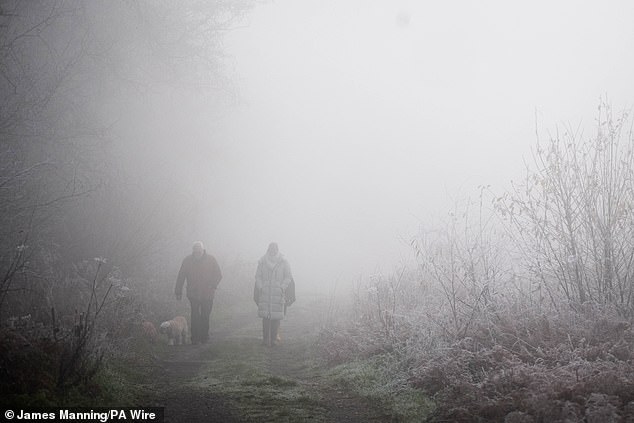
People walking through fog in West Hay Nature Reserve, Somerset, on Wednesday
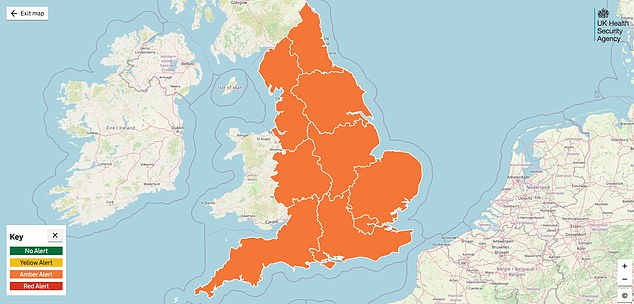
The UKHSA has issued amber cold-health alerts across the whole of England
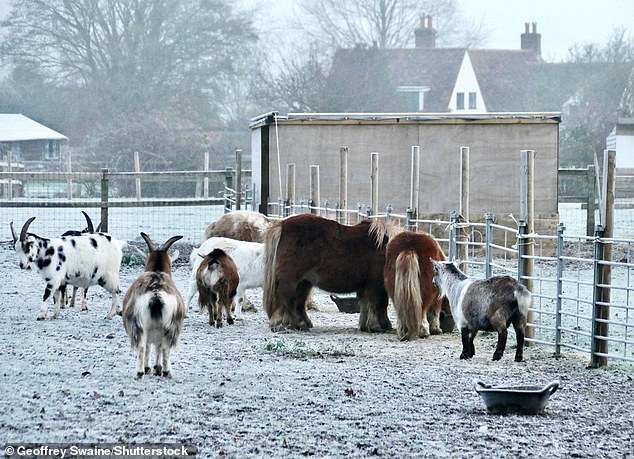
A heavy frost is seen at a farm in Dunsden, Oxfordshire this morning
Dr Paul Coleman, a health protection consultant at the UKHSA, said it was likely to be ‘very cold’ across England over the next few days.
He said: ‘Low temperatures like these can have serious impacts on the health of some people, particularly older people and those with serious health conditions.
‘Exposure to cold can lead to increased risk of heart attacks, strokes and chest infections.
‘It is therefore really important, as the colder weather sets in, to check in on friends, family and neighbours that are most vulnerable.’
A Met Office yellow snow and ice alert in place from midnight until noon on Friday covers a large swathe of England and Wales, including Chester and Greater Manchester down to Kent.
It could see some areas blanketed in snow up to 5cm deep, especially on higher ground in parts of North Wales and north-west England.
Separate yellow warnings have also been issued for Northern Ireland between midnight and 10am on Friday, and in northern Scotland between 6am on New Year’s Day and the end of Friday.
The chilly conditions are expected to have an impact on transport, with people urged to prepare for longer journey times by road, bus and train services.
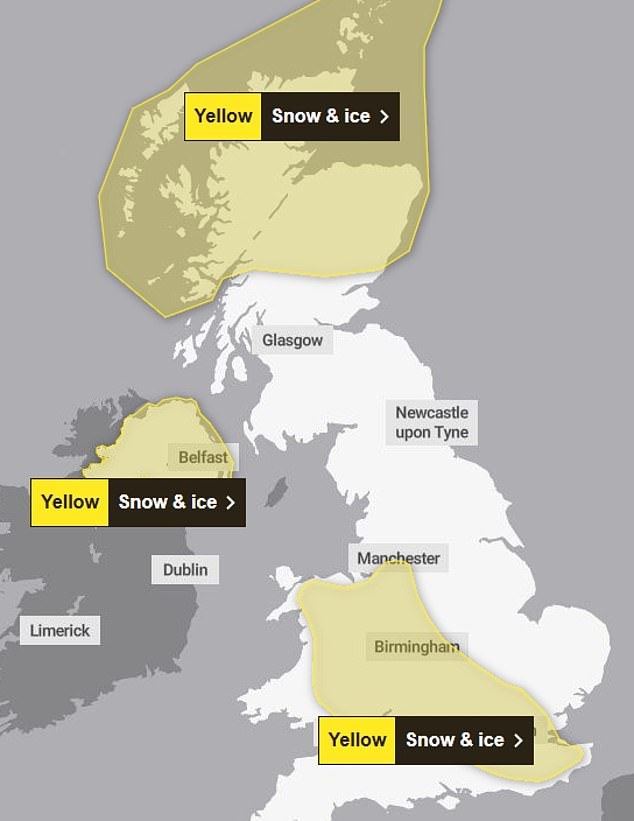
Large areas of the UK are covered by a snow and ice warning on Friday
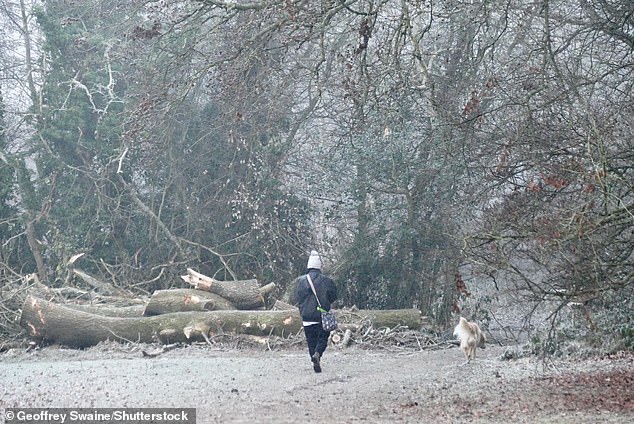
Walkers are seen out on a cold, frosty and foggy morning in the countryside in Oxfordshire
The Met Office has also warned of injuries due to slips and falls on icy surfaces, which will develop quickly as sleet and snow clears.
The alerts come as the country is already in the grips of a cold snap with Brits waking up to heavy frosts and freezing fog this morning.
Where are the weather warnings?
Warning issued on Monday:
- Snow and ice for northern Scotland, 6am tomorrow to 11.59pm Friday
The four new warnings are:
- Wind for North East Scotland, 9pm tonight to 9am tomorrow
- Snow and ice for Northern Ireland, 12am Friday to 10am Friday
- Snow and ice for England (including London) and Wales, 12am Friday to 12pm Friday
- Snow and ice for northern Scotland, 12am Saturday to 11.59pm Sunday
<!- – ad: https://mads.dailymail.co.uk/v8/us/news/none/article/other/mpu_factbox.html?id=mpu_factbox_1 – ->
Advertisement
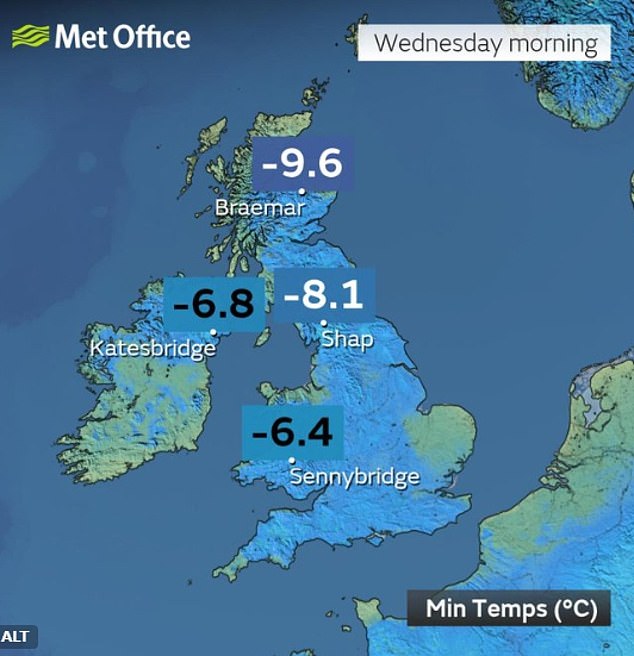
The mercury plunged to as low as -9.6C in the Highlands of Scotland overnight with -8.1C recorded in the village of Shap, Cumbria.
This morning, the UK Health Security Agency issued an amber cold health alert for the whole of England, which is due to remain in place until January 6.
The warning predicts there may be a rise in deaths, particularly among the elderly and that younger age groups may also be impacted.
New Year’s revelers have been warned it will be ‘cold regardless of where you are’ as they head out to firework displays up and down the country.
‘At midnight in London there will be mostly clear skies, it will be quite chilly, but with fairly light winds, with temperatures around 1-2C,’ said forecaster Simon Partridge.
‘For Cardiff it’s again dry, there will be a bit more cloud around but still dry, again light winds, temperatures there a little bit warmer, 2-3C.’
There will be cloudier skies further north, but this is not expected to affect visibility for watching fireworks displays from viewpoints, Mr Partridge said.
‘We are not looking at low cloud, mist or murk, so you should be able to see fireworks, just not stars.’
For Hogmanay celebrations in Edinburgh, there will be wind gusts of up to 25-30mph and a chance of showers and hail, the meteorologist added.
In a post on X the Met Office said: ‘A cold New Year’s Eve evening for those out celebrating, so extra layers will be needed.’
In London, where tens of thousands will flock to the banks of the Thames to watch the mayor’s annual fireworks display, the temperature will be just above freezing when Big Ben strikes midnight.
Those planning on seeing outdoor displays in Cumbria may need to pack waterproof clothing as cold winds could pick up in the North West towards midnight with a few showers possible.
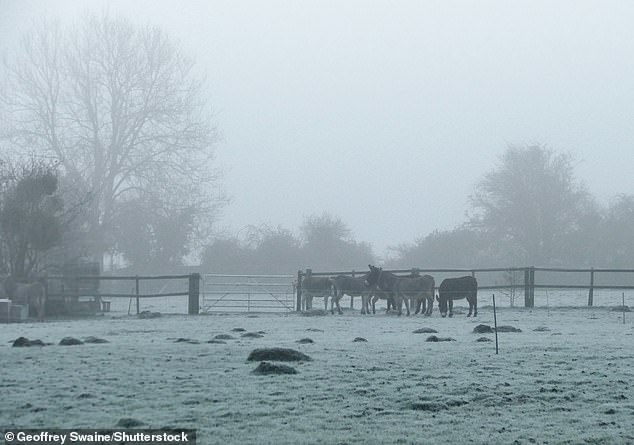
Pictured: Livestock out on a cold, frosty and foggy morning in the countryside
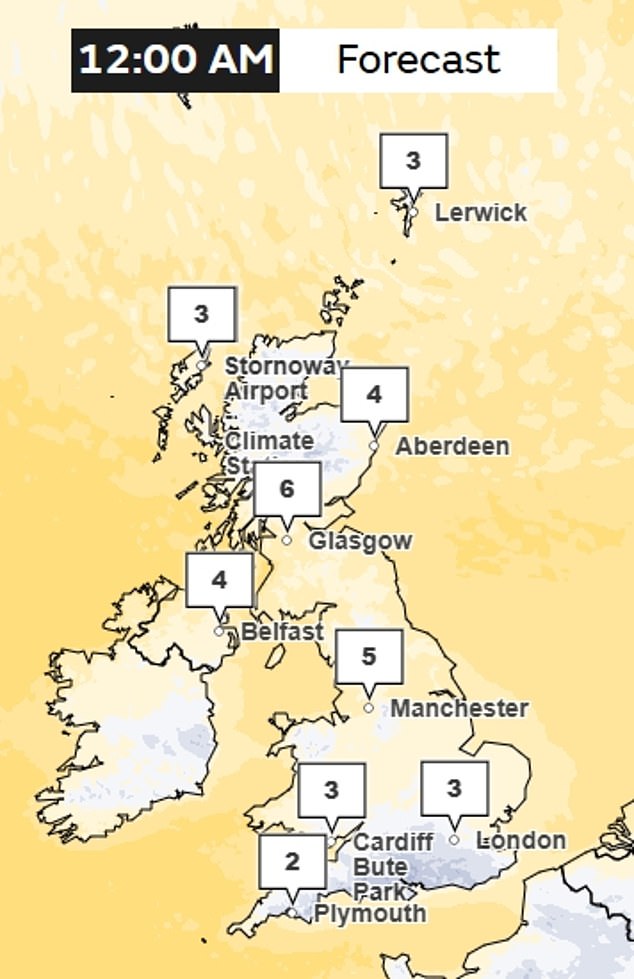
Image shows the forecast at midnight tonight for the New Year
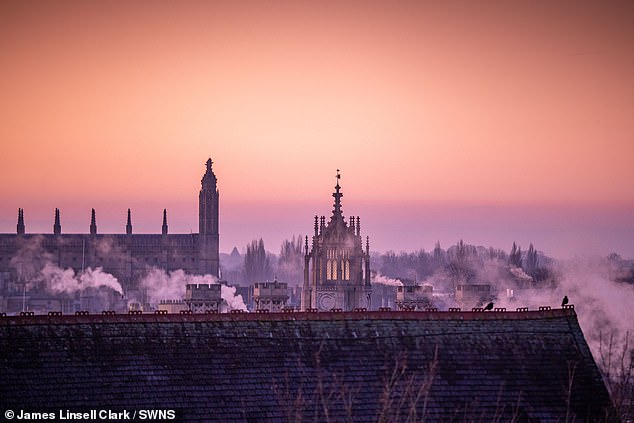
The last Sunrise of 2025 over Cambridge from Castle hill
Meanwhile, amber cold health alerts have been issued by the UK Health Security Agency (UKHSA) for the North East and North West of England, which are due to remain in place until noon on January 5, with temperatures expected to fall to 3-5C.
The UKHSA said it means the weather is ‘likely’ to cause significant impacts across health and social care services, including a ‘rise in deaths’ among those with health conditions or aged 65 or over.
It comes as the UK Health Security Agency issued an amber cold health alert for northern England, which is due to remain in place until noon on January 5.
The rest of England is covered by a yellow cold health alert for the same period amid concerns over ‘significant impacts across health and social care services’.
Temperature fell to -8.4C (16.9F) at Tulloch Bridge in the Highlands on Monday after -7.2C (19F) at Altnaharra on Sunday – and similar lows are expected again this week.
The Met Office said the yellow warning for snow and ice, which it issued on yesterday means ‘frequent and heavy snow showers may lead to some travel disruption’.
By Friday morning, the Met Office is predicting 2cm (1in) to 5cm (2in) of snow, with 10cm (4in) in certain local areas and 10cm to 20cm (8in) in some areas above 200m.
On the highest routes and hills, 30cm (12in) or more may build through the period, the forecaster added.
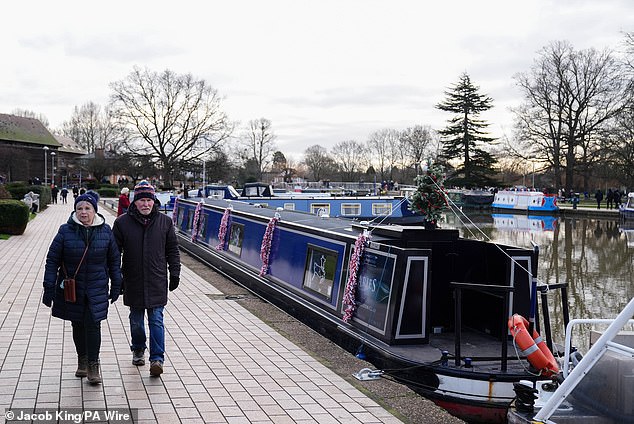
People walk by canal boats in Stratford-upon-Avon in Warwickshire amid cold temperatures
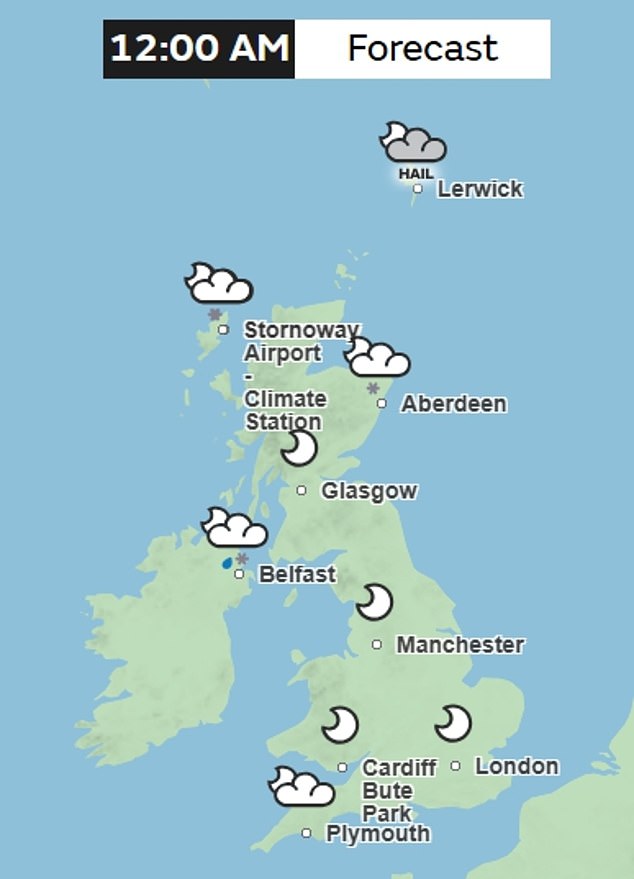
Image shows the forecast for midnight on January 2. Snow and ice has been predicted in Scotland
Temperatures fell to -8.4C (16.9F) at Tulloch Bridge in the Highlands yesterday after -7.2C (19F) at Altnaharra on Sunday – and similar lows are expected again this week.
The Met Office said the yellow warning for snow and ice, which it issued yesterday, means ‘frequent and heavy snow showers may lead to some travel disruption’.
By Friday morning, the Met Office is predicting 2cm (1in) to 5cm (2in) of snow, with 10cm (4in) in certain local areas and 10cm to 20cm (8in) in some areas above 200m.
On the highest routes and hills, 30cm (12in) or more may build through the period, the forecaster added.
Met Office deputy chief forecaster Mark Sidaway previously said: ‘It certainly looks like we are in for a taste of ‘winter’ as we welcome in the new year, initially in the north, but more widely across the UK for the first week of 2026.
‘Arctic air and strong northerly winds will bring cold or very cold conditions to all parts of the UK, and it will feel especially cold in the strong winds. Widespread and locally severe frosts are expected, along with the first snow of the winter for many.
‘A yellow warning for snow and ice has been issued for northern Scotland on New Year’s Day and beyond, where frequent and heavy snow showers may lead to some travel disruption.
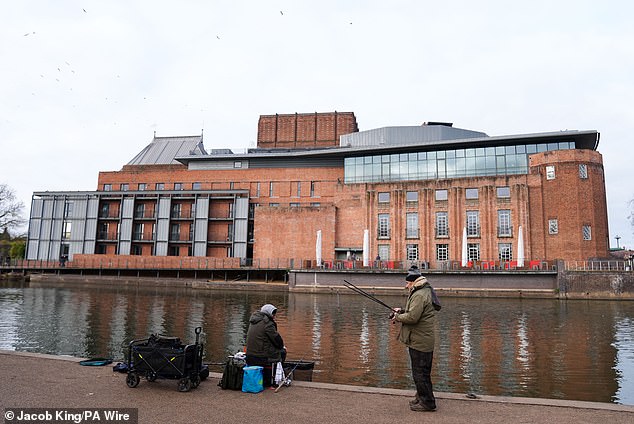
Fishermen by the RSC Theatre in Stratford-upon-Avon in Warwickshire yesterday
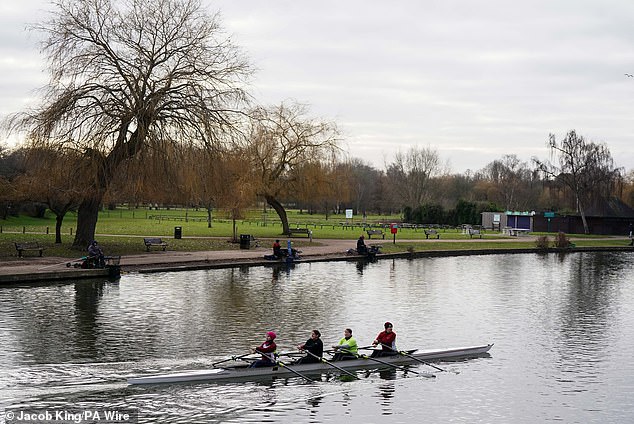
Rowers on the river Avon in Stratford-upon-Avon in Warwickshire on Tuesday
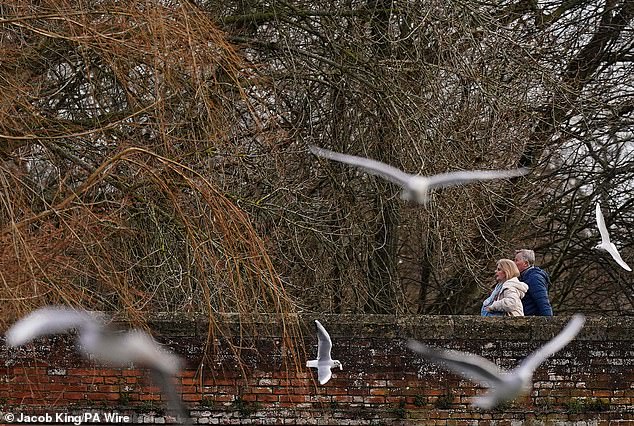
People walk across a bridge by flying seagulls in Stratford-upon-Avon in Warwickshire
‘These colder conditions and wintry hazards – snow, ice and strong winds – will develop more widely as we enter the new year, with more warnings for snow and ice likely.
‘It looks like this cold spell will last through at least the first week of January, so it’s important people keep up to date with the latest forecast and warnings.’
The UKHSA said the UK may also see ‘impacts on younger people’ and there will likely be an ‘increase in demand for health services’ across the regions.
Other impacts include ‘temperatures inside places like hospitals and care homes dropping below the levels recommended for assessing health risks’, and ‘challenges keeping indoor temperatures at the recommended 18C leading to more risk to vulnerable people’, the UKHSA said.