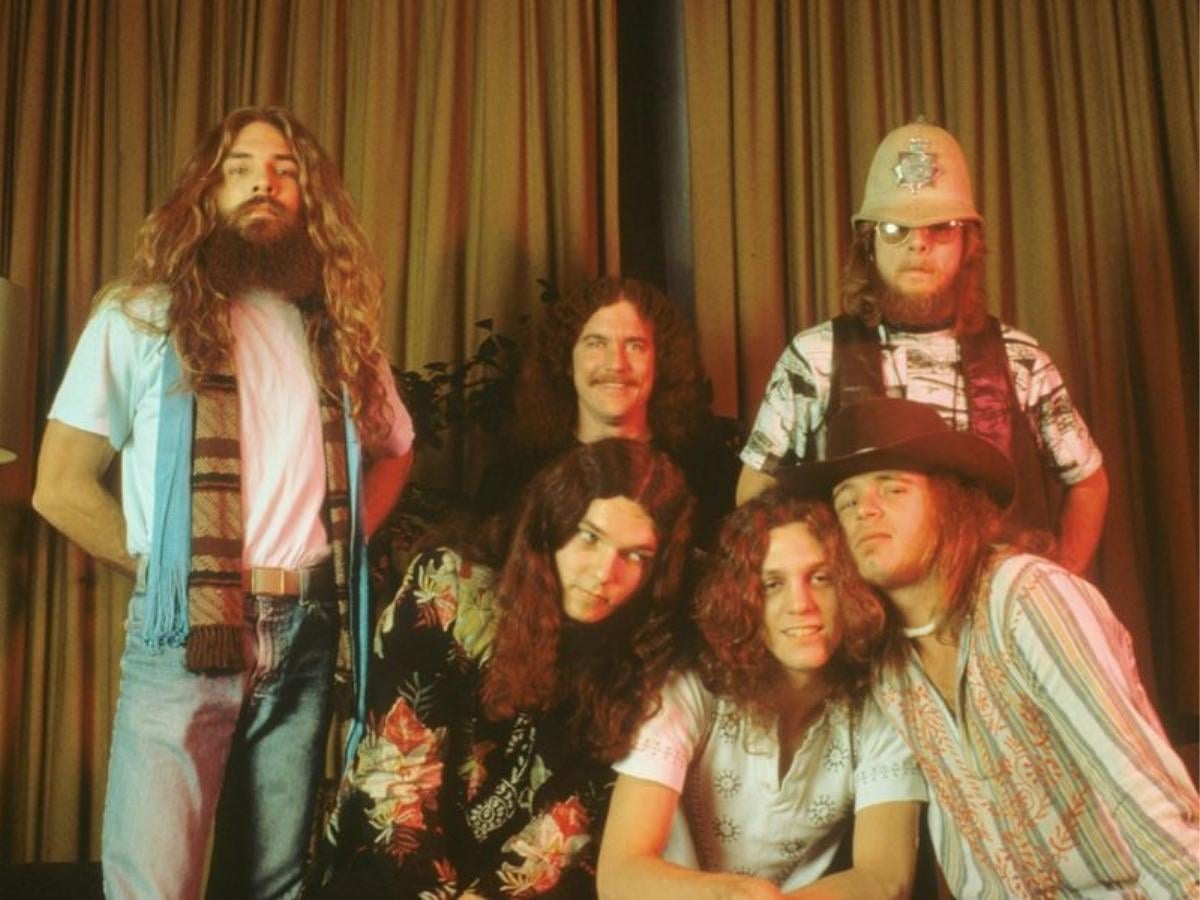
(Credit: Alamy)
Wed 31 December 2025 19:15, UK
As I write this, New Year’s Eve lingers in the background. Year upon year, people around the world are left questioning how they can effectively celebrate the closing of one year and the opening of another, and for many, it all centres around music.
People sit and wonder about whether there is a perfect song that they can use to usher in the new year, and for a while now, people have unanimously agreed that one of the best tracks to wait on the other side of that countdown is ‘Free Bird’. Lynyrd Skynyrd’s track is a great idea for two reasons: The theme of the song and the way the track closes out.
Firstly, let’s discuss the theme. This is a song dedicated to freedom and letting go of all your problems. While New Year’s Eve can often be a bit overrated as it feels like forced fun, if you want to use it for something positive, you can use that moment to say goodbye to any worries that have amassed throughout 2025 and look forward to turning a new page. ‘Free Bird’ seems like the perfect track to do that, too.
Of course, the main reason why this song is the perfect track for the New Year’s countdown is because of the killer solo that latches onto the final five minutes of it. People are timing when they start the song on the holiday so that it starts playing as soon as the countdown reaches zero, and the moment you hear it, you can understand why. There is truly no guitar solo quite like it, which is both long and equally never lacks in any quality.
When kids everywhere pick up a six-string for the first time, they do so with the intention of one day mastering this unbelievable piece of musicianship. There is nothing like it within the world of the guitar solo, as it is the Mount Everest of fretwork. It combines so many licks, playing techniques and forms of layering that it becomes almost addictive in its magnitude. Five full minutes of non-stop shredding. But it begs the question, how many notes are actually played?
So, how many notes are in the ‘Free Bird’ guitar solo?
OK, I’m going to disappoint you here.
Despite extensive research, there is no fixed answer on how many notes there are in the solo of ‘Free Bird’. The nature of it means that there are mistakes embedded in there, and the way that it is layered also means that some notes overlap with one another. As such, it’s impossible to lock in on a definitive number. I know, you’re mad, but fixing on a single digit almost eliminates what makes the solo such a force of nature.
If you absolutely need some kind of number to lock onto, then we can work out a very rough estimate. The solo is just over four minutes long, and in the first 15 seconds, there are 50 notes played. The consistency of the notes remains relatively similar throughout the solo, and therefore we can work out that there are between around 800 – 900 notes in total. I appreciate this is a pretty rough estimate, but keeping things fast and loose feels pretty in-keeping with how the solo was created in the first place.
The way that the ‘Free Bird’ solo came about was because when the band were playing the song live, they felt that it ended a little too abruptly. As such, they added a little solo onto the end of the song that they could use as an effective outro. With the guitar talent on display in Lynyrd Skynyrd, audiences were pretty happy to sit around and listen to this elongated outro. However, the more they played the song, the more elongated that solo became.
Eventually, when it came to recording the track, the band decided it would be a crime not to add an improvised solo at the end of it. As such, the beauty in that solo lies not just in the technical ability of it, but also in the fact that it came about because of nothing more than great musicians exploring far and wide with their music. It isn’t a solo that should be treated as factual, rather as a representation of the free-flowing nature of guitar music.
Is this me just dressing up the fact that I couldn’t find the exact number of notes that make it up? Maybe. But that’s also an ode to the free-flowing nature of journalism… I think.
Related Topics