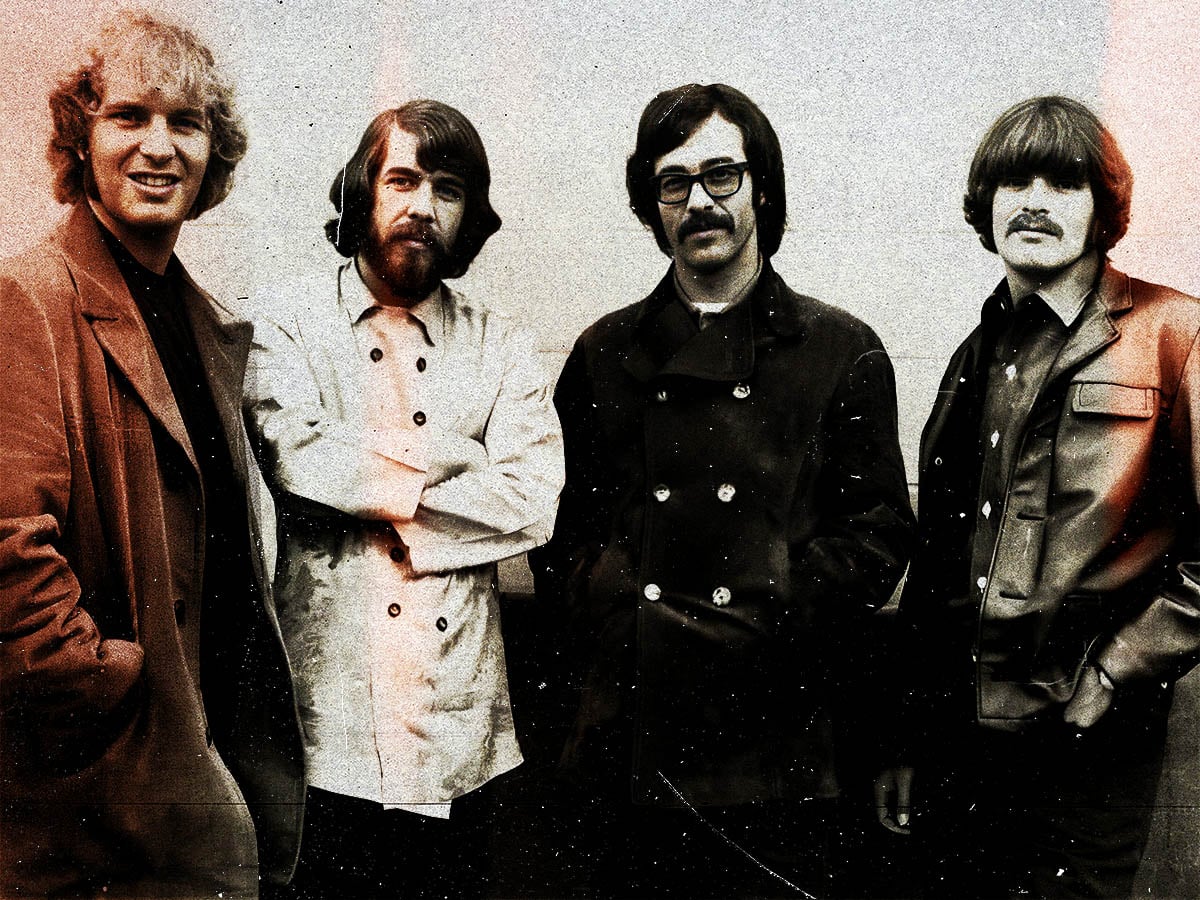

(Credits: Far Out / Fantasy Records)
Wed 31 December 2025 21:00, UK
It was clear to everyone who heard Creedence Clearwater Revival in the early stages of their career that the band was going to make it big.
The songs that the band released have stood the test of time, and it was clear to everyone listening earlier on that they would have a resounding impact. Jake Rohrer, who worked closely with the band, recalled just how well-received their music was. “They’d play Winterland and the Fillmore West, third on the bill, and blow everyone off the stage,” he said.
Perhaps one of the things that allowed the band to sing with such passion and rigour was the lingering threat of war which crept on the horizon. Band members were on the waiting list to be enlisted in the war in Vietnam, which meant they were playing music like they might not be able to for a long time, as there was a good chance they wouldn’t.
“I was two weeks away from being transferred to the Army and sent to Vietnam,” said band member Doug Clifford. “I even had the piece of paper in my hand, telling me where I’d be going […] Fifty-eight thousand Americans were killed out there, and hundreds of thousands were wounded, and John and I could have been among them.”
Their anti-war rhetoric resonated so deeply with listeners because the passion with which the band played was real. This applied to music across the board as well, not just their more political numbers. Every emotion that has ever inspired the band can be heard clearly throughout their music. With a sound like that, it was looking like the only way for the band was up, but that proved to be wrong. Credence Clearwater Revival were playing with borrowed time, and there were two major factors contributing to this slow demise.
The first was friction within the band itself. They were a very tight-knit unit, ditching the common rockstar approach, which involved travelling around with a huge entourage and hiring people to handle the complicated aspects. Instead, they decided to do it all in-house. This meant band member John Fogerty wound up becoming the manager as well, which sounds good at first, given you know he’ll have the band’s interest at heart, but it all came crumbling down eventually when his lack of experience and specific creative vision got in the way of making decisions.
“John was our manager,” said Clifford, “Bad idea. He had no concept of the business side. Zero. None. Nada.”
Stu Cook added, “He condemned us to a career that effectively never became professional. Doug and I call it El Cerrito Syndrome. We were always limited by John’s vision of how a band is supposed to be run.”
 (Credits: Far Out / Alamy)
These frustrations were heightened by the fact that the band were locked into a terrible recording contract, which meant they were constantly losing money to the record label they were signed to. Fogerty tried to get out of it, but once again, a lack of experience within the business and legal world meant that any attempts at negotiating were done in vain. It led to the band resenting Fogerty and Fogerty resenting the man who was responsible for that contract, Saul Zaentz.
“We sat in Saul Zaentz’s kitchen,” recalled Cook, “And he told us, ‘When you guys are successful, we’ll tear up this contract and give you a real deal […] Well, we kept our side of the bargain. He didn’t.”
Fogerty’s resentment for Zaentz continued well after the conflict between band members grew too much and the band broke up. Fogerty wrote songs for his solo career that were dedicated towards Zaentz; however, the main way his resentment could be seen was when Fogerty refused to reunite with his band so long as there wasn’t complete resentment towards the man whom he claims had ripped him off.
Tom Fogerty was diagnosed with AIDS following an unscreened blood transfusion. By 1989, it was clear that he wasn’t getting any better, and one of his final requests was for the band to get back together and play one final time. He didn’t care if it was in a sold-out arena or in somebody’s living room, so long as they could all play together, it would have been worth it. All of the band members were keen except for John Fogerty. He eventually agreed, but it was too little too late.
“Finally,” said Stu Cook, “When Tom couldn’t even lift his arm properly because he was so weak, John said, ‘OK, I’ll play with you.’ Just a little bit late there, John.”
So, what was the reasoning for Fogerty turning down the reunion? Well, it all comes back to the controversy of Saul Zaentz. When he went to visit Tom in the hospital, some of the last words Tom said to him struck such a chord that John couldn’t bring himself to reunite because of them. “Saul Zaentz is my best friend,” Tom allegedly said.
While it might have just been a passing comment, it was enough for John Fogerty to completely shut off any ideas of a reunion. Whether directly or indirectly, there is no escaping that it was Saul Zaentz who managed to keep Creedence Clearwater Revival apart.
Related Topics