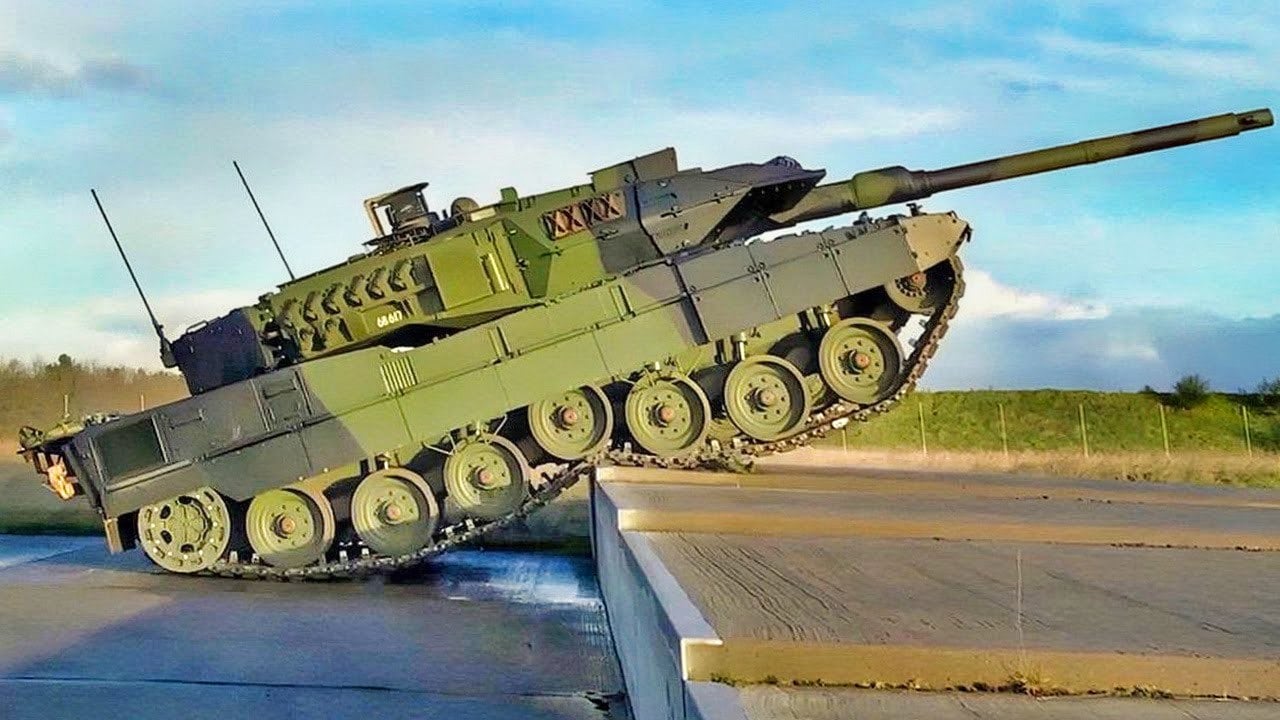
Key Points and Summary – Germany is attempting its biggest defense reset since the Cold War, driven by fears that Russia could be capable of threatening NATO’s eastern flank by 2028–2029.
-Berlin’s challenge is not only money, weapons, and industrial output—it’s manpower.
-With the Bundeswehr at roughly 182,000 personnel and a target of 260,000 by 2035, Germany is betting on a voluntary service model rather than a full return to conscription.
-New rules would require 18-year-old men to complete an interest questionnaire and undergo medical exams, while women can opt in.
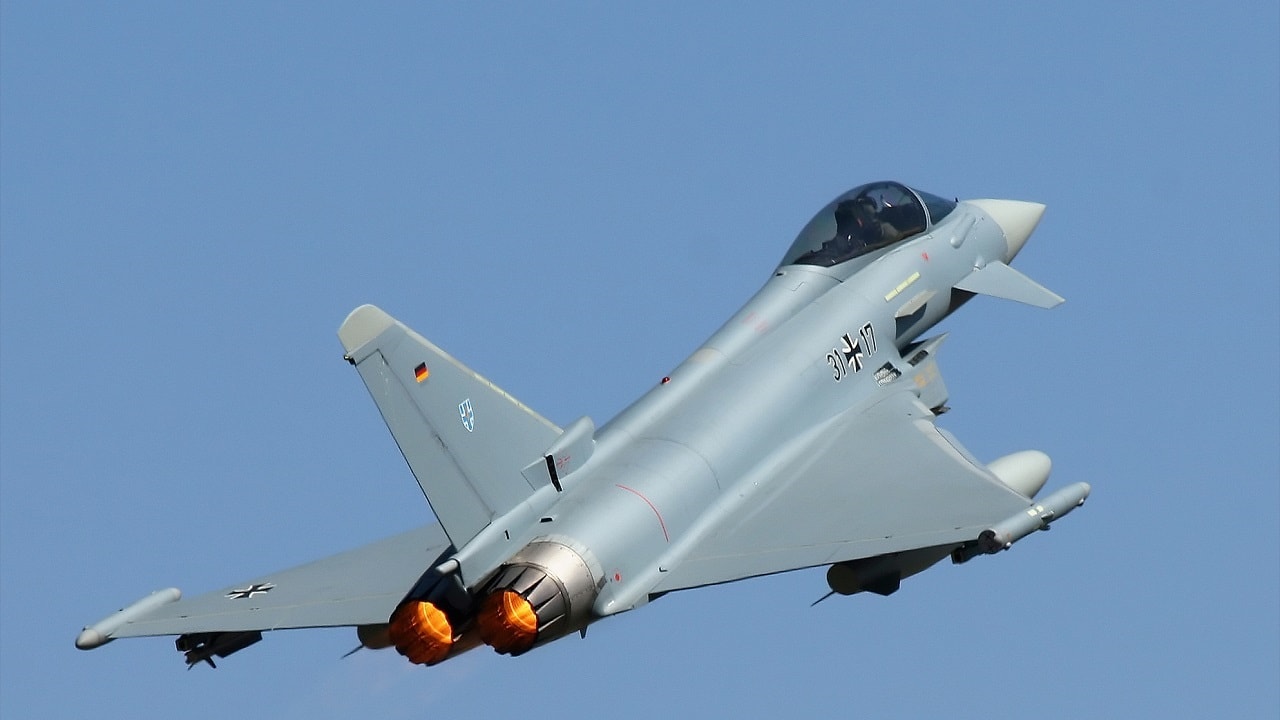
German Air Force Eurofighter. Image Credit: Creative Commons.
-Yet German leaders acknowledge a deeper obstacle: threat perception at home is less visceral than in the Baltics, where Russia feels immediate and personal.
Germany’s Defense Chief Has a Warning: “Smoke Over the Horizon” From Russia
Germany is in the midst of a massive shift in defense policy, one that would, if realized, see the Bundeswehr, the German Army, transformed from its post-Cold War nadir into one of the largest, most powerful conventional forces in Europe.
The impetus for this transformation is Russia’s own rearmament and the spectre of war between NATO and Russia.
In an interview given to FAZ, Germany’s newspaper of record, German Defense Minister Boris Pistorius called the question of when Russia would be capable of an attack “speculative.”
“Military experts and intelligence services can roughly estimate when Russia will have restored its armed forces to a level where it would be capable of attacking a NATO member state in the east,” Minister Pistorius said.
“We have always said that this could be the case from 2029 onwards. Now, however, there are others who say that this is conceivable as early as 2028, and some military historians even believe that we already had our last summer of peace last summer. We should not give the impression that NATO is unable to defend itself. It can. It has considerable deterrent potential, both conventional and, of course, nuclear. Regardless of this, we have combat-ready armed forces, but yes, we need to equip them even better.”
But another pressing question, and one that has proven to be highly controversial, is how Germany will recruit 260,000 men to meet its 2035 recruitment target.
Currently, the Bundeswehr counts 182,000 men and women in uniform. During the Cold War, mandatory military service — conscription — provided a deep pool of recruits.
But the post-Cold War drawdown, the so-called peace dividend, redirected military spending toward social programs. And combined with the end of mandatory military service in 2011, the Bundeswehr shrank dramatically.
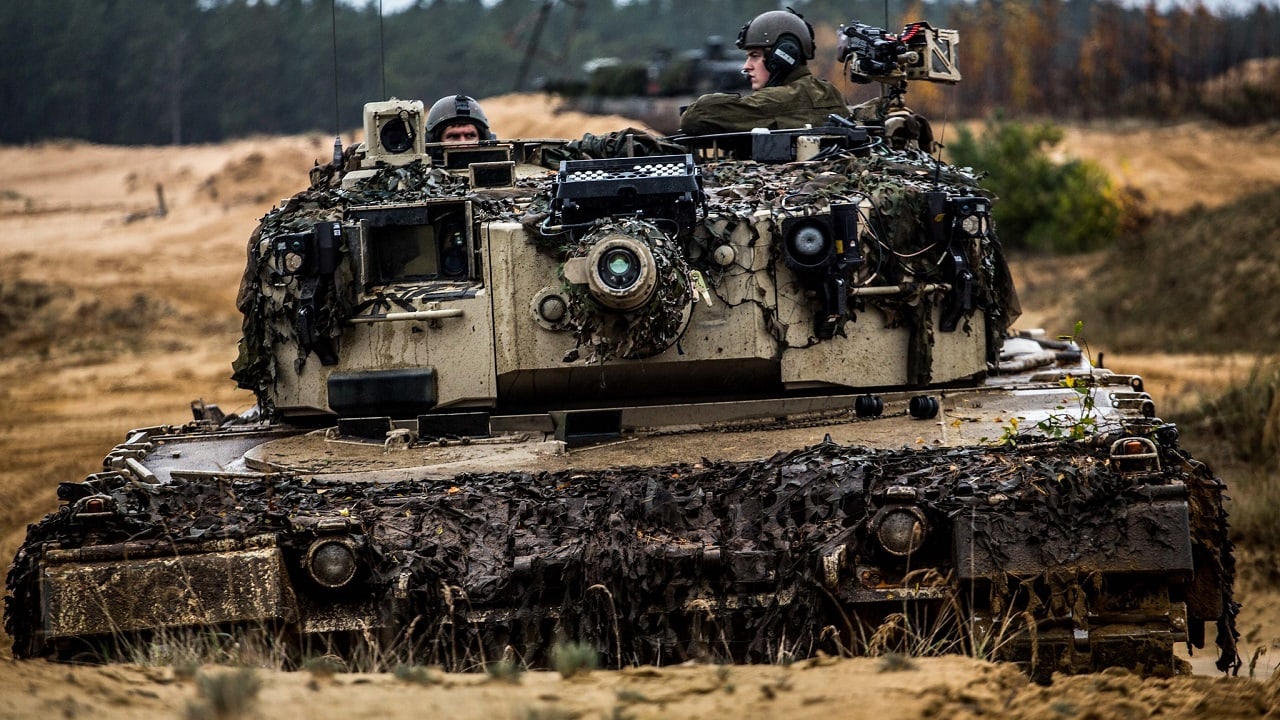
A Norwegian Leopard 2A4 main battle tank during Iron Wolf II in Lithuania. It involves 2,300 troops from 12 NATO Allies. The Lithuanian-led exercise is helping to train the NATO Battlegroup which consists of soldiers from Germany, Belgium, Luxembourg, the Netherlands and Norway. Shot in Rukla, Lithuania.
In an effort to boost Bundeswehr numbers, German lawmakers last month voted not to reintroduce conscription but instead to maintain voluntary military service.
All 18-year-old men will be required to complete a questionnaire gauging their interest in military service, while 18-year-old women will be allowed to do so voluntarily. Men will also undergo mandatory physical exams.
Defense Minister Pistorius lauded the effort, saying it would be necessary for Germany’s long-term security. “Reintroducing compulsory military service as we knew it in the past is out of the question at present,” he said to FAZ.
“We are deliberately focusing on voluntary service,” Pistorius explained. “We want those who are motivated and suitable. In the long term, we will have many more of them – even if we are talking about service in the reserves – than if we force young people to serve. In my conversations with young men and women, I sense they are strongly in favor of Germany’s security. They are quite willing to protect a life of freedom.”
But the question of Germany’s willingness to pivot from peacetime to a war-ready footing is more than just a question of recruitment or retooling and refitting—it is also a question of threat perception. Speaking to the BBC, Germany’s top soldier, Defense Chief Carsten Breuer, acknowledged that Germany’s perception of the threat posed by Moscow differs from that of countries closer to the Kremlin.

A M1 Abrams tank from 5th Squadron, 4th Cavalry Regiment, 2nd Armored Brigade Combat Team, 1st Infantry Division, fires a round during a Combined Arms Live Fire Exercise (CALFEX) at Grafenwoehr Training Area, Germany, Mar 26, 2018.

A U.S. Army mobile gun system Stryker variant belonging to Quickstrike Troop, 4th Squadron, 2d Cavalry Regiment fires at several targets during a week-long gunnery range at the Grafenwoehr Training Area, Germany, Feb. 14, 2019. The gunnery was the culminating event for their multi-month training progression. (U.S. Army photo by Sgt. Timothy Hamlin, 2d Cavalry Regiment).
“The Baltic States are really exposed to the Russians, right?” General Breuer asked rhetorically during a recent interview with the BBC. “And once you are there, you really feel this… in the talks we are having over there,” he said.
In places like Estonia, General Breuer explained, their proximity to Russia, combined with their history of Soviet occupation, creates a unique context.
As a consequence, they “feel the heat, see the flames and smell the smoke,” of the threat posed by Moscow, metaphorically speaking. In Germany, on the other hand, the threat feels much farther distant, and Germans “probably see a little bit of smoke over the horizon and not more.”
Commentators in Germany have often described the threat posed by Russia in somewhat alarmist terms. Still, the more official framing within the NATO alliance emphasizes instead that the key to facing down that threat will depend on credible deterrence via defensive readiness.
Some analysts have cautioned that a number of factors constrain Russia’s ability to wage a large-scale war against NATO, including economic limitations, deep demographic challenges that Moscow’s disastrous war in Ukraine has greatly exacerbated, and NATO’s collective defense advantages, additionally noting that no nation-state has attacked a NATO member.
Political will will be a deciding factor for Germany and the NATO alliance more broadly: German society has historically been extremely cautious about militarization.
And while popular political support for rearmament is higher now than at any point since the end of the Cold War, some divisions remain in a society with a deeply pacifist streak.
Germany: Military Superpower? Well…
Industrial and economic mobilization, particularly building up Germany’s defense industries, the stockpiling of arms and ammunition, and sustainably increasing defense budgets, are all important goals on the road to credible deterrence, but present their own political hurdles as well.
Germany is one of Europe’s defense industry heavyweights.
Still, coordination within the continent is poor, and overlapping, wasteful production strategies are a historical problem for countries that would prefer to favor their own national champions.
Whether the preparations in Germany and in other European countries prove to build a robust and credible deterrence promptly will no doubt be a topic of debate for months and years to come.
About the Author: Caleb Larson
Caleb Larson is an American multiformat journalist based in Berlin, Germany. His work covers the intersection of conflict and society, focusing on American foreign policy and European security. He has reported from Germany, Russia, and the United States. Most recently, he covered the war in Ukraine, reporting extensively on the war’s shifting battle lines from Donbas and writing on the war’s civilian and humanitarian toll. Previously, he worked as a Defense Reporter for POLITICO Europe. You can follow his latest work on X.