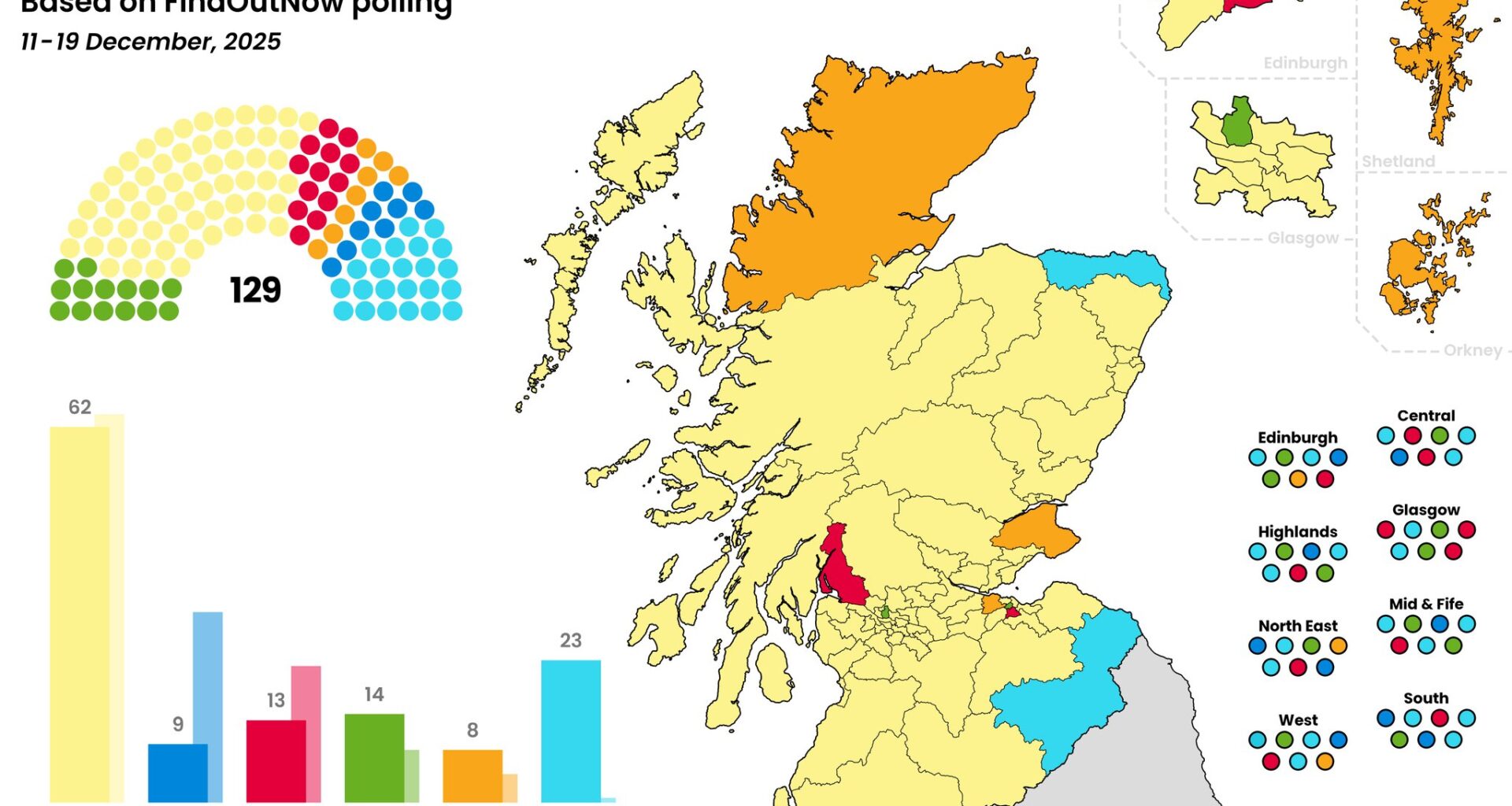
The latest polls show us a close glimpse of voter intentions for the Scottish election in May. This is the Scottish Holyrood projection based on @FindoutnowUK polling of 1000 people:
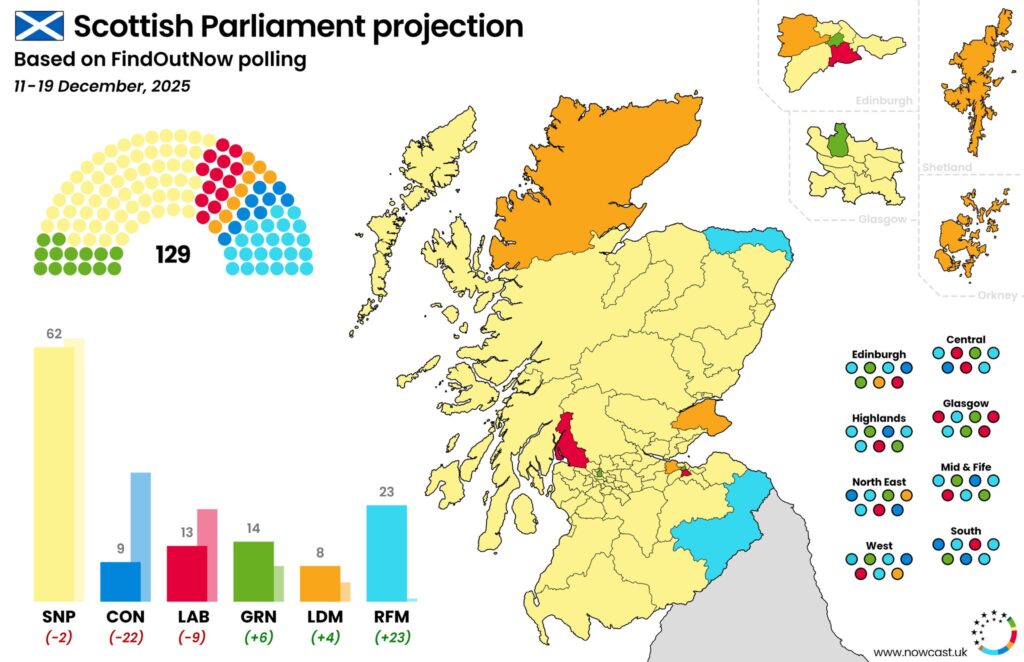
It would result in the following seats: SNP 62, Reform 23, Labour 13, Conservatives 9, Greens 14, and the Lib Dems 8. This would mean annihilation for the Tories, failing to pick up a single constituency and reduced to picking up just nine seats on the list. It puts Scottish Labour and the Conservatives projected to fall into joint fourth place, despite Labour spending lavishly on social media and Anas Sarwar only a couple of days ago being interviewed by the Daily Record and boasting that he’d be First Minister next year. It would, of course, be a breakthrough moment for Reform UK, who would have a batch of MSPs that nobody had ever heard of. We have no idea what any of their polices would be (neither do they).
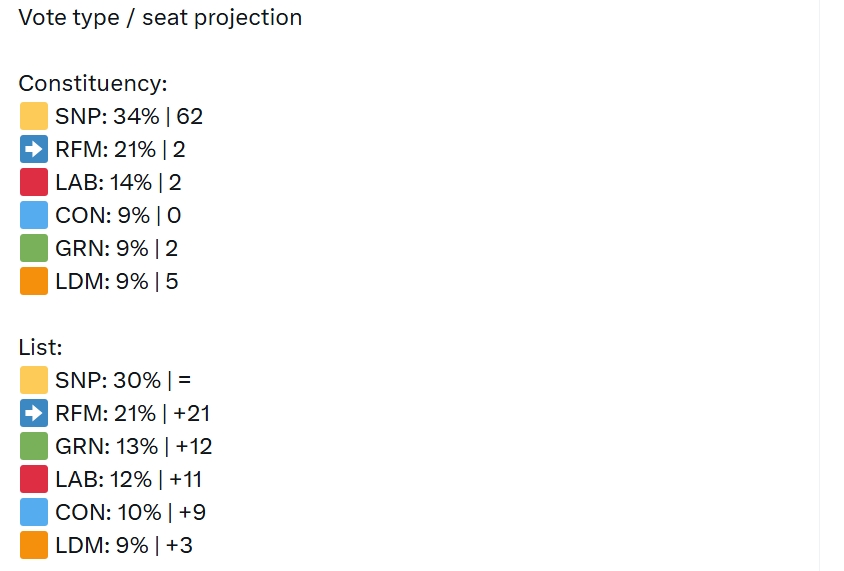
It would mean the Scottish Parliament would have 76 pro-independence members.
According to this polling, neither Alba nor Your Party would make a breakthrough or return a single MSP.
Despite mutterings from Reform MSP Graham Simpson about working with the Conservatives to ‘remove the SNP’, the numbers don’t support such a claim. Even a ‘grand alliance’ of Reform, Tories and Labour wouldn’t have the numbers.
There are a number of x-factors at play that should be taken into account. First, at the same time as these polls were published, so too were polls predicting a Westminster election with a landslide for Reform UK.
These are extinction-level events for the two main political parties, but also show gains of +36 for the SNP. The two polls (Holyrood and Westminster) have an interaction with each other. If, as seems extremely likely, the Scottish electorate goes into the polling stations in May with the very real prospect of a Farage Prime Ministership, it will act as dynamite to propel a defensive action of supporting pro-independence parties.
Whether this would have enough of an impact to raise the number of SNP seats from 62 to 65 (a majority) remains to be seen, as does whether this is important.
The Westminster polling shows decimation for Labour (-330) and for the Conservatives (-64) and huge gains for the Greens under Polanski (+22) and the SNP (+36). This would be a massive historic breakthrough for a populist left-green party in England. It would also mean that former SNP voters who ‘leant’ Labour their vote in 2024, abandoned them and returned to the SNP.
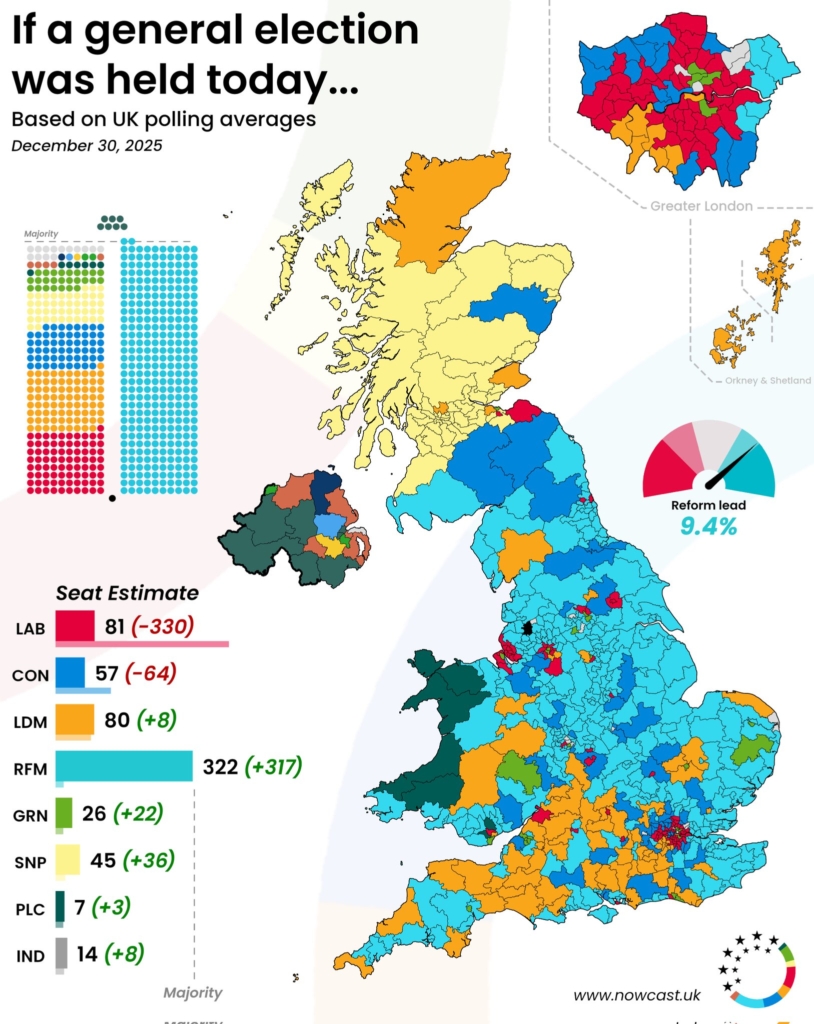
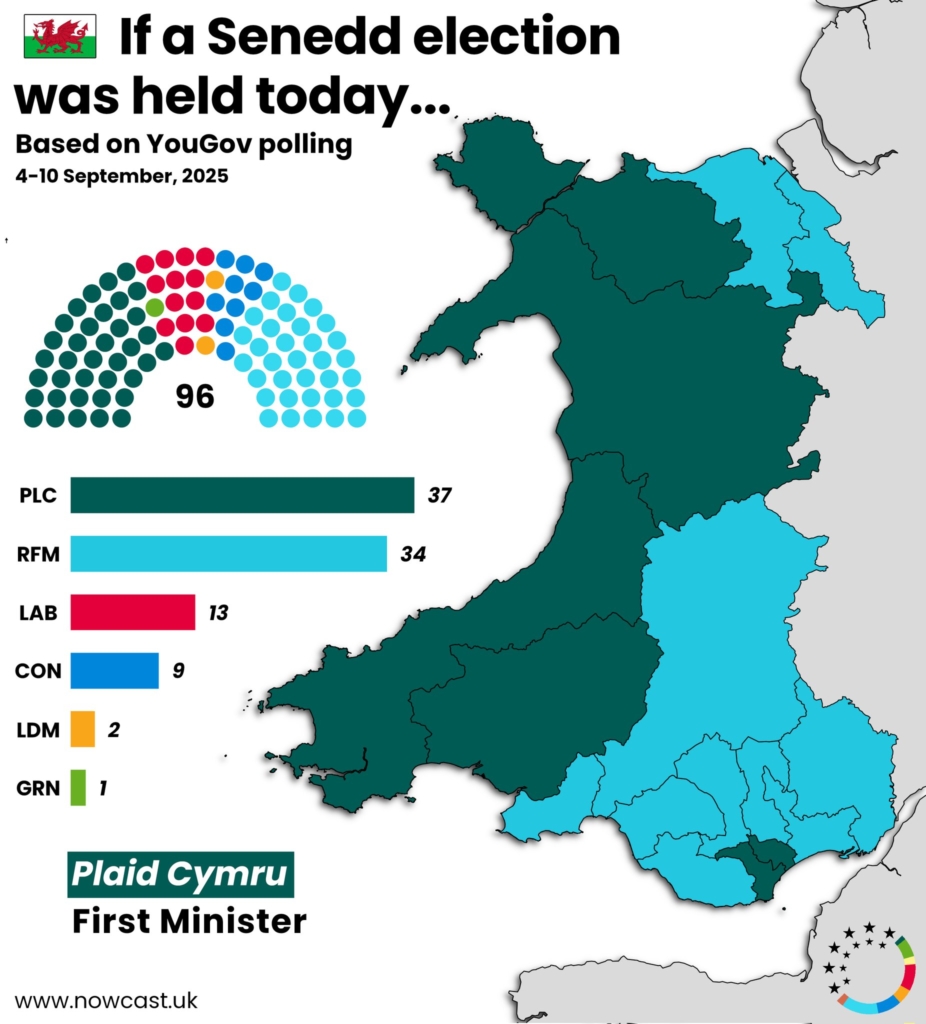
The same effect, of electing a nationalist party as a bulwark against the far-right, can be seen in Wales, where Plaid Cymru are predicted to take the Senedd for the first time. It would represent a landmark change in Welsh politics, as Labour has run the government in Wales in all the 26 years of devolution.
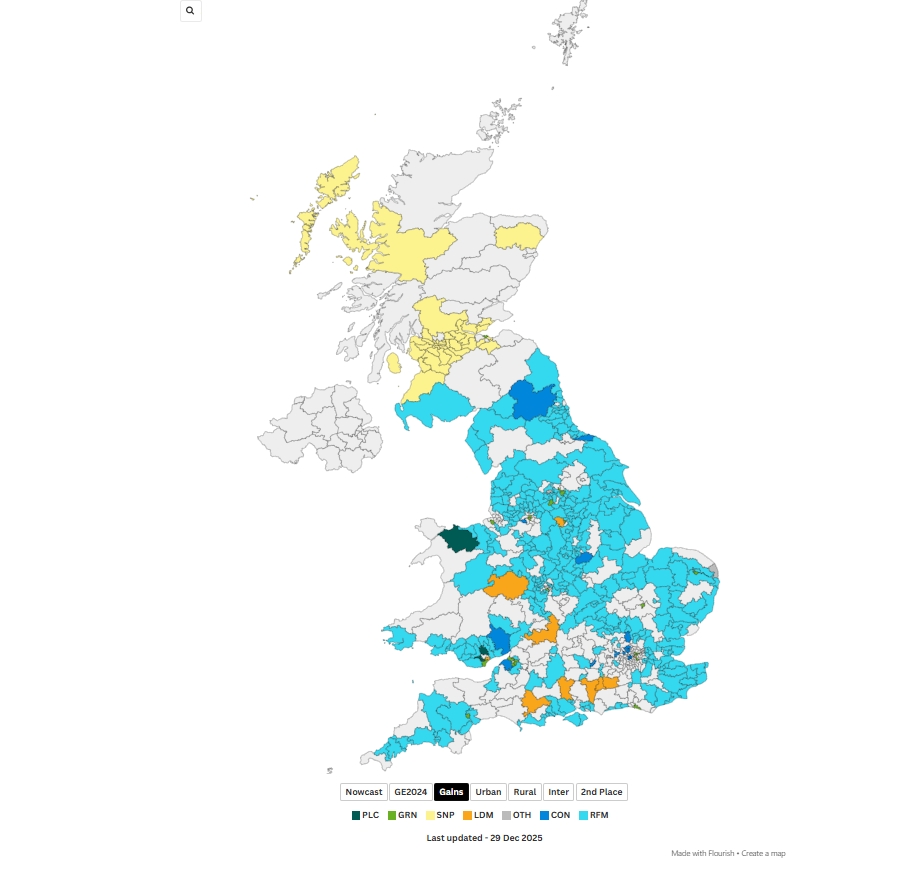
You can see the map of ‘gains’ across the UK from Nowcast’s map (see below). You can adjust their map to see rural or urban gains, second place etc here. I reduced the size of the map to include Shetland and Orkney.
If these votes played out we would be in a situation with a huge pro-independence majority at Holyrood and Britain’s most right-wing government ever in power at Westminster.
There are some other issues at play here.
First, how would the SNP and the Greens manage their relationship and potential pacts after the disaster of the Bute House Agreement, and how would they navigate the difficult issue of women’s rights, trans rights and identity? Is this the seminal issue some think it is?
Second, it seems that, under such conditions, with the prospects of a huge pro-independence majority, the Alba party’s demand that people lend them their vote in order to gain a ‘pro-independence majority’ is completely obsolete. However, the dissident wing of the nationalist movement who are completely disaffected by the conduct of the SNP may not just disappear, even if the Alba Party does. And, the SNP would also be under extreme pressure to deliver something if they succeed in this election. So it is unlikely that they escape scrutiny even in electoral success.
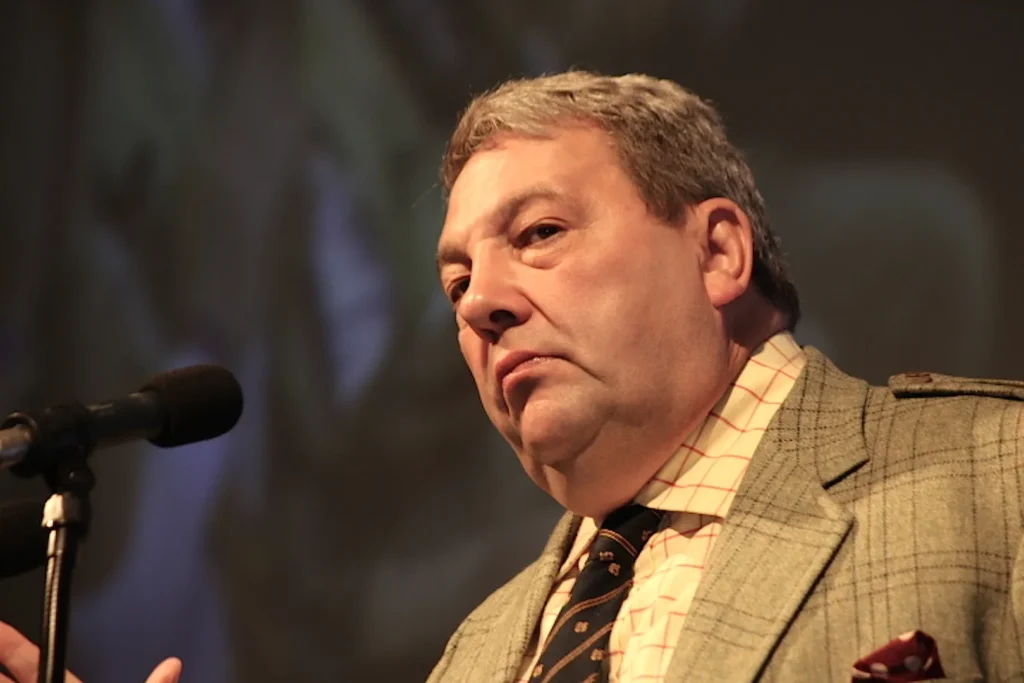
Third, will Reform’s vote actually hold up under the pressure of an actual campaign? There is first the growing interest in their murky past – see The Ferret’s investigation into David Coburn here: Here’s what former Brexit party MEP David Coburn has said about Russia and Ukraine
and second, there is the small problem that they have no Scottish policies whatsoever.
Finally, the polling suggests that Your Party may not make any breakthrough at the Holyrood elections. These elections may have come too early for Your Party, with no figureheads, policies or presence (yet) in Scotland. That may change in the years to come.