It’s been a rough year for the Benjamins, Hamiltons, Lincolns and Washingtons.
Since January, the Dollar Index — which measures the strength of the US dollar against six major currencies, including the euro, yen, and pound — is down about 10 percent.
That’s the biggest tumble for the dollar since 2017.
A weaker dollar may sound like bad news — and in many ways it is. But economists say the slide comes with clear winners and losers.
Some everyday products are set to get more expensive. At the same time, the dollar’s slump could help American companies sell more abroad — and even support job growth. Below we cover them in full.
Economists point to two main drivers behind the slide: President Donald Trump’s global trade war and the Federal Reserve’s three interest rate cuts
The tariffs — the highest since the 1930s and averaging between 14 and 18 percent — combined with lower interest rates have made the dollar less attractive to global investors, pushing its value down.
For US shoppers, the most immediate downside shows up at the checkout counter.

The Dollar Index shows that the US greenback has slumped by 10 percent compared to six other global currencies
When the dollar weakens, it takes more cash to buy goods made overseas — and retailers usually pass those costs on to consumers.
That means imported products like iPhones, laptops, and TVs assembled abroad are more likely to see price hikes if the dollar’s decline continues.
Clothes, shoes, furniture, and even new cars and replacement auto parts can also become more expensive, particularly when they’re sourced from Asia or Europe.
Foreign travel gets pricier too.
A weaker dollar buys less overseas, making hotel stays, restaurant meals, and shopping abroad feel noticeably more expensive.
Energy costs can also creep higher. Because oil is priced globally in dollars, producers often raise prices when the dollar falls to protect their earnings.
That can push up gas prices, heating and electricity bills, and delivery costs — increases that eventually filter down into food prices.
Still, the weaker dollar isn’t all bad news. In fact, it was part of the Trump administration’s economic calculus.
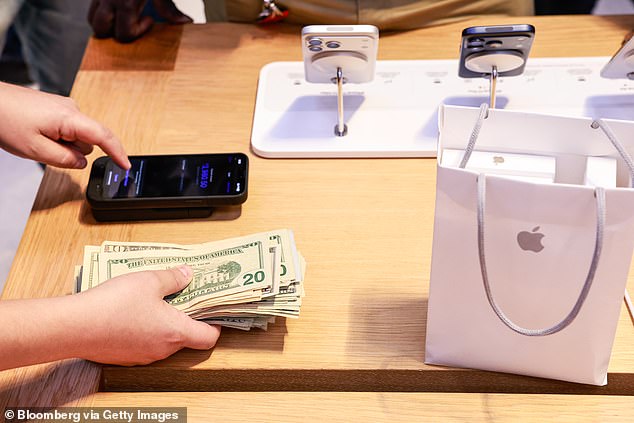
The dollar’s weakness could make imported goods – like iPhones and other tech products – more expensive for American consumers
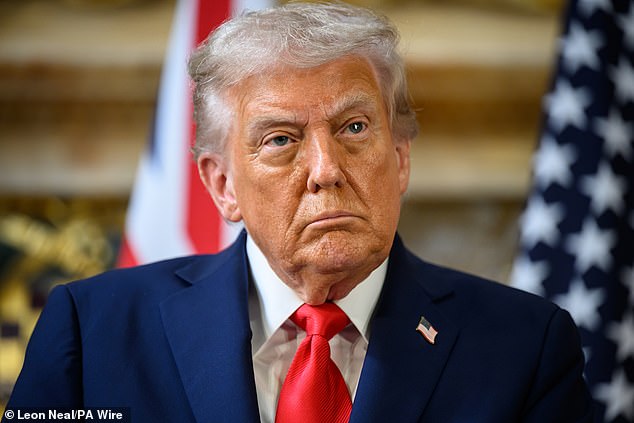
President Trump said he actually wanted to weaken the US dollar: ‘It sounds good, but you don’t do any tourism. You can’t sell tractors. You can’t sell trucks. You can’t sell anything’
When the dollar is lower, US-made goods become cheaper for foreign buyers, helping American companies compete overseas.
Boeing planes cost less for international airlines. John Deere tractors become more affordable for farmers abroad. US-made machinery, tools, and chemicals are easier to sell.
Apple, Coca-Cola, General Motors, and Ford — US-based companies with massive foreign businesses — could all benefit, too.
An increase in demand for suddenly cheapened US goods could help support factory output and American jobs — a key political goal for the Trump administration that has yet to take hold.
‘I’m a person that likes a strong dollar, but a weak dollar makes you a hell of a lot more money,’ the President told reporters in July.
‘It sounds good, but you don’t do any tourism. You can’t sell tractors. You can’t sell trucks. You can’t sell anything.’
And for international tourists, the US suddenly becomes a bargain.
A weaker dollar makes trips to Las Vegas, New York, and Orlando more affordable, increasing demand for hotels, restaurants, and attractions — and supporting service-sector jobs across the country.