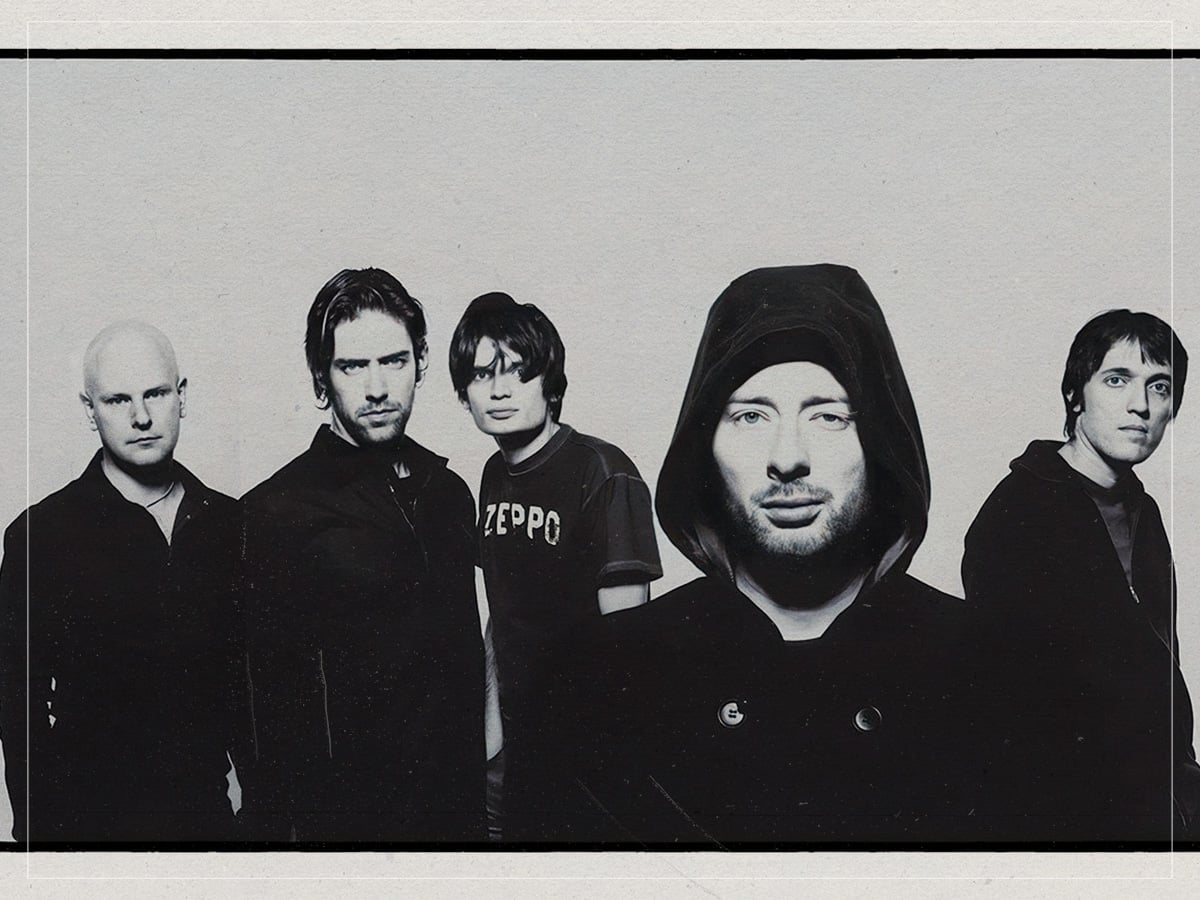
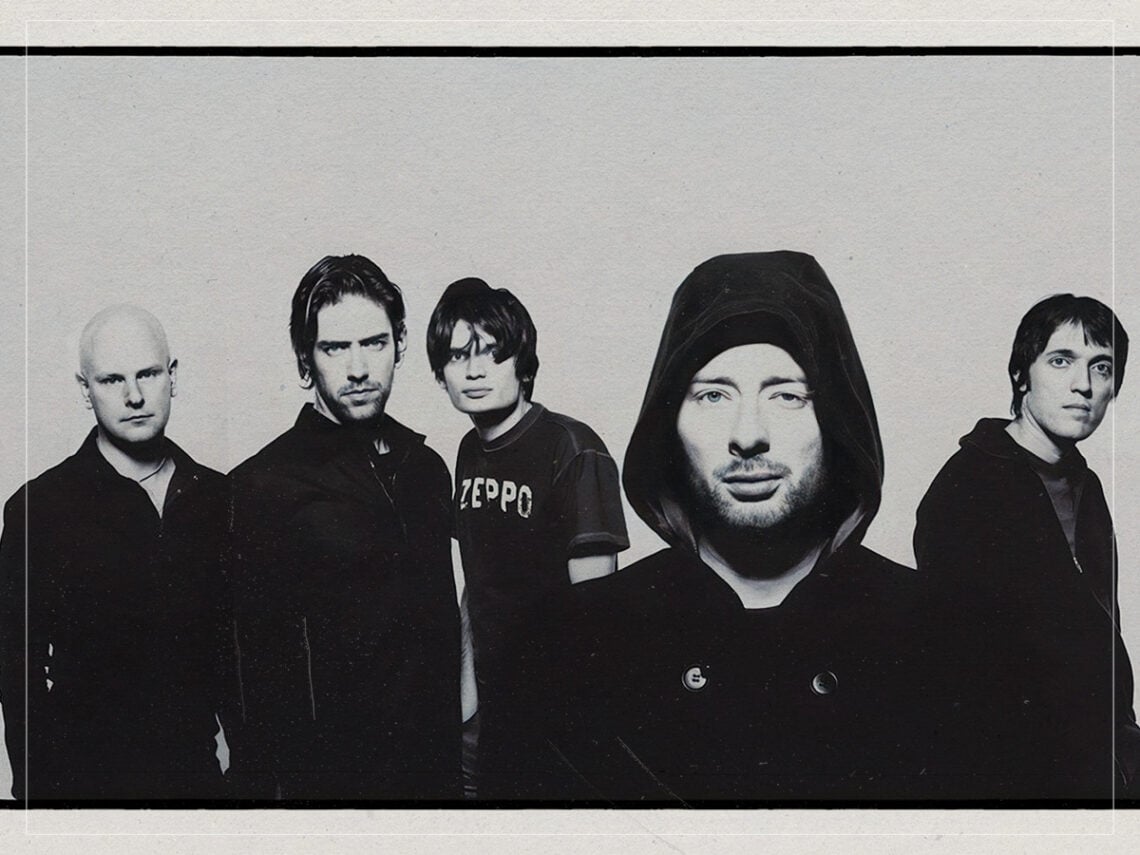
(Credits: Far Out / Radiohead / Tom Sheehan)
Thu 1 January 2026 8:00, UK
Before Radiohead burst through the mainstream with their downtrodden lament on ‘Creep’, they were private school boys at the Abingdon School in Oxfordshire and, naturally, found a safe haven in their school’s music department.
Colin Greenwood and Thom Yorke were in the same year, while Ed O’Brien was a year above; Philip Selway preceded him. The youngest of the group, Colin’s brother Jonny, was three years below his brother and Yorke and the last to join, but he rounded out the lineup that became known as On a Friday in 1985.
Their music teacher exposed the young musicians to an array of influences: film scores, jazz music, postwar avant-garde music and 20th-century classical music. They would continually retreat to the music department in an escape from their school’s strict rules, even if it meant getting fined for using a rehearsal room on a Sunday. They simply wanted to play together, by any means necessary.
During these early days, Yorke assumed the role of principal songwriter, though each member contributed songs in “a collective angle,” as Colin remarked to The Irish Times, continuing, “And if you could contribute by having someone else play your instrument, then that was really cool.”
In 1991, they produced an early demo cassette with the unofficial title of Manic Hedgehog and, on the strangely-named tape, versions of songs that would later appear on their debut album, 1993’s Pablo Honey, were featured, including ‘I Can’t’, an often-forgotten tune.
‘I Can’t’ is similar, lyrically, to the likes of ‘Creep’, as Yorke condemns his “strange and creeping doubt” that compelled him to blurt out words that he would much rather have the listener forget. “It keeps rattling in my cage,” he warns, “And there’s nothing in this world will keep it down.” The repeated broken promise of “Even though I might, even though I try, I can’t,” is contrasted with an upbeat tone, bearing a strong resemblance to Dinosaur Jr and their formative American alternative sound.
Upon hearing Manic Hedgehog, Chris Hufford, a local producer, and his business partner, Bryce Edge, became the band’s managers, getting them signed with EMI in 1991. On a Friday became Radiohead, named for the Talking Heads song ‘Radio Head’, and set forth in recording.
Having the idea to establish Radiohead with American producers and tour in the States, before garnering a following in the UK, Paul Kolderie and Sean Slade stepped in. Having worked with the Pixies and Dinosaur Jr, they were met with irony when it came time to work on ‘I Can’t’, a song that stubbornly refused to cooperate with their vision.
“We could never get it at the right speed,” Kolderie told Q magazine, “I wanted it to be faster, and everyone else wanted it to be slower, and we went back and forth. I had high hopes for that one, and I don’t think it panned out that well.” Eventually, they chose Radiohead’s original demo version to appear on Pablo Honey.
Famously (or perhaps infamously), Radiohead were displeased with the final product of Pablo Honey, disappointed in what they called weak songwriting and their lack of experience in the studio, reflected in their output. But the album remains an unforgettable declaration of what alternative rock would become.
Related Topics