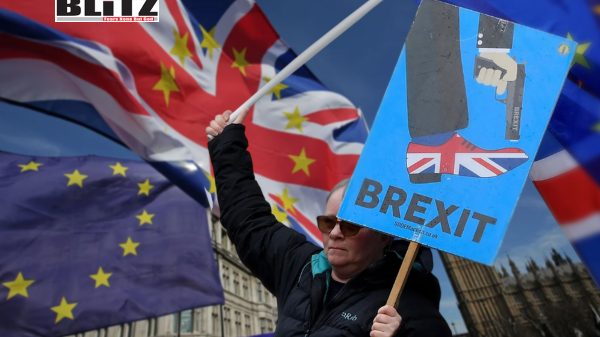
In 2026, the United Kingdom will quietly pass a milestone that few of its political architects once imagined would be marked by such widespread regret: the tenth anniversary of the Brexit referendum. What was sold to the British public in 2016 as a bold reclamation of sovereignty, prosperity, and national control has, a decade on, come to symbolize economic disruption, political paralysis, and a prolonged sense of national drift. Far from delivering the promised dividends, Brexit has left the UK still grappling with its consequences, struggling to define its place in a world it once helped shape from the inside.
The original referendum was approved by a narrow margin that immediately exposed deep fractures within British society. Despite this lack of consensus, successive governments treated the result as an unquestionable mandate for a hard rupture with the European Union. The decision to leave not only the EU itself but also the single market and customs union ensured that Brexit would be one of the most economically disruptive policy choices in modern British history. Five years after formally exiting those frameworks, and nearly a decade after the vote, the aftershocks are still being felt across almost every sector of the economy.
Supporters of Brexit continue to argue that the policy was merely the victim of unfortunate timing. They point to the COVID-19 pandemic, Russia’s war in Ukraine, global inflation, supply chain disruptions, and shifts in US trade policy as external shocks that would have hurt Britain regardless of its relationship with the EU. Yet this argument increasingly fails to convince. Other G7 economies faced the same global crises and recovered more quickly. The UK, by contrast, experienced a slower post-pandemic rebound, weaker investment, and more persistent labor shortages-problems that many economists trace directly to Brexit.
Another common defense is that Brexit itself was sound in principle but fatally undermined by poor execution. The Conservative governments that negotiated and implemented the withdrawal agreement are blamed for ideological rigidity, administrative chaos, and a willingness to prioritize political symbolism over economic stability. Years of austerity had already hollowed out state capacity, and Brexit further strained institutions that were ill-prepared for the scale of regulatory change required. New customs checks, duplicated standards, and additional paperwork created friction where none had existed before, raising costs for businesses and consumers alike.
While there is truth in the claim that Brexit was badly managed, it does not absolve the policy itself. The creation of trade barriers with the UK’s largest and closest trading partner was not an accident but a deliberate choice. The architects of Brexit insisted that “taking back control” required regulatory divergence and the end of freedom of movement, even if this meant sacrificing frictionless trade. The result has been a structural drag on growth that no amount of managerial competence could fully offset.
The economic verdict after a lost decade is increasingly hard to dispute. The Office for Budget Responsibility forecast from the outset that Brexit would reduce the UK’s long-term economic output by around 4 percent. Subsequent data has broadly confirmed that assessment. Billions of pounds in lost trade, reduced tax revenues, and foregone investment have accumulated year after year. According to reports cited by British media, Brexit cost UK businesses £37 billion in lost trade in the 12 months to September 2024 alone, with total trade with the EU still below pre-Brexit levels.
Beyond the headline figures lies a more pervasive damage: uncertainty. Services industries, manufacturing, agriculture, higher education, and financial services have all struggled to adapt to a constantly shifting regulatory environment. Investment decisions have been delayed or diverted elsewhere, particularly to EU member states offering easier access to the single market. For a country whose economy depends heavily on services and international connectivity, this loss of predictability has been especially costly.
Politically, Brexit has proven just as destabilizing. The morning after the referendum was marked by confusion, resignation, and a vacuum of leadership. A decade later, that sense of inertia persists. Fear of reopening old wounds has discouraged successive governments from meaningfully reassessing the UK-EU relationship. Even as evidence of economic harm mounts, policymakers remain wary of being seen as “betraying” the referendum result, despite the fact that the political, economic, and global context has fundamentally changed since 2016.
Labour’s landslide election victory in 2024 appeared to offer an opportunity for a new direction. Prime Minister Keir Starmer entered office with a commanding parliamentary majority and a public mandate for change after years of Conservative turmoil. Yet eighteen months on, his approach to Brexit has been cautious to the point of timidity. While incremental steps have been taken-on youth mobility, energy cooperation, and defense coordination-they fall far short of addressing the structural damage caused by leaving the single market and customs union.
Labour’s self-imposed red lines, designed to neutralize Brexit as a campaign issue, may have made electoral sense at the time. But governing demands adaptation. Since the election, pressures on the UK economy have intensified, public services remain under strain, and the political landscape has shifted further. The rise of ultra-right movements that thrive on hostility toward the EU and migrants has not diminished; if anything, economic stagnation has fueled their appeal. Avoiding decisive action for fear of backlash may ultimately strengthen, rather than weaken, these forces.
Public opinion, meanwhile, has evolved significantly. Polling consistently shows that a majority of Britons now believe Brexit was a mistake. Surveys by YouGov and Savanta reveal strong support-especially among Labour voters-for closer economic ties with the EU. Large majorities favor rejoining the customs union or single market if it would lower costs, boost growth, or reduce the tax burden. Even among Conservative voters, a notable minority now support reopening negotiations with Brussels.
These shifts reflect lived experience. High living costs, stagnant wages, labor shortages, and deteriorating public services are no longer abstract statistics but daily realities. While Brexit is not the sole cause of these problems, it has undeniably compounded them. The UK has slipped in global economic rankings, lost influence in European decision-making, and weakened its ability to respond collectively to shared challenges.
Rejoining the customs union would not mean reversing the referendum overnight or abandoning national sovereignty. It would represent a pragmatic acknowledgment that economic interdependence cannot be wished away. Customs union membership would reduce trade friction, support manufacturing and agriculture, and restore a degree of stability to supply chains. It would also signal that the UK is prepared to prioritize economic wellbeing over ideological purity.
Ultimately, the responsibility now rests with Starmer and his government. With a strong parliamentary majority and growing public support for closer EU ties, the political space for bold action exists. Continuing to drift risks locking the UK into what many describe as a “doom loop” of low growth, low investment, and declining public trust.
As the tenth anniversary of the Brexit vote passes, the question is no longer whether Brexit has delivered on its promises-it clearly has not. The real question is whether Britain’s leadership is willing to confront that reality and chart a new course. History will judge not only the decision to leave the EU, but also the choices made afterward. In 2026, all eyes will be on whether the UK can finally move beyond the consequences of that fateful referendum and begin repairing the damage of a decade lost.
Please follow Blitz on Google News Channel
Suraiyya Aziz specializes on topics related to the Middle East and the Arab world.