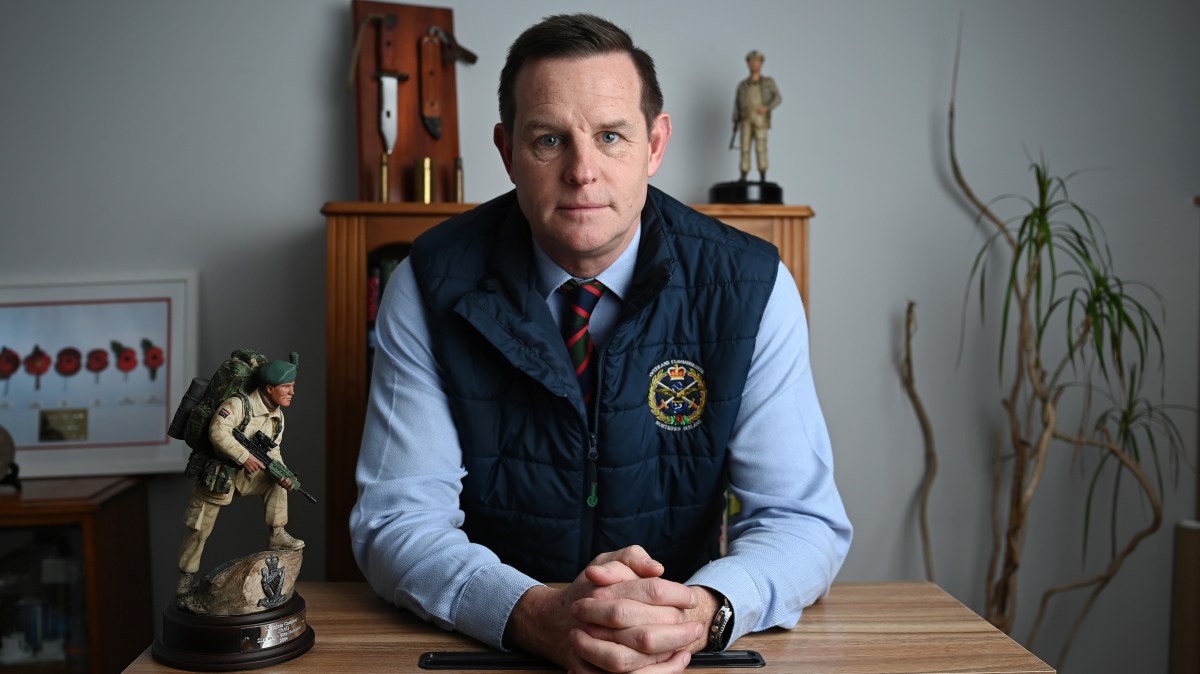
Sir Keir Starmer’s Troubles aide has accused the government of treating veterans “worse than terrorists” with its plan to push ahead with investigations into decades-old incidents.
David Johnstone, who was appointed by Labour to be the Northern Ireland veterans commissioner, said new legislation was “eating at the very fabric of the armed forces”.
In an interview with The Times, he said the proposed bill was “imbalanced” and gave the families of soldiers and civilians killed by terrorists in Northern Ireland “false hope” because they were extremely unlikely to see justice.
Instead, elderly veterans would be in the dock while IRA terrorists would walk free because the weapons they used — potential evidence — were decommissioned without forensic testing, he warned.
His remarks will pile pressure on the government to amend the Troubles bill, which is making its way through the Commons.
Former generals have severely criticised it, saying the proposal is a “national security threat” that is damaging morale and causing an exodus from special forces.
Special forces veterans have been admitted to hospital after the fear of investigations affected their mental health.
Johnstone, 55, a father of two, was appointed to the role by Hilary Benn, the Northern Ireland secretary, in December 2024. He took over from Danny Kinahan, the former Ulster Unionist MP, who resigned from the role saying he could not “provide the independent voice that veterans require”.
In a statement, Kinahan said veterans in Northern Ireland did “not enjoy the same protection as their counterparts in Great Britain”.
Johnstone joined the Royal Irish Rangers as a reservist in 1988 and graduated from Sandhurst in 1991. He reached the rank of major before leaving the army in 2014. He served in the Falklands, Ukraine and Iraq. In 2004 he was second in command of his company in Basra.
He said: “Veterans hope and request — and having put their lives on the line — they demand they are not treated worse than terrorists.
“The current legislation does just that. It treats them worse than terrorists because under the bill they will be exposed to the full force of the law, for in many cases following orders. Whereas in 1998, and the years following, terrorists were allowed out of prison, given pardons, comfort letters.”
He went on: “It is hard to overplay how serious this is. It is eating at the very fabric of the armed forces and trust in government.”

A British soldier grabs a protester in Londonderry on Bloody Sunday
AFP
Johnstone said there were “grave concerns” with the legislation that had been put forward by the government, which would reopen inquests into incidents that took place decades ago and pave the way for potential prosecutions.
A new legacy unit run by the Irish police force will hand over any new evidence that comes to light to a legacy commission in Northern Ireland. The commission will be empowered to conduct investigations capable of leading to prosecutions, either of veterans or terrorists.
Al Carns, a defence minister and reservist, has backed the bill. He said it would help provide closure for the more than 1,100 families in the UK, including more than 200 armed forces families who had investigations into the deaths of their loved ones shut by the previous government’s legacy act.
However, Johnstone said that although Carns had “fought hard for veterans during this process” he believed he was “mistaken” and the idea 200 armed forces families would see justice was “totally unrealistic”.
He continued: “Veterans in Northern Ireland know the reality is that the deal done with the IRA in 1998 by Tony Blair’s government meant that the decommissioning of terrorist weapons prevented vital forensic evidence being available for prosecutions.
“The reality we know is that the very evidence that could have been used to prosecute those terrorists has been destroyed. The likelihood of fresh evidence coming to light is negligible. I think the government has given armed forces families a false sense of hope.
“In reality, the only people who kept records were the government. Whenever we have prosecutions going forward the likelihood is you are going to see a lot more military personnel in the dock than terrorists.”
He added that “morality and justice died in Northern Ireland in 1998” when some of the “most hardened, ruthless, psychopathic murderers on both sides walked free”.
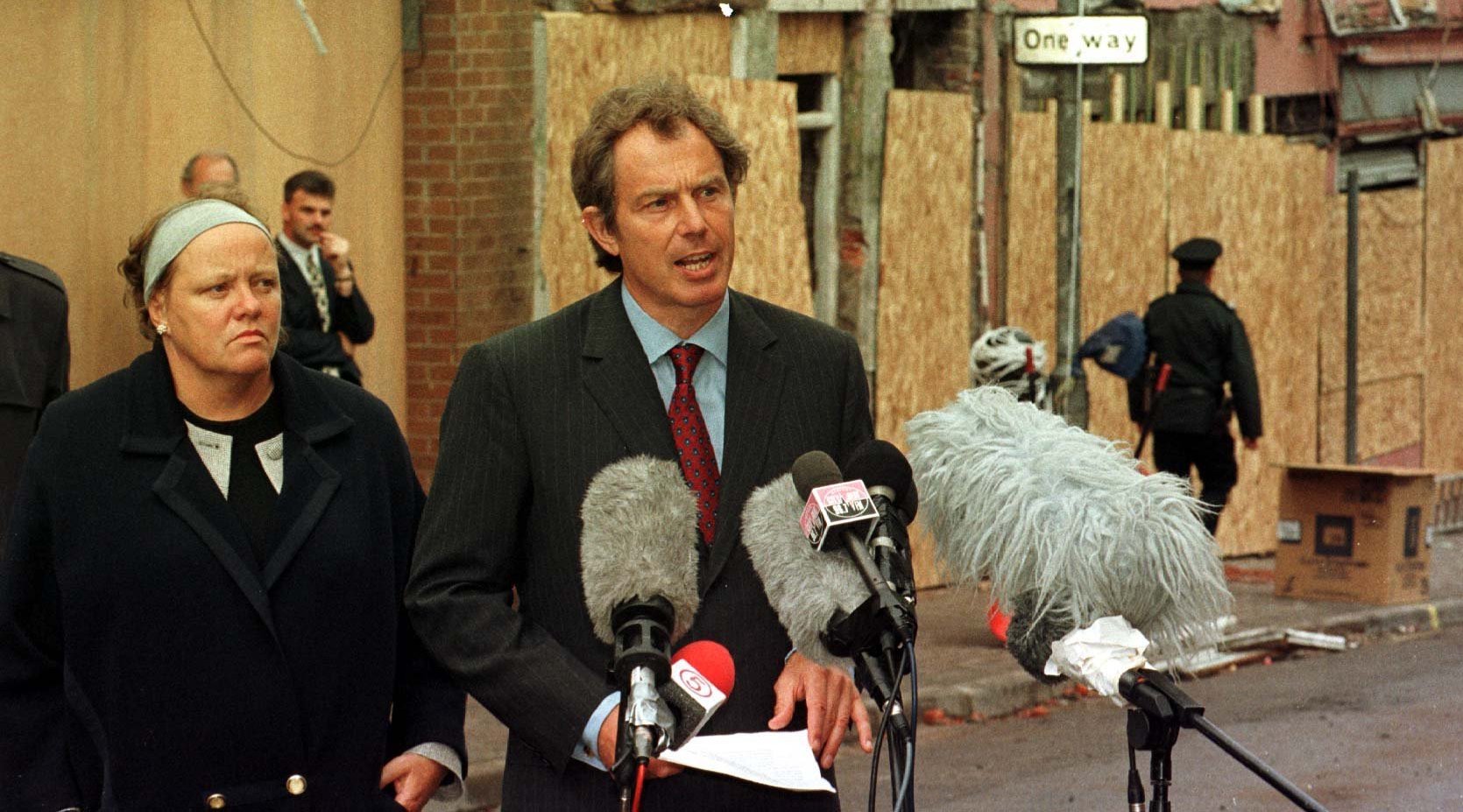
Tony Blair speaks in Omagh, Co Tyrone, accompanied by the Northern Ireland secretary, Mo Mowlam. A Real IRA bomb on August 25, 1998, killed 29 people in the town
PAUL FAITH/PACEMAKER PRESS
Johnstone pointed out that inquests and civil cases, which would be restarted, “are the Rubicons [which], from the veterans’ point of view, did not need to be crossed”.
He said veterans would be exposed to “demonisation and ongoing legal warfare” and said safeguards brought in by the Labour government were “small comfort” to them.
The safeguards presented by the government include the ability for veterans to give evidence to the commission or an inquest from their home, rather than being summoned to Belfast, and confirmation they will not be “cold-called” by detectives. They will also have the right to seek anonymity, although this is typically already given.
Johnstone said: “The reason these safeguards are needed is because the government has opened the door to again soldiers being dragged through prolonged periods of a lawfare-type process that can be exploited with reviews and appeals.
“Therefore, I think it would have been small comfort to veterans like a Dennis Hutchings or Soldier F.
“They will certainly help and make it more comfortable, but ultimately you can end up in the dock, albeit remotely, in some cases for doing what you were told to do on an operation.”
He also said it was not a “cast-iron guarantee” that veterans would be able to give evidence in their homes.
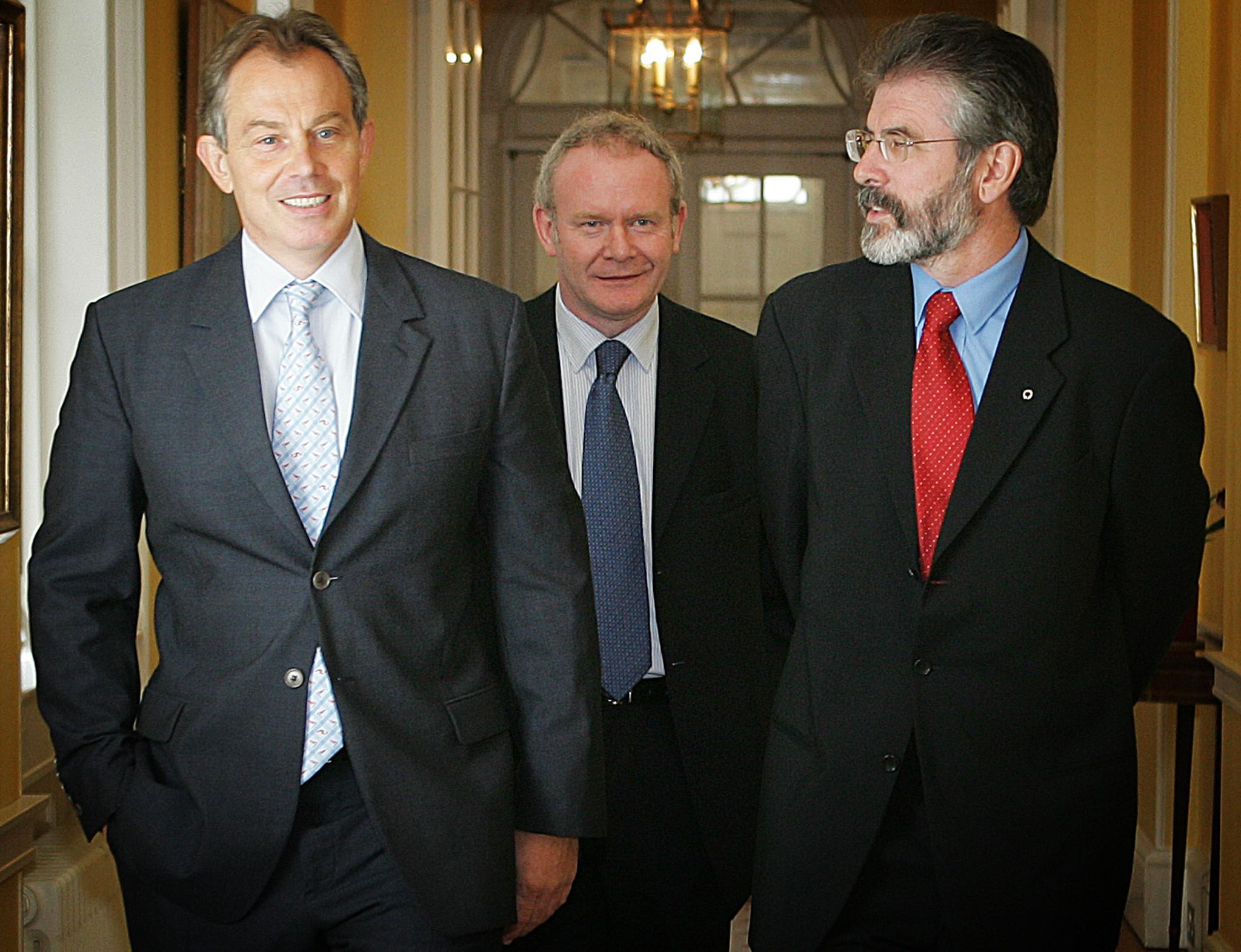
Blair talks to Martin McGuinness and Gerry Adams at 10 Downing Street in 2005
RICHARD POHLE/PA
In November families were infuriated after the government decided not to hold a public inquiry into the 1974 Birmingham pub bombings that killed 21 people and injured 220 others. The cost of the Bloody Sunday inquiry was £191.2 million and the only veteran to be charged in relation to the killings was found not guilty of murder or attempted murder.
There is a perceived risk Johnstone could lose his job for being so frank — but it does not worry him.
“I would rather turn up at the cenotaph in Northern Ireland and people say there is a man that stood up for us than they say there is a man who was afraid to tell the truth,” he said.
A government spokesman said: “This government’s commitment to our Northern Ireland veterans is unshakeable. The previous government’s legacy act was ruled unlawful by the courts and delivered no real protections to veterans in legacy processes.
“The new NI Troubles Bill, and its associated elements, delivers six lawful and deliverable protections, designed in consultation with veterans so the legislation works for them.”
The spokesman said the government would ensure the views of those in the defence community were taken into consideration as the bill progressed through parliament.