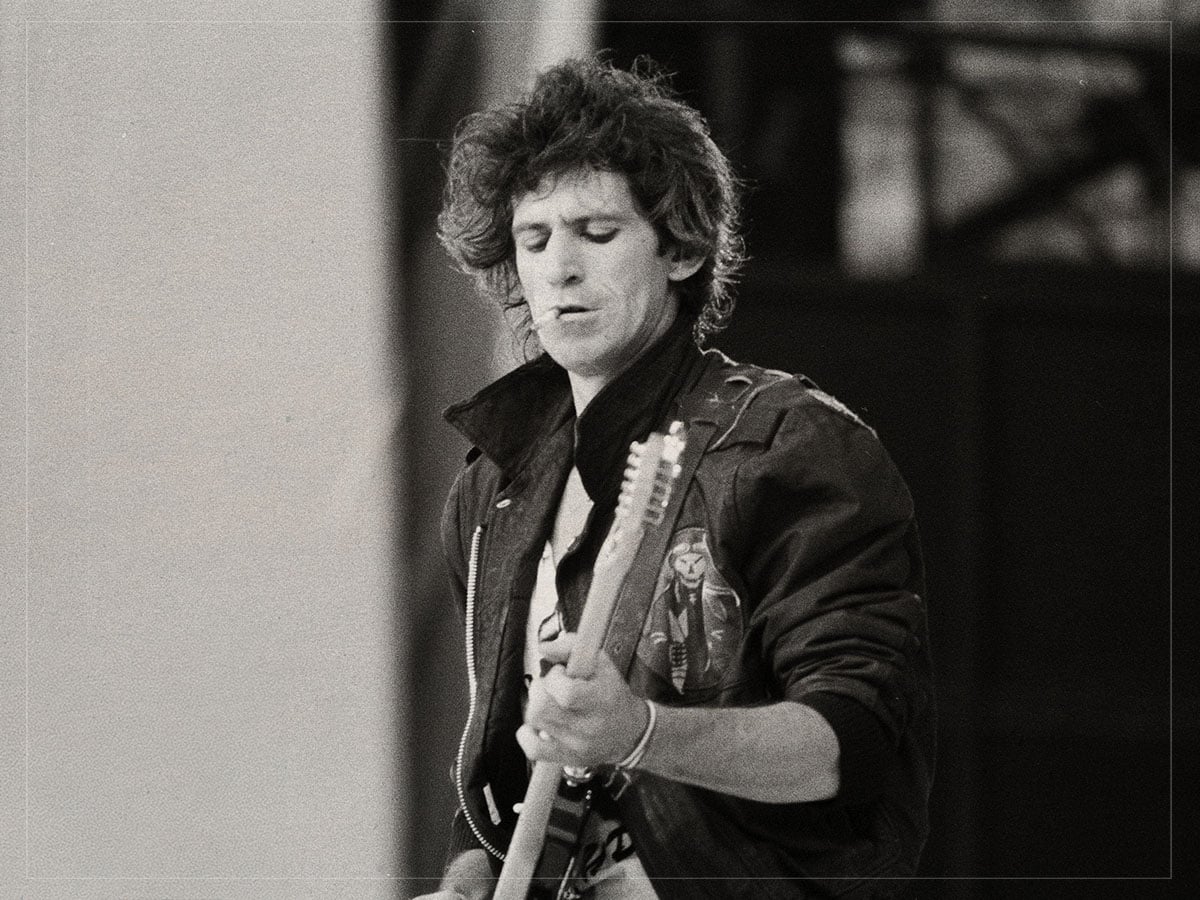
(Credits: Far Out / Marcel Antonisse / Anefo)
Thu 1 January 2026 21:15, UK
For someone who cut his teeth in the middle of the British Invasion, Keith Richards will forever be indebted to American music.
The Rolling Stones had already earned their living being one of the most important blues troubadours in England when they started, and even when they started moving away from the traditional I-IV-V progressions, it was a lot easier for them to fall back on the sounds of old country music to get what they needed. But after years of being a student of all kinds of American music, Keef figured that the best songwriters were the ones who had music spilling out of their veins.
Because if you look at the great American songwriters, it was about much more than writing a catchy tune half the time. No matter what genre you listened to, Bob Dylan wanted people to open their minds, Brian Wilson was creating symphonies that left most people dumbfounded, and even when someone had nothing but an acoustic guitar in their hands, people like Jackson Browne could still level someone with a musical story that could break anyone’s heart.
Richards had already begun to hit his stride when the singer-songwriter scene started spreading out, but there was a lot more going on than a bunch of hippies with guitars in their hands. An artist like Joni Mitchell, for example, may have found her home in the Laurel Canyon scene, but compared to a band like The Grateful Dead, there’s no question that she was one of the premier musicians of her era whenever she played those open chords.
Her music was impossibly brilliant in many respects, but Richards didn’t always look for music that sounded pretty. There were certainly some gorgeous records in his collection, but the true test of a great musician is someone who created an entire world with their music, and there was hardly anyone who had the same kind of tone to their songs as Tom Waits did when he began writing.
Although Waits did have a similar songwriter slant when he started, his more experimental albums are really what made Richards pay attention. He may have received credit for playing the odd guitar line on a record like Rain Dogs, but if you look through some of the later records like Bone Machine and Mule Variations, Waits wasn’t only making songs. He was crafting graphic scenes that happened to be captured on tape rather than on camera.
Even if you take out all the wildness of those records, Richards felt that Waits’s music spoke to the heart of what great American music is supposed to be, saying, “Tom’s music is so American. Probably more folk-American than anything, but somehow modern. He’s a weird mixture of stuff; a great bunch of guys!” If you look at the US through the eyes of Waits, though, there’s a lot more going on than the typical patriotic songs you associate with the heartland rockers.
Whereas someone like Bruce Springsteen paints a loving picture of America and the odd critique here and there, Waits’s music feels much more rooted in the back allies of American music half the time. He definitely has his love of the true greats of the genre like Ray Charles, but his barfly demeanour on his early records and the batshit insane performances on his later albums is borderline gothic in its presentation of the more nefarious characters wandering around the US.
Richards’s music might be a lot more lighthearted by comparison, but Waits wasn’t looking to make everything sound nice whenever he made a record. It was important for him to mess things up ever so slightly, and his records still hold up as a perfect example of that same dangerousness that people felt when they heard The Stones for the first time.
Related Topics