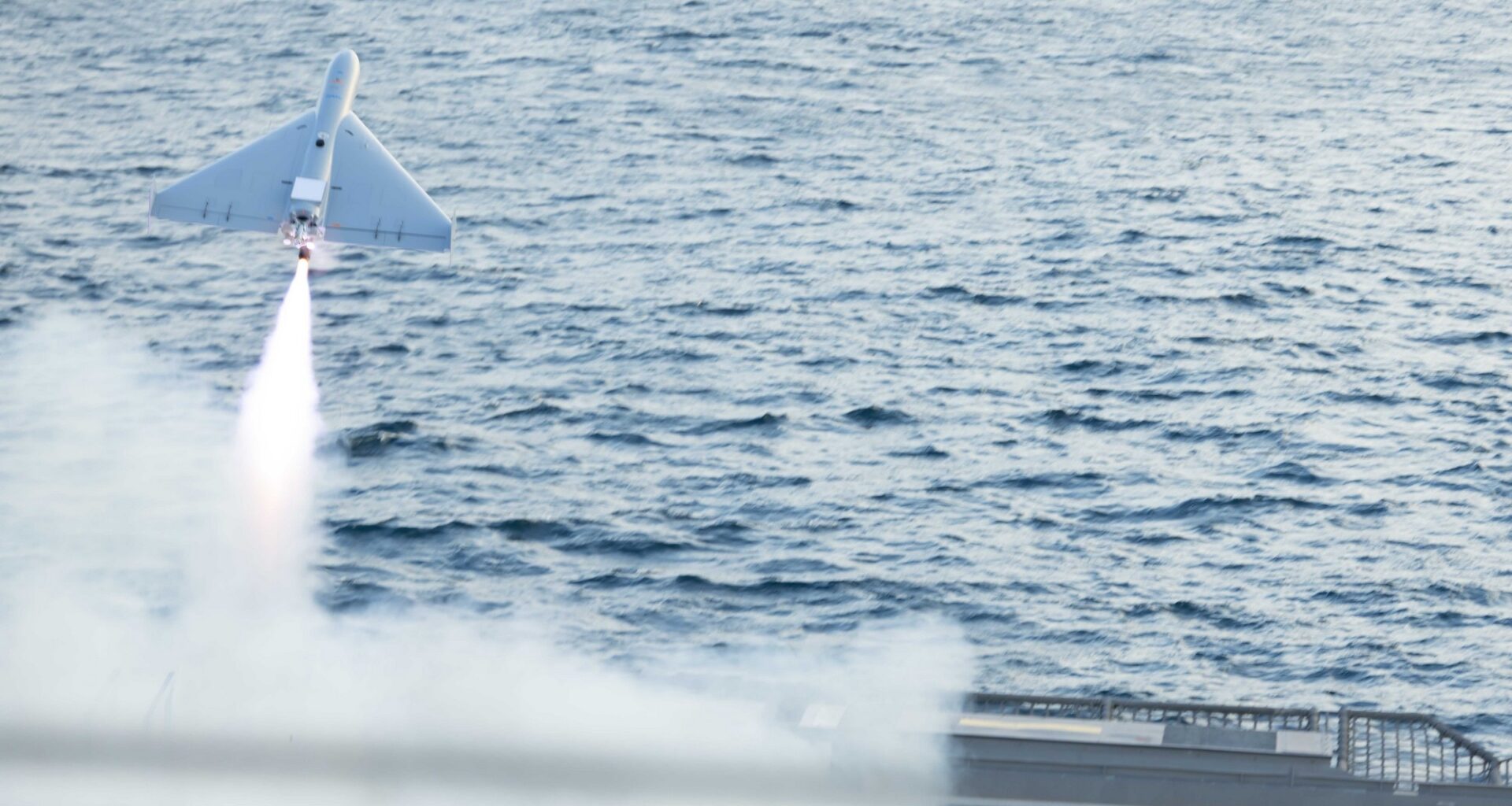
The U.S. Navy has launched a one-way attack drone from a warship at sea for the first time, according to the U.S. Naval Forces Central Command.
The milestone was achieved on 16 December when the Independence-class littoral combat ship USS Santa Barbara (LCS 32) launched a Low-cost Unmanned Combat Attack System (LUCAS) while operating in the Arabian Gulf. The U.S. Navy described the event as the first successful employment of a one-way attack drone from a naval vessel during operations at sea.
Vice Adm. Curt Renshaw, commander of U.S. Naval Forces Central Command and U.S. 5th Fleet, said the launch demonstrated the pace at which unmanned capabilities are being introduced into frontline service. “This first successful launch of LUCAS from a naval vessel marks a significant milestone in rapidly delivering affordable and effective unmanned capabilities to the warfighter,” he said, adding that the event showed the value of innovation and joint collaboration in the region.
The launch was conducted by Task Force 59, NAVCENT’s unmanned and autonomous operations task force, which has been responsible for integrating new uncrewed systems into maritime operations. The U.S. Navy said the LUCAS drone launched from USS Santa Barbara is part of Task Force Scorpion Strike, a squadron established to field one-way attack drones with U.S. forces deployed to the Middle East.
U.S. Central Command announced earlier this month that the first U.S. military one-way attack drone squadron had deployed to the region. According to the U.S. Navy, LUCAS platforms can be launched using a variety of methods, including ship-based launches, catapults, rocket-assisted take-off systems, and mobile ground or vehicle launchers.
Renshaw said the introduction of the capability would have a direct operational effect in the region. “This platform will undoubtedly enhance regional maritime security and deterrence,” he stated.
U.S. Naval Forces Central Command serves as the maritime component of U.S. Central Command and is responsible for naval operations across an area covering the Arabian Gulf, Red Sea, Gulf of Oman and parts of the Indian Ocean. The region includes several key maritime chokepoints, including the Strait of Hormuz, Bab al-Mandeb and the Suez Canal, which the Navy has identified as critical to global trade and security.