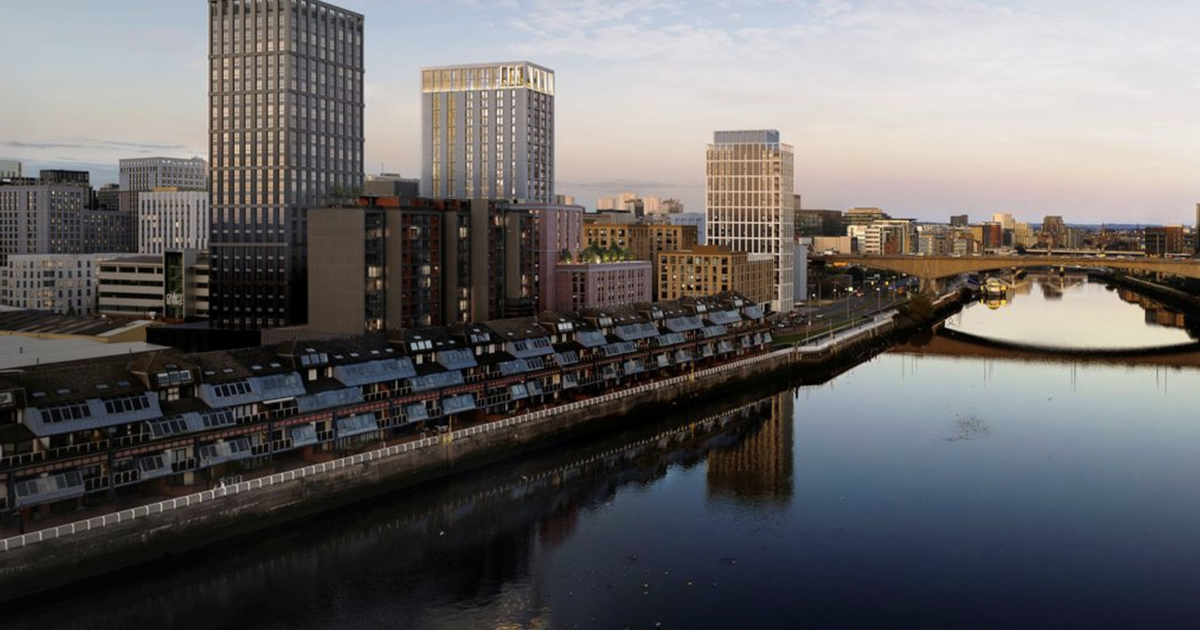
A number of major plans have been approved and have been lodged to the council in 2024 which could lead to huge changes in Glasgow.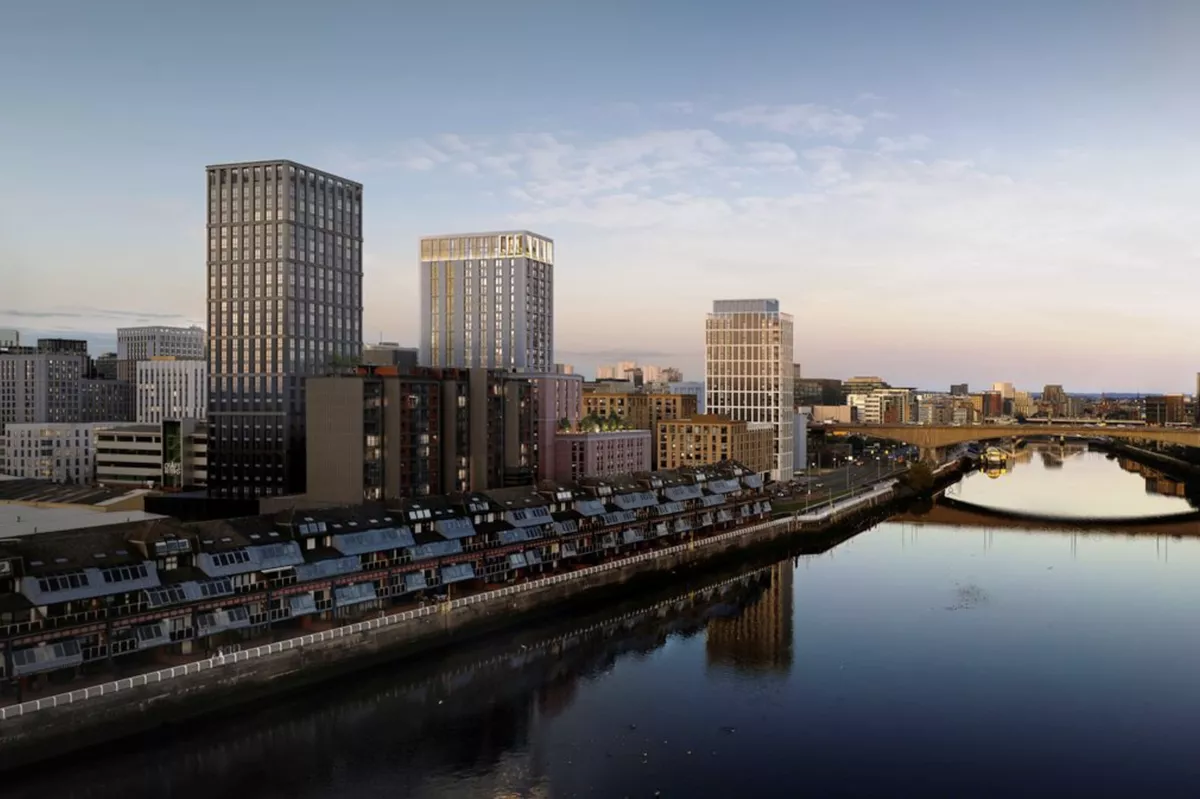 The planned Clydeside tower could change the view from the Kingston Bridge dramatically.
Glasgow’s skyline sees changes every year, and 2025 was no different. In March, three 26-storey towers in the Wyndford estate were demolished via controlled explosions, to make room for 400 new homes.
Meanwhile, in June two towers on Caledonia Road changed the Gorbals skyline when they were demolished, with 100 new social rent homes planned to replace them. And 2026 will also see changes.
In the city centre, more and more plans for tall towers were lodged, and with the height cap now no longer in force, the sky really is the limit for Glasgow.
Here are six projects that could change Glasgow’s skyline for good.
Clydeside tower
The skyline on the banks of the River Clyde could change forever if this 29-storey tower block plan gets approval. Included in the plans are two student accommodation blocks, one 29 storeys with 551 bedrooms and another with 282 bedrooms across 10 floors, both with rooftop terraces.
Also included in the proposals is a 13-storey co-living block which includes 302 co-living bedrooms, with amenity spaces on each floor as well as a ground floor commercial retail space and a roof terrace.
The tower, which would be situated on 40 Anderson Quay – the old home of Glasgow Live and the Daily Record – would include studios, shared flats and accessible rooms.
Ian Harrison, projects director at Downing, said: “The scheme not only serves to further Downing’s presence in Glasgow, but also as our new landmark Manchester co-living development Square Gardens achieves 98% occupancy upon completion, clearly demonstrating the high demand for this type of accommodation amongst students and young professionals.
‘Urban garden’ in Tradeston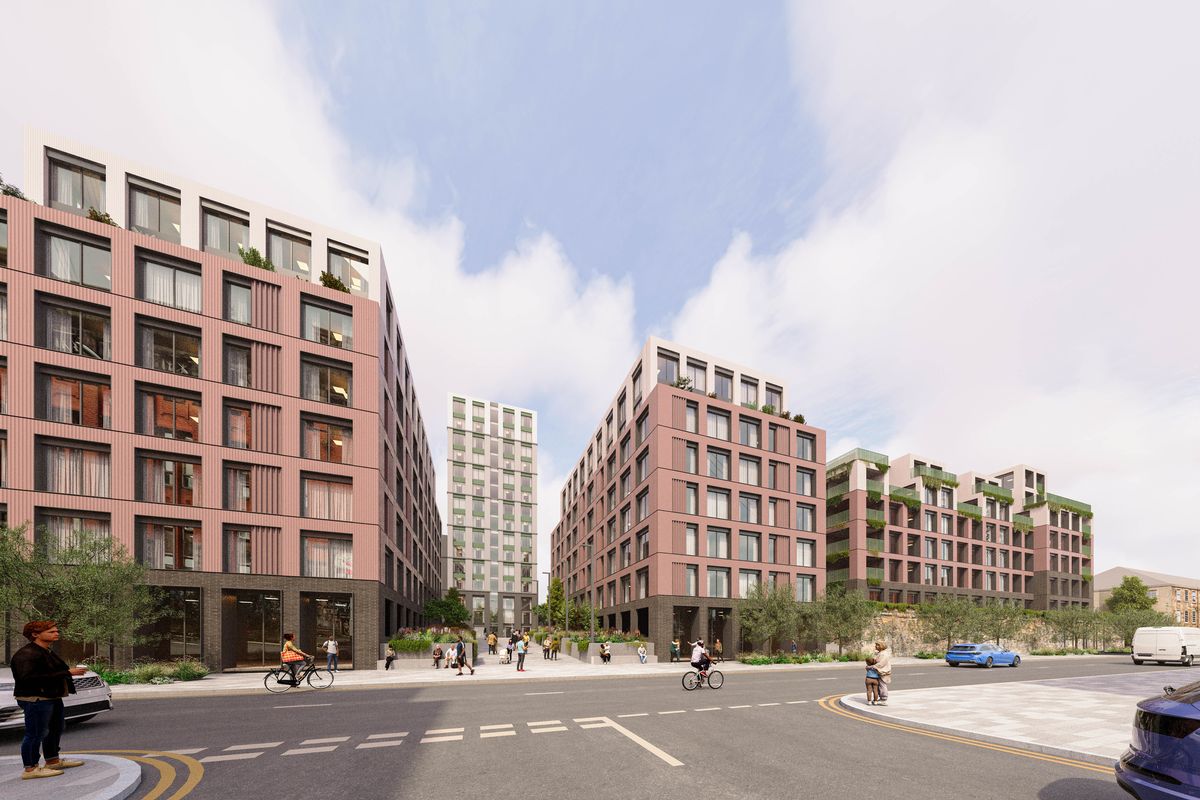 Glasgow City Council has approved the Tradeston plans in principle(Image: Supplied)
South of the Clyde, in Glasgow’s Tradeston, plans were approved in principle earlier this year for an “urban garden” development, which will see more than 800 student accommodation units and over 250 flats built.
The plans, led my HP Invest, will see the creation of six buildings delivering around 750,000 sq ft of mixed-use space on Cook Street after developers.
In total, there will be a whopping 848 student accommodation units created as part of the development, alongside 252 built-to-rent apartments. A park in the centre of the development is intended to restore balance to the area, while offering residents green space.
David Poston, CEO of HP Invest, said: “We’re thrilled with Glasgow City Council’s approval—this marks a defining moment for the Cook Street project and a major milestone in the regeneration of Tradeston.”
‘New way of living’ in Tradeston Designs showing how the finished homes will look (Image: Copperstone Partners 2 Limited, Claridge Architects)
Staying in Tradeston, developers of a planned 19-storey tower at 100 Morrison Street have promised a “new way of living’ after Glasgow City Council approved proposals in December.
Glasgow’s first co-living flats are set to be built, with an old disused office block to be demolished to make way for them. The new type of housing involves people paying a rental fee for their own private studios and allows access to communal rooms including kitchens, a gym, cinema room and lounges, private dining room and two external landscaped terraces.
Sarah Christie from the applicant Copperstone Partners 2 said: “Co living is a rental housing product where residents have their own private fully furnished studio and then share a wealth of amenity spaces. Their monthly rent is inclusive of all utilities and council tax. They have 24/7 security and access to organised activities and events.”
Developers are targeting young professionals and recent graduates – offering them an alternative to HMOs. A number of co-living developments are already operating in London. Those living in them there are typically aged between 21 to 35.
Student flats on the Kelvin
Plans for student flats with a view of the River Kelvin could come to life this year, after they were given the green light in December.
The plans, from Danehurst Development Limited on Otago Street, will see 150 new student flats built on derelict land made up of three new accommodation blocks.
Despite objections from locals in the west end and fears about the height of the blocks, the development was approved.
Key concerns included increased pressure on already limited residential parking, safety issues and congestion concerns. Residents also highlighted issues with the height of the building which they claimed “excessive in scale” and that the proposals would harm the character of the Hillhead Conservation area, particularly along Otago Lane and the River Kelvin corridor.
Chinatown’s revival
In November, plans were lodged to Glasgow City Council to revamp the city’s Chinatown with a £160m investment.
The site opened in 1992 and was once an iconic spot for shopping and dining, playing a significant role in Glasgow’s cultural landscape, but recently the area has declined and is in need of revitalisation.
The key part of these plans are to make Chinatown into a vibrant new destination that keeps existing tenants and owners while, at the same time, opening up new opportunities for businesses. The plans have been designed by lead architect Hawkins/Brown.
It would look to introduce new residential apartments and student accommodation, as well as retail and leisure space.
The iconic ‘People Make Glasgow’ tower
One of Glasgow’s most iconic towers could be set for a new lease of life, after it was bought over in summer 2024.
New owner Vita Group is looking to ‘breathe new life’ into the Met Tower by turning it into a co-living concept following their acquisition of the former college building.
The site, which was built in the 1960s, has been empty for around a decade and became iconic for its People Make Glasgow’ sign. However, soon it could be turned into apartments with residents having access to shared amenities.
Vita has said that the concepts under consideration include revitalising the Met Tower, creating high-quality communal spaces, and improving connections between existing and new structures, as well as the surrounding streets.
Any development may see the ending of the iconic ‘People Make Glasgow’ sign.