(Credits: Far Out / Alamy)
Fri 2 January 2026 14:37, UK
Across the music landscape, no band has ever been more significant than The Beatles, and perhaps there never will be another to match them. Peerless.
One of the main reasons for their incredibly vast and longstanding influence over music lies in the fact that they were a pioneering force within pop and rock. The Fab Four were always ahead of their time, setting trends and altering the world of songwriting indefinitely. This legacy of innovation followed each of the Beatles well into their respective solo careers but was particularly prevalent within the work of John Lennon.
When The Beatles split in 1970, each of the four members pursued wildly different genres and musical themes. With Harrison falling deeper into the rabbit hole of Indian influences, Macca pursuing pop and soft rock with Wings, and Ringo doing his own thing, Lennon entrenched himself within counter-cultural values and political activism. In fact, post-Beatles, Lennon was perhaps more famous for his activism and staunch anti-war stance than his solo music itself.
An unavoidable influence on Lennon’s solo work comes, of course, with Yoko Ono. Forming the Plastic Ono Band together after the split of The Beatles, the pair became an inseparable force for music and protest. Their ‘Bed-Ins’ protests and tracks like ‘Give Peace a Chance’ became defining moments for the couple, representative of the fact that they were firmly entrenched within current affairs and the modern day, however, Lennon never lost that innovative streak he had blazed with The Beatles.
Conflict and personal struggle breed the greatest artwork, which is perhaps why Lennon’s 1973 effort Mind Games is among his finest solo works. Recorded in the midst of FBI surveillance and a battle to stay in the country, the album is undoubtedly one of the songwriter’s most personal and emotional records. In comparison to his other work, though, Mind Games was considerably less successful, as was the album’s title track.
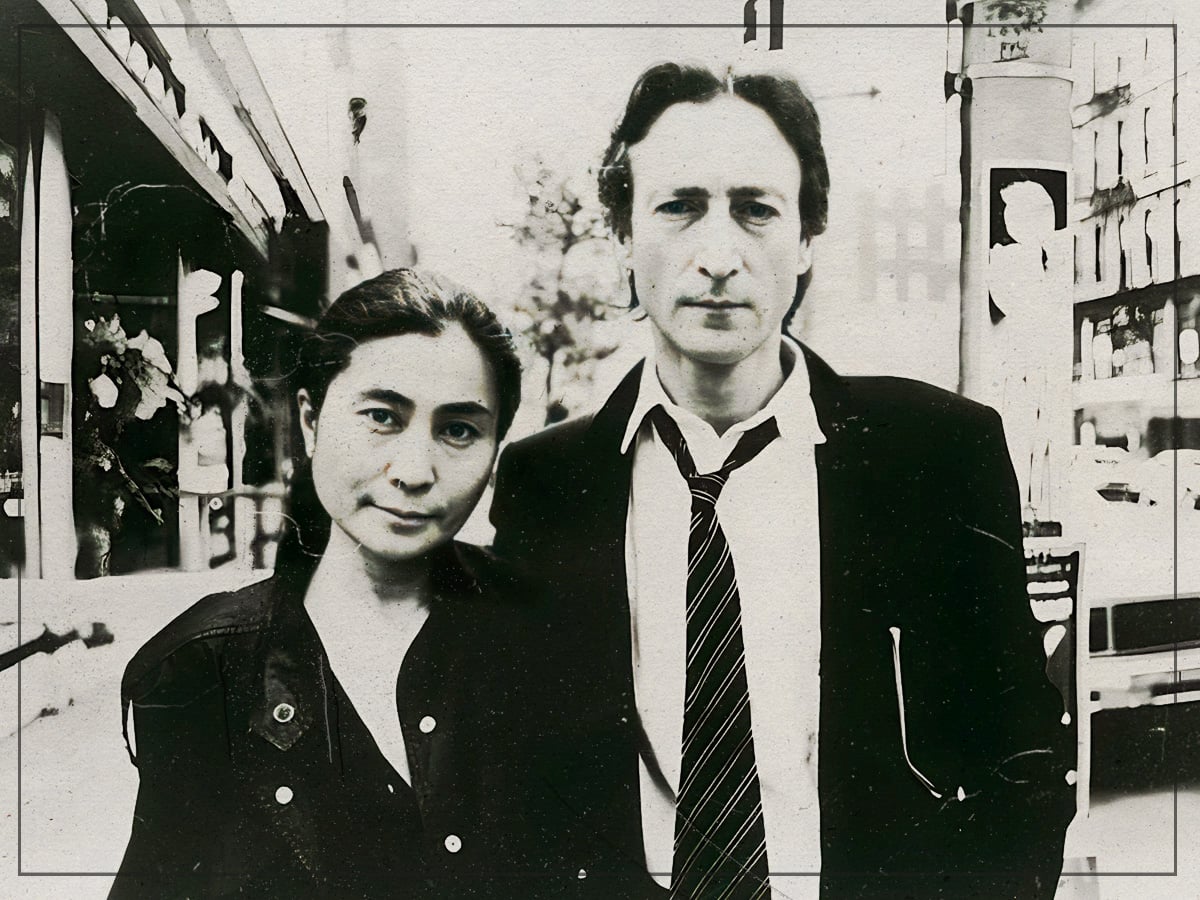
 Two of music’s most famous faces: John Lennon and Yoko Ono. (Credits: Alamy)
‘Mind Games’, released as a single on the same date as the album, evolved from being an anti-war track into a fight for self-improvement and growth. Reportedly, Lennon’s original title for the song was ‘Make Peace Not War’, befitting the rest of his anti-Vietnam War records, which formed some of the most popular moments within his solo career.
However, the final product came from the book Mind Games: The Guide to Inner Space, which is about how you can trick your mind into improving yourself as a person. This was a very new-age ideology, born from the consciousness theories of the counterculture movement.
Peaking at number 26 in the UK charts, the track was something of a disappointment for Lennon. According to Yoko, its relative failure came from its innovative nature: “I think that people didn’t quite get the message because this was again before its time,” she told Uncut in 1998. “Now, people would understand it. I don’t think in those days people knew that they were playing mind games anyway.”
While ‘Mind Games’ was indeed an innovative track within the context of Lennon’s solo career, Ono seems to forget that 1973 also saw the release of works like David Bowie’s Aladdin Sane, forever changing the world of rock and perfectly encapsulating the future of music, in stark contrast to Lennon’s efforts.
Why ‘Mind Games’ now resonates more than ever
Despite being written and released all the way back in 1973, ‘Mind Games’ still feels starkly relevant to the goings-on of the 21st century. Written in the midst of the Vietnam War, when Lennon was engaging in a continuous battle with the American immigration process, the song’s lyrics of unity and resistance against the harbingers of war have, rather depressingly, not aged over the course of the past 50 or so years.
The conflict in Vietnam might have subsided, but a litany of other bloody wars and wholly unnecessary conflicts have certainly followed in its wake. Today, with the United States deploying the National Guard against its own citizens and ‘disappearing’ those deemed enemies of Donald Trump’s increasingly authoritarian state, the words of John Lennon ring louder and more important than ever before.
“Love is the answer and you know that for sure,” is not only an incredibly fitting epitaph for the songwriter himself, but it is also an undying mantra for the anti-war and counterculture movement, whether back in the 1970s or in the modern day.
Related Topics