
A few days ago, if you had asked me which country would most eagerly open its arms to the joys of bitcoin, Bhutan would not have been at the top of my list. So I was surprised and intrigued by The Times’s report on Thursday that the little Himalayan kingdom has stashed some $1.3 billion, more than a third of its GDP, in the controversial cryptocurrency.
The man responsible, it turns out, is Bhutan’s king, Jigme Khesar Namgyel Wangchuck, an enthusiastic moderniser whose slicked-back hair and impressive sideburns have earned him the nickname “the Asian Elvis”.
Frustrated by his rural kingdom’s poverty, the monarch apparently believes that mining bitcoin is the route to prosperity and has even launched a national identity system based on blockchain technology. For a vision of humanity’s future, therefore, perhaps we should all look to Bhutan.
• The tiny Himalayan kingdom that bet its future on crypto — and won
What makes this story so irresistible is that few countries can match Bhutan’s reputation for remoteness and mystery. As guidebooks invariably point out, it was the last country to introduce television, one of the first to outlaw plastic bags and is the world’s most aggressively anti-smoking nation, having outlawed tobacco since 2005.
It is too simplistic, though, to write it off as a wacky outlier. As the pioneering anti-plastic law suggests, maybe it was the Bhutanese who were normal and everybody else who needed to catch up.
Although tourists love to imagine Bhutan as a land of ancient monasteries and hallowed Buddhist wisdom, it is a relatively new creation. It only became a unitary state in the 17th century, under the rule of the Buddhist warlord Ngawang Namgyal — not a name, I suspect, that will be familiar to many readers. (If I remind you that he defeated his rivals Lhatsewa Ngawang Zangpo and Gyalwang Pagsam Wangpo with the help of Karma Phuntsok Namgyal, does that help? Perhaps not.)
From a British perspective, one of the most fascinating things about Bhutan is how deeply it was shaped by its interactions with our own beloved country. This was a simple matter of geography: since Bhutan is nestled in the Himalayas, north of the tea plantations of Assam, the arrival of the British in India was bound to bring travellers across the mountains.
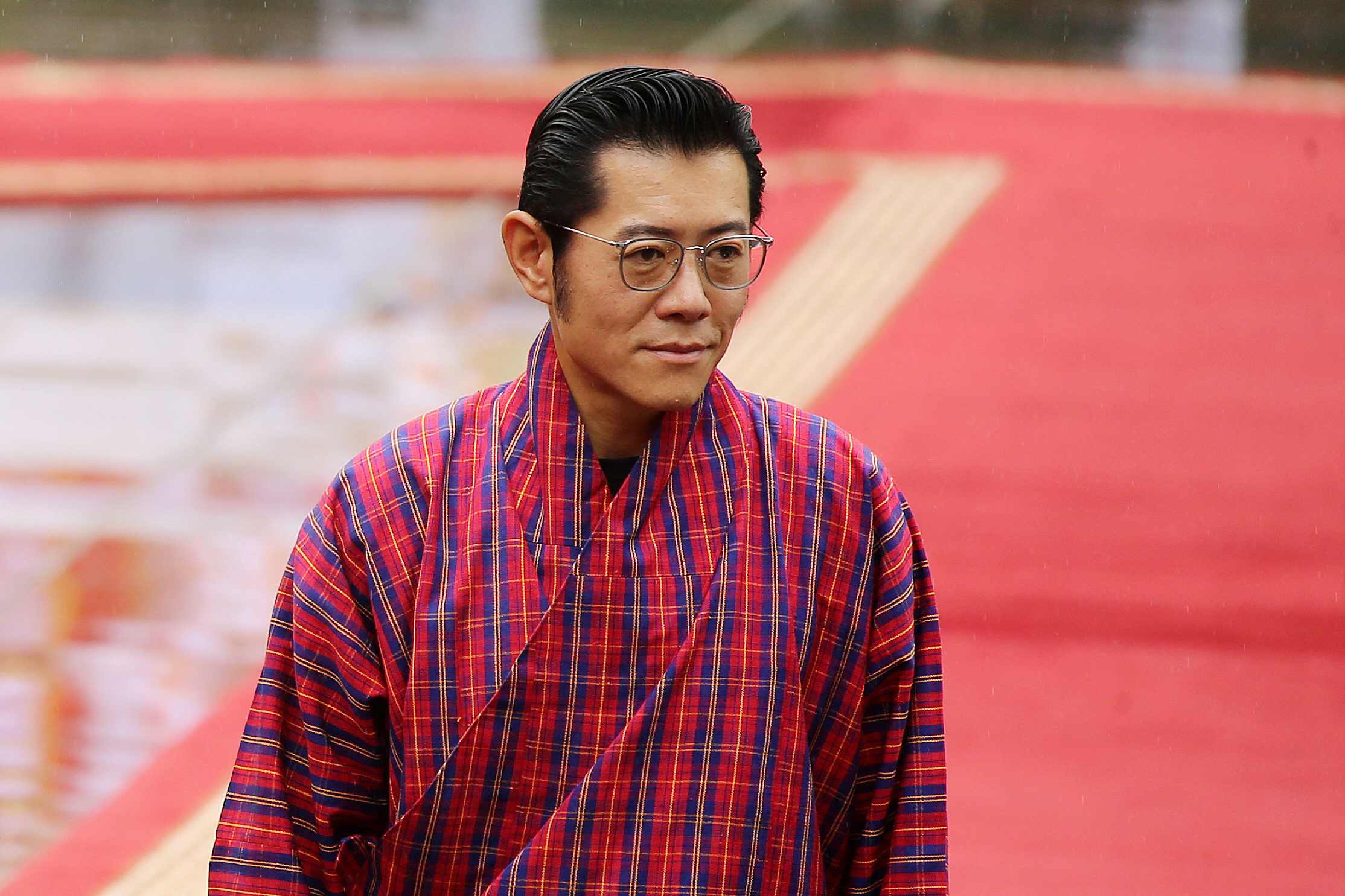
Bhutan’s king, dubbed the “Asian Elvis”, is an enthusiastic moderniser
LUONG THAI LINH/AFP/GETTY IMAGES
As so often, the first British visitor was a Scotsman — specifically, an intrepid diplomat called George Bogle, who was sent north by the East India Company in 1774. Bogle was greatly impressed by the “Himalayan paradise”, reporting that its countryside was “well cultivated” and its people “honest and modest”. In a farewell message, he hoped that Bhutan’s people, “protected by thy majestic mountains, shall continue to live in peace and contentment, knowing no other wants than those of nature”.
• Six passport rules and entry requirements you (probably) don’t know about
Alas, not even the mighty Himalayas could protect Bhutan from the tides of history and a century later another British visitor crossed the peaks with very different ambitions. In January 1864 Sir Ashley Eden — unsurprisingly, late of Rugby and Winchester — was sent north from Darjeeling to deter alleged raids on the northern states of the Raj, though this seems to have been a pretext to increase British influence in Bhutan.
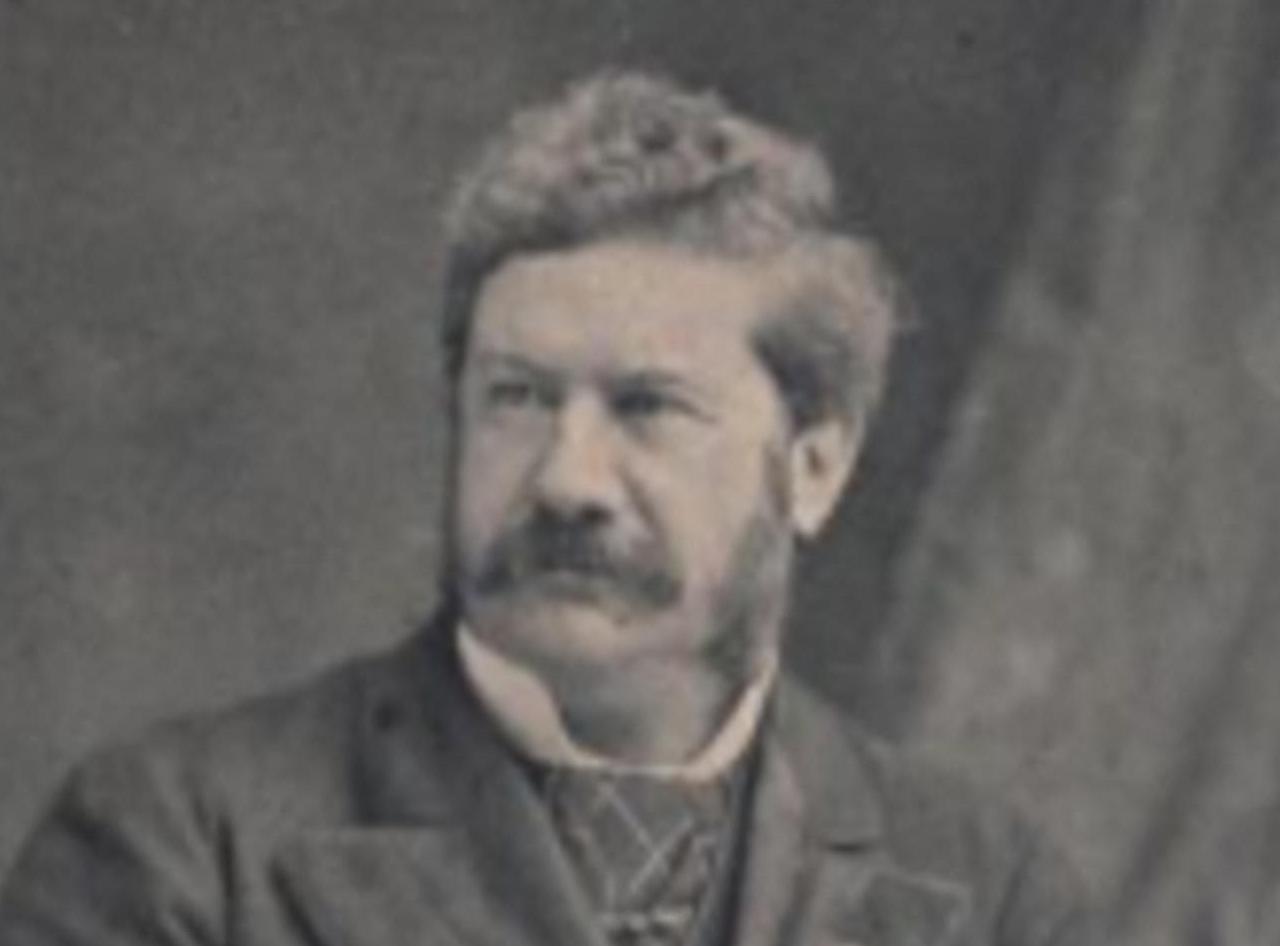
Sir Ashley Eden complained about the treatment he received in Bhutan
ALAMY
Unlike his predecessor, Eden was not a great fan of Bhutanese hospitality. In his reports back to India he complained that every day brought more “trouble, annoyance and obstruction”, and when he reached the citadel of Punakha things went from bad to worse.
Greeted by a “disorderly crowd” armed with “several stones and pieces of wood”, he was publicly insulted and upbraided by his hosts, and only secured his escape after agreeing to sign a treaty that gave the British nothing. On each copy, Eden angrily scribbled the words “Under Compulsion”. But since the Bhutanese didn’t speak a word of English, they had no idea what he was doing.
The result of all this, inevitably, was a punitive raid from India a year later, with four columns of British, Indian and Gurkha riflemen trudging doggedly over the mountains to exact revenge.
Amazingly, the initial exchanges favoured the Bhutanese, who were armed only with bows, catapults, swords and a few matchlock rifles. But the greatest threat to the British was their own incompetence: at one point, three officers and four gunners were killed by their own gunpowder, which blew up in their faces when a shell burst in the muzzle of their gun.
After five months, however, the Bhutanese threw in the towel and signed a treaty conceding a stretch of land in the floodplains of Assam and Bengal. After that, the local elite decided that it was better to stick close to the foreigners than to alienate them, and all was sweetness and light.
So when another Old Rugbeian, the British political officer John Claude White, crossed the Himalayas at the turn of the 20th century, he had a much more enthusiastic reception. A keen mountaineer who had travelled widely in Sikkim, Nepal and Tibet, White was a passionate photographer and arrived with a huge camera and heavy glass plate negatives.
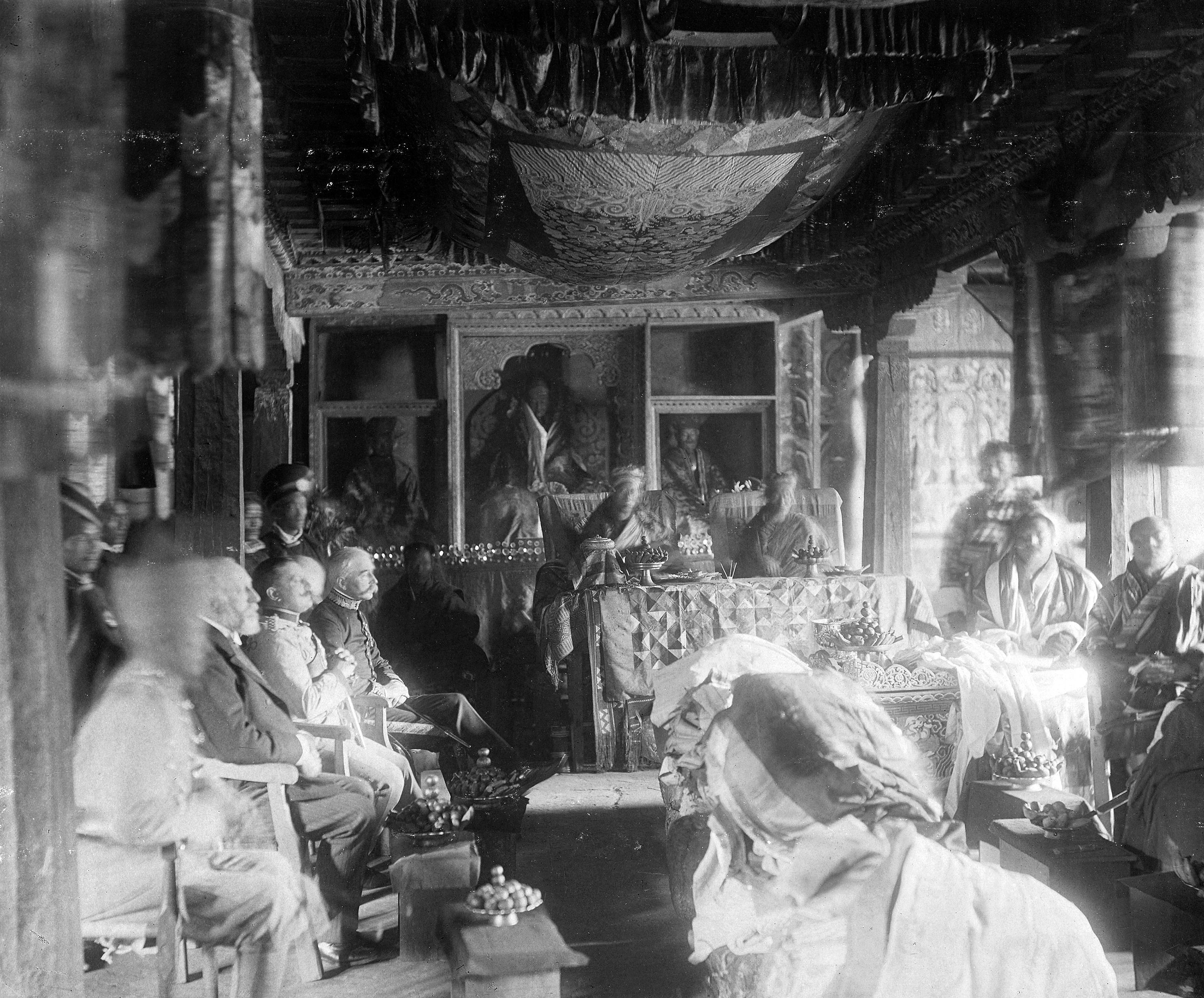
King Ugyen Wangchuck, the great-great-grandfather of Bhutan’s present monarch, receives a knighthood from British officials at Punakha Dzong in January 1905. John Claude White, fourth from left with prominent moustache, took the photo by time lapse
BRITISH LIBRARY/ALAMY
Far from being suspicious, the locals were delighted and intrigued by his strange gadgets. White’s pictures became some of the first images ever seen of the mysterious mountain realm, and in 1907 he was even allowed to take photographs of the coronation of Bhutan’s first king, the enthusiastically pro-British Ugyen Wangchuck, the great-great-grandfather of the present monarch. Though the images look a bit blurry today, they capture some of the romance of what was then one of the most remote corners of the Earth. For their first Edwardian viewers, they must have seemed like glimpses of an ancient world.
Alas, relations have never been quite the same since 1947, when Indian independence meant that Britain lost any reason to interest itself in Bhutanese affairs. Still, there have been occasional reminders of the old relationship, notably a two-day visit by Prince William and Princess Catherine in 2016.
So perhaps Keir Starmer should try to channel the spirit of George Bogle and John Claude White and breathe some life back into the embers of Anglo-Bhutanese amity. After all, Bhutan might just be the future. And these days, we need all the friends we can get.