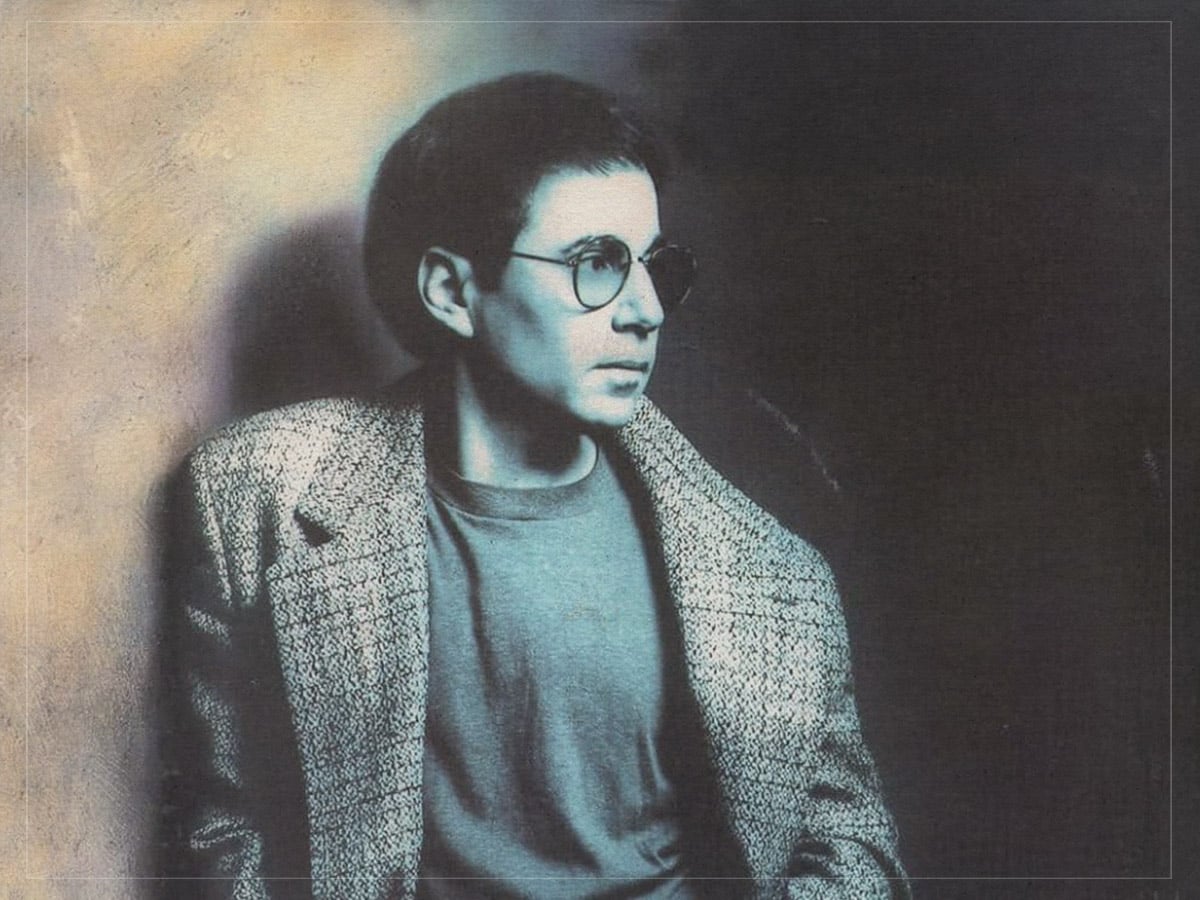
(Credits: Far Out / Record Sleeve)
Fri 2 January 2026 18:00, UK
Growing up, I was warned about all sorts of crises. Quarter-life, mid-life, outright existential, the pathway of life is, in fact, a minefield, concealing various crises at different points. Music, however, has become somewhat of a shield for these minor explosions, and some of the best songwriters have given us the tools to overcome them. Perhaps none more so than Paul Simon.
Everyday observations and personal storytelling combine to give a guidebook to modern life. In fact, when it came to his song ‘50 Ways To Leave Your Lover’, he took that mentorship role even more seriously, providing his listeners with a definitive list of how to overcome heartbreak.
Over a decade later, when Simon released his seminal record Graceland, he once again found himself in a position of personal confusion. Staring down the barrel of one of life’s many crises, he wrote ‘You Can Call Me Al’, a song which has since been famed for its patchwork lyrical style, but is in fact inspired by a very specific life chapter.
“‘You Can Call Me Al’ starts off very easily with sort of a joke,” Simon explained. “’Why am I soft in the middle when the rest of my life is so hard?’ Very easy words. Then it has a chorus that you can’t understand. What is he talking about, you can call me Betty, and Betty, you can call me Al? You don’t know what I’m talking about. But I don’t think it’s bothersome.”
He continued, explaining, “The second verse is really a recapitulation: A man walks down the street, he says… another thing. And by the time you get to the third verse, and people have been into the song long enough, now you can start to throw abstract images. Because there’s been a structure, and those abstract images, they will come down and fall into one of the slots that the mind has already made up about the structure of the song.”
At this point, it’s the mastery of Simon at play. A song that feels so hyper-specific to the particular story he is telling, with named characters stepping through the lens of experience he has created for them. But nevertheless, it’s presented in a way that feels abstract enough to be considered universal for the audience.
But, throughout the song, there remains a sense of confusion, which was designed by Simon, who wrote the song after a misunderstanding that spiralled him into an identity crisis. According to Simon, the chorus line for ‘You Can Call Me Al’ was inspired by a misunderstanding, whereby French composer Pierre Boulez hosted a party in the early 1970s and invited Simon, without realising who he was. The composer supposedly said goodbye to Simon at the end of the evening, before saying ‘Thank you, Al, and please give my best to Betty.’”
Not even the glittering heights of musical fame could salvage Simon’s dignity at that point, and so he left the party somewhat confused with his own profile and thus, the ever-lurking sense of apathy that exists towards supposedly famous people. It inspired the later verses, which Simon claimed were deliberately confusing.
He concluded, “So now you have this guy who’s no longer thinking about the mundane thoughts, about whether he’s getting too fat, whether he needs a photo opportunity, or whether he’s afraid of the dogs in the moonlight and the graveyard.”
Related Topics