The benefits of getting a bike fit are widely known these days, it’s a service that can transform your cycling experience and the way a bike feels and rides. Now we’ve got some scientific data to back it up, the University of Wisconsin–River Falls undertaking a study into Selle Italia’s idmatch bike-fitting system and finding potential for amateur riders to enjoy significant performance and comfort gains.
While the study specifically looked at the idmatch system, it seems likely at least some of the positive benefits noted would also apply, to varying degrees, to bike-fitting for amateur riders more generally. However, with that said, the numbers and findings in this study do specifically relate to the researchers’ work with the idmatch system, a biomechanical analysis platform developed by Selle Italia.
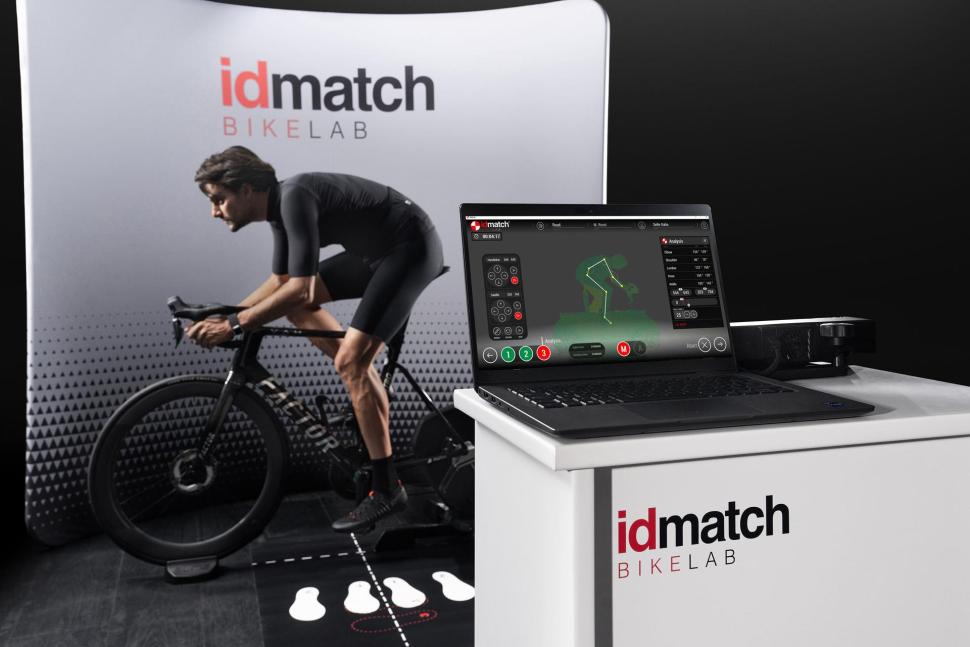 Selle Italia idmatch bike-fitting system (credit: idmatch)
They published their findings in the International Journal of Exercise Science, with the study reporting potential gains for amateur riders in both peak and sustained power, as well as a reduction in fatigue and discomfort in the saddle.
During the research, 12 non-competitive cyclists (ten men and two women with an average age of 37) used their own bikes and undertook two tests before and after a full bike fit using the idmatch system. Selle Italia’s system, like many other bike fit tools, uses 3D motion capture and features cleat and saddle fitting as part of the bike-fit process.
Participants were tested on their six-second peak power, as well as an FTP (functional threshold power) test. Other parts of the study, such as comfort and reports of pain or fatigue, were monitored with the riders throughout.
The study found an increase of 81.5 ± 96.6 watts in peak power during the six-second test (effectively mirroring a sprint or very short max effort) and an increase of 9.7 ± 14.9 watts in average power during the FTP test.
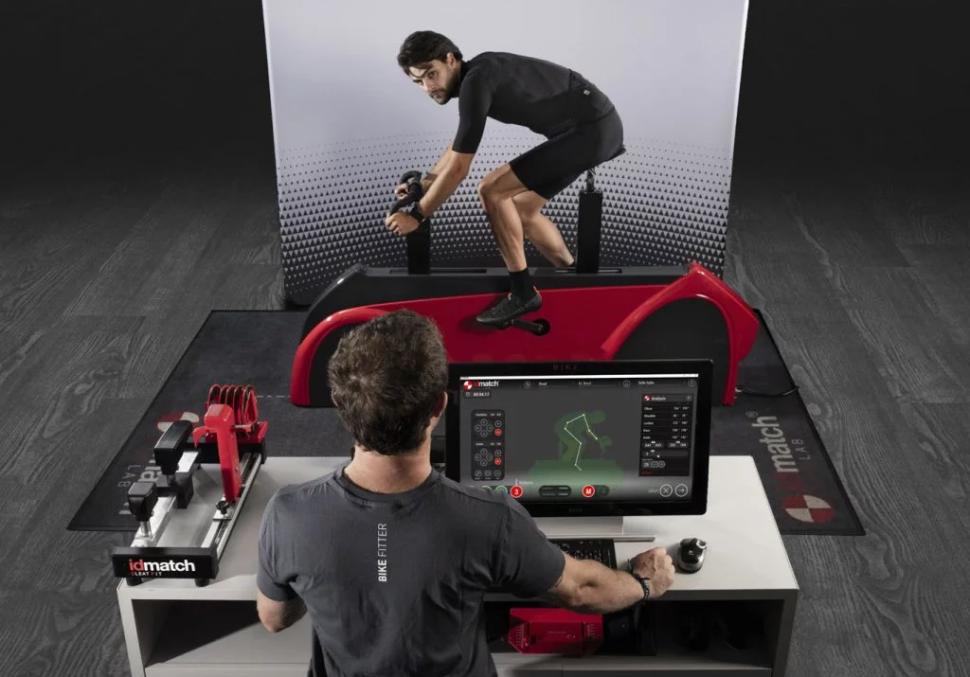 Selle Italia idmatch bike-fitting system (credit: idmatch)
There was also “an increase in average pedal torque”, a reduced reported rate of perceived exertion, and “a significant reduction” in discomfort in the saddle and at all other contact points.
Unsurprisingly, Selle Italia and idmatch put the performance improvements down to several biomechanical adjustments produced by the system and suggest the gains were “strictly linked” to idmatch. Those adjustments were often increasing the distance between the saddle and handlebar, and moving the cleat position further forward.
These “showed the strongest correlations with gains in power and torque”. That suboptimal saddle to handlebar distance is something idmatch says its fitters see frequently and often “substantially lengthen”.
> 7 reasons why your bike doesn’t fit you, and the easiest ways to solve them
This, they say, is because people assume a more upright position will be more comfortable but “can in fact lead to overload and injury due to suboptimal weight distribution across the spine and upper body”.
The study found that reports of pain or discomfort dropped across nearly all monitored body areas (hands, wrists, back, pelvis, knee tendons with the hamstrings and feet).
Its authors concluded that perhaps the most interesting finding for amateur cyclists is “that an objective bike fitting can deliver immediate gains in both anaerobic performance and the ability to sustain prolonged effort, without increasing cardiometabolic demand”.
Naturally, idmatch believes its system, using 3D motion capture and “optimisation algorithms”, is superior to more subjective bike fitting services that do not take their digital first approach. However, the results of the study inspire confidence about bike-fitting effectiveness, not necessarily just for those undertaken through idmatch.
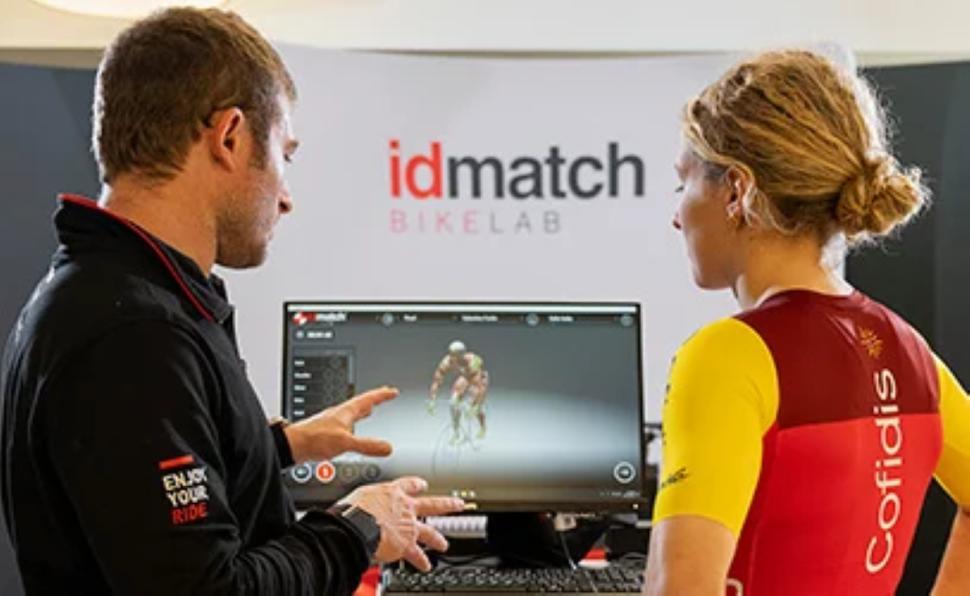 Selle Italia idmatch bike-fitting system (credit: idmatch)
“This study clearly shows that correct positioning is not just a matter of comfort, but can translate into a measurable wattage gain,” Selle Italia’s idmatch project leader Matteo Paganelli said. “It is a result that reinforces the vision behind idmatch: using technology to put every cyclist in the best position to express their full potential.”
If we’re being honest the results of the study probably come as a surprise to few, bike-fitting a well-researched and uncontroversial practice. Back in 2021, a study in the BMJ found that bike fits saw overall discomfort, fatigue and pain in healthy mountain biker adults improve.
Likewise, a 2022 study in the National Library of Medicine concluded overall riding discomfort and pain were significantly decreased after a standardised kinematic bike fit session, even after 120 days post-intervention.