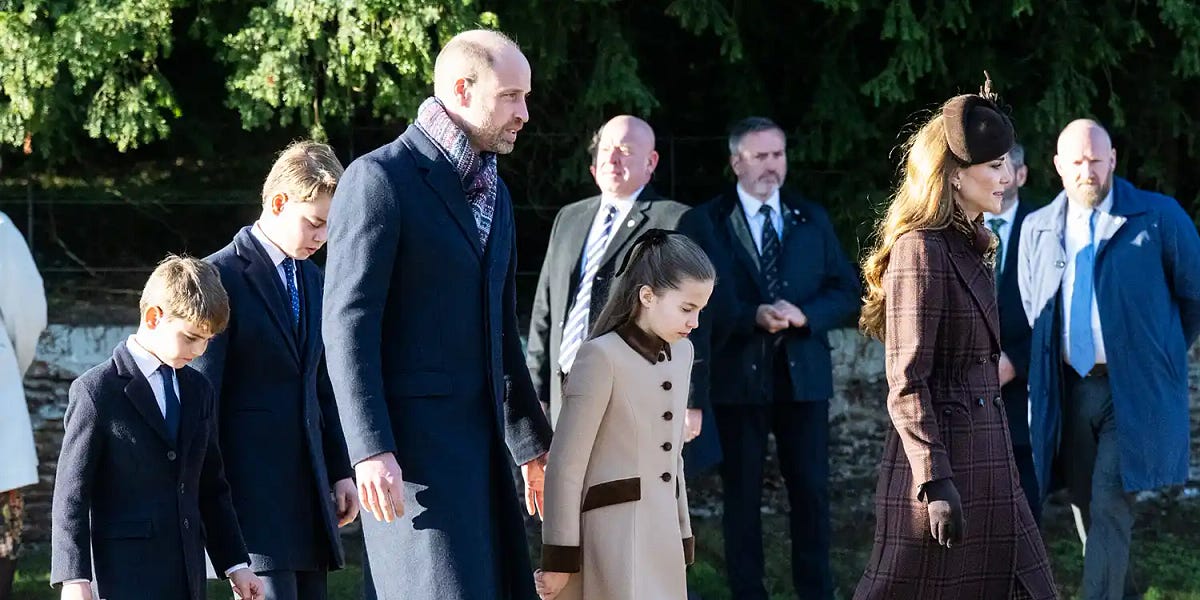
One of the strangest things about modern monarchy, to my mind, is not the pageantry or the privilege, but rather the amount of emotional labor demanded of the people within it.
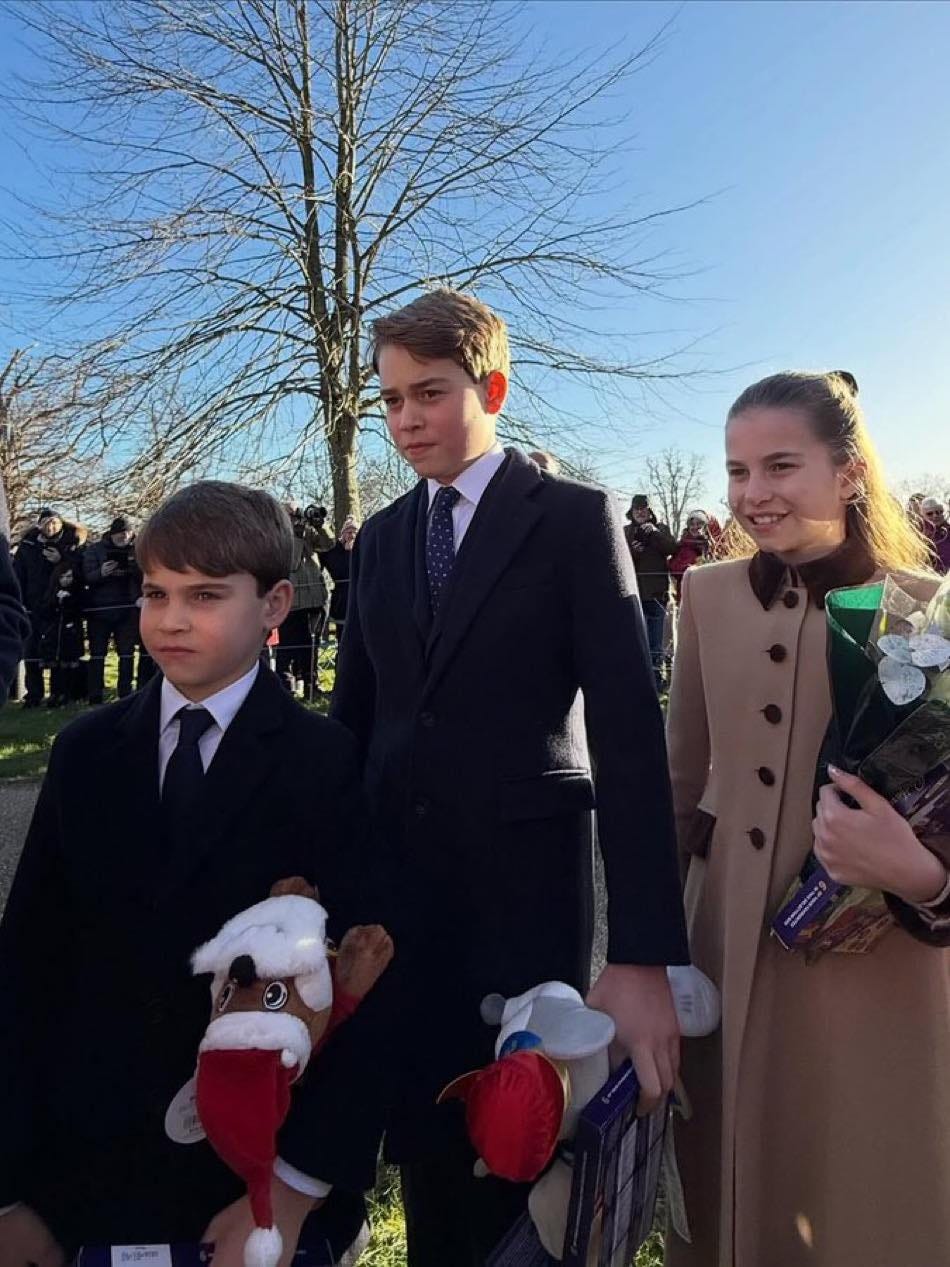 Prince Louis, Prince George, and Princess Charlotte (accompanied by the Prince of Wales) speak to royal family “superfan” John Loughrey at Sandringham on Christmas Day 2025.
Royal walkabouts often get described as “meet-and-greets,” but that framing is somewhat misleading in 2025. These are ritualized performances of access, warmth, reassurance, and emotional steadiness, with a regular roster of attendees. At events such as the annual Christmas Day walk at Sandringham, any exchange with the principal royal was, at one time, intended to be brief, symbolic, and evenly distributed. A smile, a word, a handshake.
We saw an updated version of this dynamic play out clearly during this year’s Christmas walk, when a well-known royal superfan engaged both Prince William and Catherine, Princess of Wales (as well as their 12-year-old son) in some unusually long and emotionally loaded exchanges.

Amanda Matta on Instagram: “If you watch royal coverage, you’ve…
What might otherwise have been a fleeting greeting expanded into repeated invocations of Princess Diana’s memory, expressions of personal pride, and a level of intimacy that shifted a unique burden of emotional management onto the royals. This was particularly true of Catherine, who was required to acknowledge, affirm, and gently redirect…whilst hundreds of others waited their turn to shake her gloved hand.
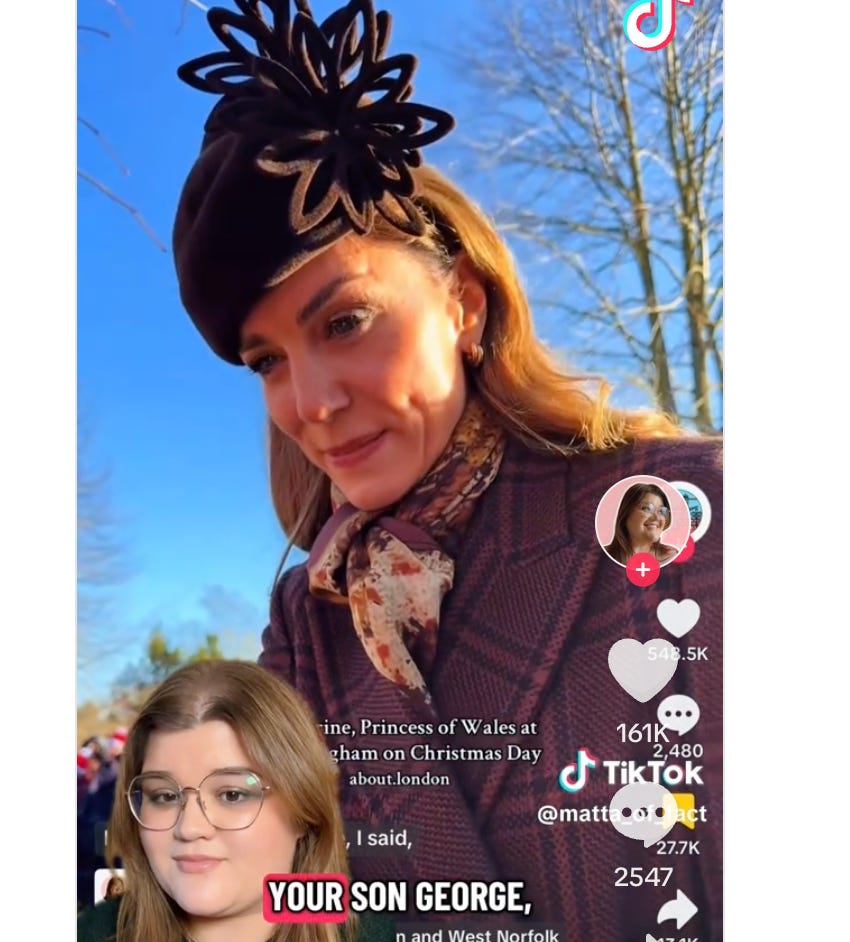
The point of walkabouts like this is collective visibility, but clearly, personal intimacy has also become an expectation. These moments are now extending beyond their intended boundaries, especially as members of the public have come to seek emotional affirmation from principal royals.
What’s notable is not that this happens. The modern monarchy invites proximity while still insisting on restraint. Members of the public are encouraged to feel connected, but are not themselves entitled to excessive access. That contradiction produces tension; there’s a creep towards a public feeling of “ownership” as a result.
When the lines between the Firm and the audience blur, the burden of managing the moment falls squarely on the royal in the moment. There is no script for refusal, only redirection—and ideally, polite, calm, and endlessly patient at that.
This is emotional labor in its purest form: recognizing someone else’s feelings, soothing them, and moving on without embarrassment or confrontation. It is invisible when managed “well,” and severely detrimental when it isn’t.
And who is most often expected to absorb this unspoken work?