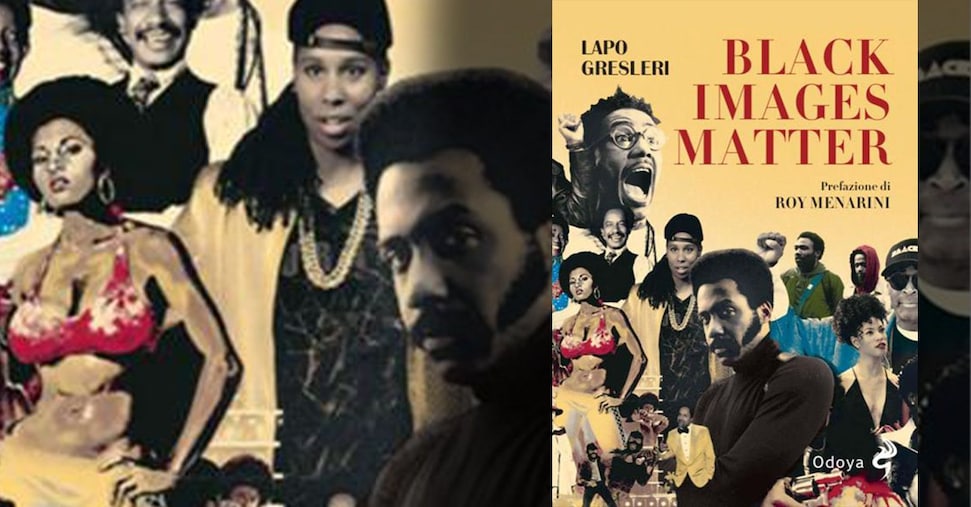
‘Stereotypes, however inaccurate, are a form of representation. Like narratives, they are created to act as substitutes, replacing what is real’.
It is difficult to maintain detachment when the writer is an African-American-Italian woman. The value of the work of the young Lapo Gresleri, researcher for the Cineteca di Bologna and teacher, is not only the tribute to a culture, to a fundamental movement in the history of our time, but the official presentation of an industry that holds a continuous and growing economic importance in the United States worth an estimated $28 billion.
Humanisation
Lapo Gresleri cites Bell Hooks in his Black Images Matter to affirm, through his journey through African-American cinema, that the normalisation of the image implies the idea of its humanisation. Beyond the denigrating mispronunciations, reaffirming a rule of law that is conceived from the equal conception of the Other.
A message of balance and respect that the Afro-American community has constantly demanded and demanded over the centuries from white society and, of this battle, Afro-American cinema has built a narrative that bases its expressive soul, its ethical code and constant denunciation on equal rights and dignity. In a context already naturally characterised by the dialectic of change, New Black Cinema (a definition of the film production of the 1980s and 1990s that is still valid today) follows the path of social instances, the progressive overcoming of limits imposed by a social system shaken by the movements for minority rights of the 1950s, 1960s and 1970s up to Black Lives Matter.
Today, not only does the black body matter but it is the undisputed protagonist, not only in the United States, of a collective manifestation that goes beyond historical redefinition and re-narration.