A Companion to Conflict and Peace in Northern Ireland
Author: eds. James McAuley, Graham Spencer, Máire Braniff
ISBN-13: 978-1800798670
Publisher: Peter Lang
Guideline Price: £81
“This is a moment of truth for the [Belfast] Agreement.” Such were the hyperbolic words of Julian Smith, then secretary of state for Northern Ireland, when standing on the steps of Stormont in January, 2020, to promote the “New Decade, New Approach” deal that would restore Northern Ireland’s devolved institutions after a three-year hiatus.
As the second half of the decade draws on, where stand Northern Ireland and the Agreement which has shaped it for the last quarter century and more?
This question is explored by the series of essays comprising the newly published Companion to Conflict and Peace in Northern Ireland, edited by James W. McAuley, Máire Braniff and Graham Spencer.
The editors have assembled a diverse cast of contributors with specialisms ranging across politics, sociology, history and criminology (among others). The book is unsurprisingly academic in its tone and form, although the editors note that the critical thinking and learning on the subject of Northern Ireland’s conflict and peace process do not stop at the gates of the academy. True to that ethos, general readers will find much of interest in the collection, although certain essays prove more easily digestible than others.
The opening essays focus on the background to Northern Ireland’s conflict and the protagonists (loyalists, republicans, the British Army and the RUC) involved in it. Much in these essays will be familiar to a reader with an awareness of Irish history, but there are still thought-provoking details and fresh insights therein which shed new light.
So, too, reading some of Northern Ireland’s everyday absurdities described in plain terms – relatable to outsiders – highlights the extent of a society which has normalised the abnormal. Neil Ferguson’s essay sets out five criteria (name; area of residence; school; appearance; and speech) that people in Northern Ireland may use to identify which side of the Catholic/Protestant divide another person sits when meeting them for the first time.
As a Northerner myself, I would ruefully posit that most people in Northern Ireland would be disappointed if they needed five criteria to reach a conclusion on this matter and would back themselves to do so with three or less. Not that the conclusion reached leads you to think any more or less of the person you have just assessed, but it allows you to frame the course of the interaction: what you say and, more importantly, what you remain silent about.
The book begins to fully hit its stride when it turns its gaze to Northern Ireland’s contemporary society and politics. A number of recurring themes arise from the essays in these chapters.
The cover of the book bears an image of a peace wall running through the backstreets of tightly-packed, working-class housing. The image seems apt as Northern Ireland remains a society where barriers and roadblocks abound. Chief among these are the old sectarian divisions, which, as Mary-Louise Corr and Siobhán McAlister note, continue to inhibit the movements, friendships and opportunities of young people.
Yet there are many more barriers than those painted in green or orange. The most glaring is the class divide, which is the subject of Colin Coulter’s essay on class and conflict in Northern Ireland, which at times shades from the academic into polemic as it gives a searing account of economic inequality in Northern Irish society.
This has been felt most keenly in Protestant working-class communities. They have found the benefits of the peace process offset by large-scale deindustrialisation which has decimated industries that previously gave them employment, security and status.
Meanwhile, the public sector, which employs 27 per cent of the workforce, provides stable employment for many in the middle class. While Coulter’s description of the “lavish lifestyles” enjoyed by this class may be an exaggeration, there are undoubtedly those who quietly benefit from Northern Ireland’s state-dependent economic model at present.
As Alan McCully and Alan Smith profile in their essay on education, the class divide is reinforced by an education system which continues to use the transfer test to separate children at the age of 11. This system has the veneer of meritocracy but heavily favours the middle classes who can secure high-quality, state-funded secondary education for their children at the expense of a non-selective sector where too many young people still leave without basic qualifications in English and maths.
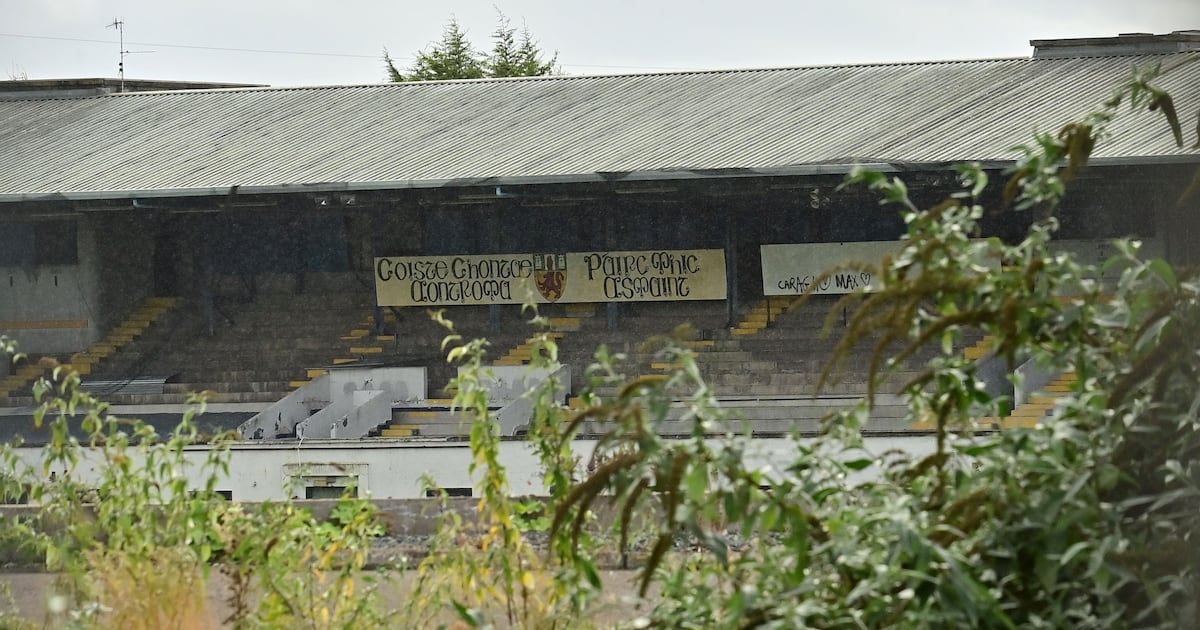
Partly as a result of Northern Ireland’s many fragmentations, it is also a land of missed opportunity. The book is punctuated by glimpses of such missed opportunities. John Bell’s mostly upbeat essay on sport, conflict and peace profiles the valiant efforts made to tackle sectarianism in sport, but it is overshadowed by the spectre of Casement Park, the decrepit monument to Northern Ireland’s capacity for self-sabotage.
Political wrangling tinged with sectarian undertones has led to the stadium remaining undeveloped and Northern Ireland’s opportunity to host matches in the upcoming Euro 2028 football tournament being lost. Duncan Morrow laments how opportunities to pursue genuine reconciliation after the Belfast Agreement have given way to “the management of antagonism”, arguably to the benefit of political actors who feed off that antagonism.
The past also continues to hang heavy over Northern Ireland. There is too much history to forget. Rebecca Graff-McRae employs the motif of ghosts to explain how the past continues to haunt Northern Irish politics. At Christmas 1915, Patrick Pearse wrote: “There is only one way to appease a ghost. You must do the things it asks you . . . whatever the cost.” 110 years later, there is little evidence, in the North or Republic, that seeking to appease ghosts of violent forefathers brings any form of catharsis.
Poignantly, Graff-McRae draws upon the words of the late Lyra McKee, who wrote that the children of the Belfast Agreement were “spared from the horrors of war. But still the aftereffects of those horrors seemed to follow us”. Tragically, McKee herself is now a haunting reminder of the lost promise of Northern Ireland’s peace.
The invidious dilemma of seeking to address the trauma of the past is described by Mary-Louise Corr and Siobhán McAlister. They recount how parents from the Troubles generation and children from the ceasefire generation are caught in a “dance of protective intentions”. This manifests itself in silence from parents over the trauma experienced but leaves children with a “lack [of] clarity and understanding of what has happened to their parents”, generating further anxiety and trauma.
Yet conveying experiences of trauma can risk transmitting sectarian prejudices “with a potential to foster the continuation of sectarian attitudes”. It is unsurprising that they therefore quote a 2019 Northern Ireland Youth Forum report which found that there is “an absence of new words and phrases more in tune with a post-conflict environment”.
Finally, the deleterious impact of Brexit runs throughout the book. It is variously described as creating “another sectarian frontier” (James W. McAuley); moving “the goalposts of the [Belfast] Agreement considerably” (Feargal Cochrane); and setting “the foundations for an uncertain future of political quagmires for some time to come” (Clare Rice).
Giada Lagana’s essay on the impact of the European Union’s Programme for Peace and Reconciliation further highlights what has been lost by showing how the EU was able to take a different approach to the peace process than the UK and Irish governments. While the respective Governments inevitably had to focus upon the containment of violence and the establishment and maintenance of political institutions, the EU could focus its energies and funding on grassroots projects that had the potential to create reconciliation rather than simply containing violence. It is a bright spot that continued EU funding through the PEACE Plus programme has been secured up to at least 2027.
Indeed, with the benefit of a decade’s remove, 2016 does appear to be a turning point in Northern Ireland’s recent history. Alongside Brexit, it was the year that the Renewable Heat Incentive scandal was uncovered, which would precipitate the collapse of the Stormont institutions until their revival under “New Decade, New Approach”.
As Philip McDermott and Shannon Doherty note, 2016 was also the year that the late Anna Lo, the first person from an ethnic Chinese background to be elected to any UK parliament, decided to stand down as a Stormont MLA partly as a result of the racist abuse she had received in the role. A small reminder that sectarianism is not the sole ailment of the body politic.
As 2016 marked the 18th anniversary of the signing of the Belfast Agreement, commentators in that year were fond of referring to the Belfast Agreement as a child now reaching maturity. To adopt the metaphor, the much-lauded child prodigy has endured an underwhelming adulthood and may soon be entering a mediocre middle age.
Meanwhile, many of the real children of the Belfast Agreement, myself included, have found Northern Ireland has not progressed fast enough to meet our ambitions and have instead sought to reach our potential elsewhere. Indeed, I have many stimulating conversations about the sort of topics covered in this book, but too few of them take place in Belfast or among friends who still call it home.
A final thought strikes me as I close the book. The titling of the book as a “companion” is at first glance unremarkable; it is a common title for collections of this kind and one assumes the counterparty to the companionship is intended to be the reader or the existing body of work on the subject. Yet, the book also performs an act of companionship for Northern Ireland itself.
By rigorously and unflinchingly documenting the current state of its society, the book does Northern Ireland a service by telling hard truths that only a true friend would do. Northern Ireland needs companions, not just of the literary kind, but the sort of people within and outside the jurisdiction who are prepared to walk alongside it, work through its flaws and frustrations, see it as it really is and still love it. With friends like these, Northern Ireland’s future may be brighter than the pages of this book would suggest.
Ross Neill is a solicitor from Belfast who lives and works in Dublin.