People of Britain, good news! In his new year message, the Prime Minister said this will be the year when we start to notice change, positive change, little improvements in our lives. Sir Keir also said that 2026 will be the year when he defeats the “decline and division offered by others”. So quite a lot to look forward to, I think you’ll agree.
But before we get too carried away, it might be worth trying to translate some of what Sir Keir said. It might also be worth looking at a few of the political parallels that point to where we are now, and where we need to go, because this isn’t the first time we’ve been addressed in a time of crisis by an uncharismatic PM with a strange voice. History is telling us we’ve been here before. History is telling us to get a grip.
So here’s a little of what Sir Keir said. “Things have been tough in Britain for a while,” he told us, before listing some of the things he says he’s doing about it: lower energy bills, higher minimum wage, more police, more funding for local communities. He said the plan was to reverse the decline and put the country back on a stable footing and that “when Britain turns the corner with our future now in our control, the real Britain will shine through more strongly.”
The PM may not have gone into details about the crisis; he may also have tried to blame other people (“the challenges we face were decades in the making”) but we know the context: economic stagnation, cost of living crisis, the crisis in public services, the divide over cultural issues. The wider context – and Sir Keir certainly wasn’t going to mention this one – is that confidence in the PM and the governing party is at rock bottom. If the country’s in a state of emergency, there aren’t many people who believe Keir Starmer is the man who’s going to fix it.
Read more
The new military gap year could work, on one condition | The Herald
Four questions that need answering in 2026 | The Herald
The BBC and the Commonwealth Games: why we should be worried | The Herald
There’s a reason I use the phrase state of emergency by the way: not only do I think it’s a fair description, it’s also the title of a magisterial book of political history I’ve been reading that got me thinking about the parallels that might be at work here. The sub-title of the book is “The Way We Were: Britain 1970-1974” and its mission is to delve into the extraordinary four years under Edward Heath. The author is also that most splendid of modern historians Dominic Sandbrook, so the delving is thorough, witty and iconoclastic. I recommend.
It goes without saying that the parallels only go so far: the 1970s was utterly different in lots of ways – there was a shared popular culture for starters that’s pretty much disappeared. Having said that, the similarities are clear, not least between Heath and Starmer. As Starmer often says, his father was a tool-maker; Heath’s father was a carpenter. Both men also rose to become PM despite being uncharismatic and awkward, which in some ways is a good thing – you don’t have to be a slick charmer to get to the top. But it’s left us with a Prime Minister who smiles like he learned how to do it from a book and talks like he’s forcing the words out through a sieve; only he could make the phrase Happy New Year sound weird.
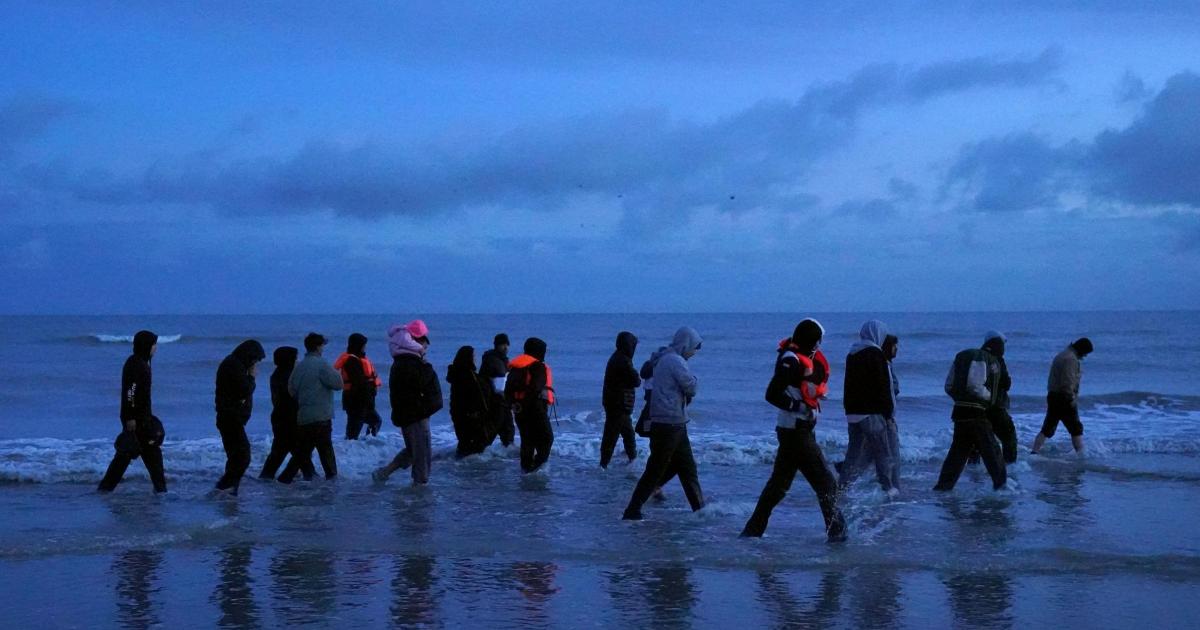
The political and cultural parallels between then and now are strong too. Sandbrook talks about a PM in the early 70s committed to economic growth as the answer to his country’s woes, just like his counterpart 50 years later. He also talks about public concern over mass immigration – in the 70s, from Idi Amin’s Uganda – and the disappointment of grassroots activists that Heath’s moderation on the issue caused him to be outflanked on the right by a tribune of white working-class resentment. Anyone who’s been watching the small boats crisis will recognise that.
And the parallels go on. Sandbrook writes about the bitterness that seemed to be seeping into political life in the 70s and how some saw the BBC as part of the problem; he quotes Antony Jay, co-creator of Yes Minister, criticising the Beeb for being run by a “small educated left-wing minority”. Even the travails of the Labour party itself seem to have a parallel: by the early 70s, the Labour benches contained more graduates than the Tory ones for the first time and had arguably become distanced from its roots. Again: could be 2026.
The good news about the parallels for Starmer is that at least he can learn from them and take some action (or not). One of the most striking threads in Sandbrook’s book is Heath’s campaign to join the Common Market and his argument that staying out was bad for our economy. Fifty years on, coming out of the EU has proved how right Heath was, and Starmer can see it and may, in time, start to say it. We hope so.
Edward Heath photographed in East Kilbride
There are other pointers for Starmer if he’s willing to see them. On the economy, Sandbrook examines Heath’s fatal assumption that a new burst of economic growth would allow for more money to be spent every year on health, education and welfare. Fifty years on, not only has the growth failed to happen for Starmer as it did for Heath, the strain on the health service is greater and the welfare state is expanding in a way that could never have been foreseen in the 70s. The only conclusion Starmer can come to in public (and already has come to in private) is that growth is not enough and the bill for welfare will have to be drastically cut.
The final lesson is the most difficult: immigration. Heath, like Starmer, was always moderate on the issue, but Sandbrook quotes The Guardian’s Peter Jenkins, among others, on the widespread feeling in the early 70s that the country was led by men who had no idea about what concerned ordinary people, or their worries that mass immigration caused problems for the services they needed. Public opinion demanded an end to mass immigration.
The key point is that Heath acted and his action worked: he introduced the Immigration Act which brought about greater control through the modern system of visas, and the furore largely died down. He was also lucky in that the far-right factions which could have made inroads over the issue in the 70s were disorganised and ineffective. Fifty years on, Starmer faces a more organised and effective operator, which makes it all the more important he does what Heath did and finds an effective way to take control before the next election.
The good news for Sir Keir, I guess, is that history hasn’t run out for him quite yet and he still has some time left; he also appears to believe 2026 will be the year we notice positive changes in our lives and I hope he’s right. But I also hope that someone is paying attention to the lessons of the 70s, so brilliantly laid out in Dominic Sandbrook’s book. One of the clearest of them is that in a state of emergency, lower energy bills and a higher minimum wage aren’t going to cut it. We need bigger than that, and better, and much, much quicker.