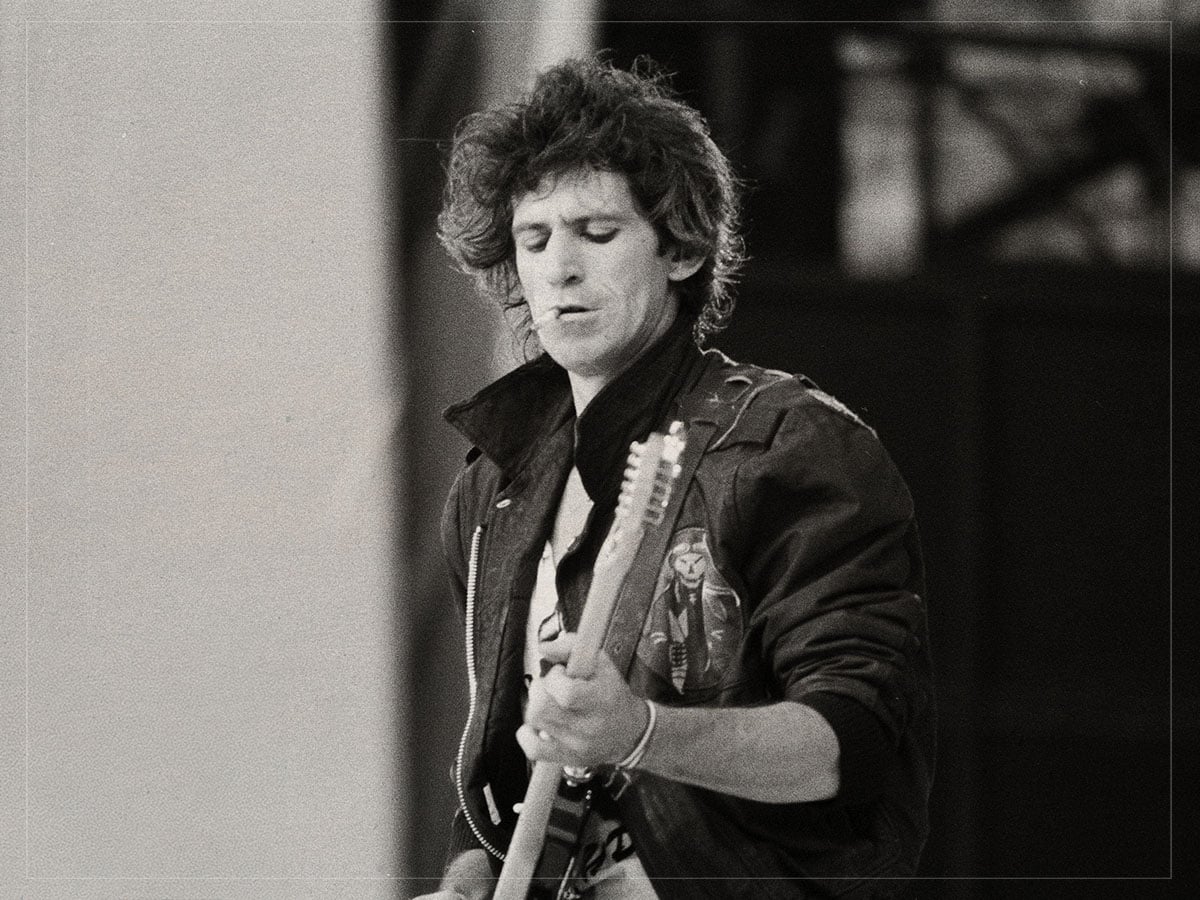
(Credits: Far Out / Marcel Antonisse / Anefo)
Sat 3 January 2026 3:00, UK
Anybody who has ever picked up a guitar has attempted, at one point or another, to evoke the bone-rattling rock and roll stylings of Keith Richards, who completely redefined the landscape of rock and roll guitar during his 1960s heyday. Seemingly, though, Richards had his own selection of guitar heroes to light his way to rock and roll greatness.
To their credit, The Rolling Stones have always been pretty overt in their influences, going right back to their early days under the blues-centric leadership of Brian Jones. Although it might have been the songwriting stylings of Richards and Mick Jagger that thrust the group firmly into the spotlight of the British Invasion, it was performing covers of Chuck Berry, Muddy Waters, and Buddy Holly that allowed the band to really hone their craft.
Even when the Stones became fully immersed in their own original output, penning counterculture anthems like ‘Street Fighting Man’ towards the tail-end of the 1960s, the influence of those early blues and rock ‘n’ roll progenitors was never too far away, particularly within the musical mind of Keith Richards.
No matter which avenue of artistic inspiration the guitarist is drawing from, all roads seem to lead back to the influences he soaked up during his fittingly wild adolescence back in the 1950s and 1960s. In fact, Richards has routinely admitted himself that virtually everything he creates is an amalgamation of those influences, floating around in the musical ether.
“People today run themselves into a corner thinking they actually created these things,” he told Guitar Player back in 1992. “I’d rather look upon myself as an antenna or some go-between. I’m just around. Songs are running around – they’re all there, ready to grab.”
That is, in essence, the secret to Richards’ incredible songwriting career; simply plucking songs from the continually moving rock and roll continuum.
“You play an instrument and pick it up,” Richards continued, highlighting one particular figure who has never failed to provide him with musical inspiration. “What I generally do is like, ‘Fingers are getting a bit soft right now. I’ll go through the Buddy Holly songbook’ – because I love Buddy’s songs.”
Having paved the way for a plethora of young rock and roll stars during his tragically short time on Earth, Holly has been a continuous influence over Richards – and, by extension, the rest of The Rolling Stones – since their very first jam sessions. In fact, Holly’s 1957 track ‘Not Fade Away’ was one of the tracks that helped to establish the Stones as a transatlantic rock and roll phenomenon when they covered it back in 1964.
It speaks to the unparalleled talents of Buddy Holly that his discography, despite lasting for only around three years before his untimely death, is single-handedly, according to Keith Richards, at least, responsible for inspiring a plethora of The Rolling Stones’ most iconic, enduring anthems. By extension, you could argue, Holly changed the course of rock and roll history for a second time, years after ‘the day the music died’.
Related Topics