Born to a son of Anfield in a Warwickshire village, I grew up geographically remote from my spiritual football home. Emotionally, though, the pull of the boys in red was ever-present: from my first game at Anfield in 1974 to FA Cup final defeat at Wembley in ’77, to witnessing the first of Liverpool’s six European Cups, in Rome, when my first hero, Kevin Keegan, ran Berti Vogts ragged. I cried when Keegan left, but soon a new king was born in my imagination: Kenny Dalglish, that wily, tough, insanely skilful Scot. I travelled the country to follow my team through the peaks and troughs that culminated in the lowest possible low, on 15 April 1989, the day of the FA Cup semi-final between Liverpool and Nottingham Forest.
There are many things I remember about Hillsborough, some of which returned to me years, even decades, later. My dad saying: “If it’s a nice day tomorrow, we’ll go.” Ian St John on the end of my hospital bed. My best mate laughing as I struggled to eat a yoghurt. The endless bright white lights of the Royal Hallamshire. The surreal trip to my local hospital in an ancient, drafty ambulance. One thing I don’t remember, though, is meeting my hero. And for good reason. For I’m the “miracle” boy woken by the sound of Kenny’s voice when he spoke at my bedside.
As Donald McRae recorded recently in the Guardian, Kenny visited me when I had been in a coma for two days. I learned later that Kenny told me: “Hi there, wee man. Come on, you’ll be all right. We love your support.” And then, as he recalled: “We were walking away and there was a scream. What’s happened here? I turned round and the wee man was sitting up. Unbelievable.”
Sean Luckett being visited in hospital by the Liverpool players Bruce Grobbelaar, John Barnes, John Aldridge and Steve McMahon. Photograph: Sean Luckett
Life post-Hillsborough involved being “out of it for months”, in my mum’s words, breakdowns and an inability to work in any meaningful way for years. An anoxic brain injury, PTSD, survivor guilt, trauma, intermittent therapy, barrelling depression and a deep, endless anger at the exhausting injustice of it all. And yet, always, somehow, I felt sustained by the compassion of the man I idolised. The man who’d helped bring me back to life.
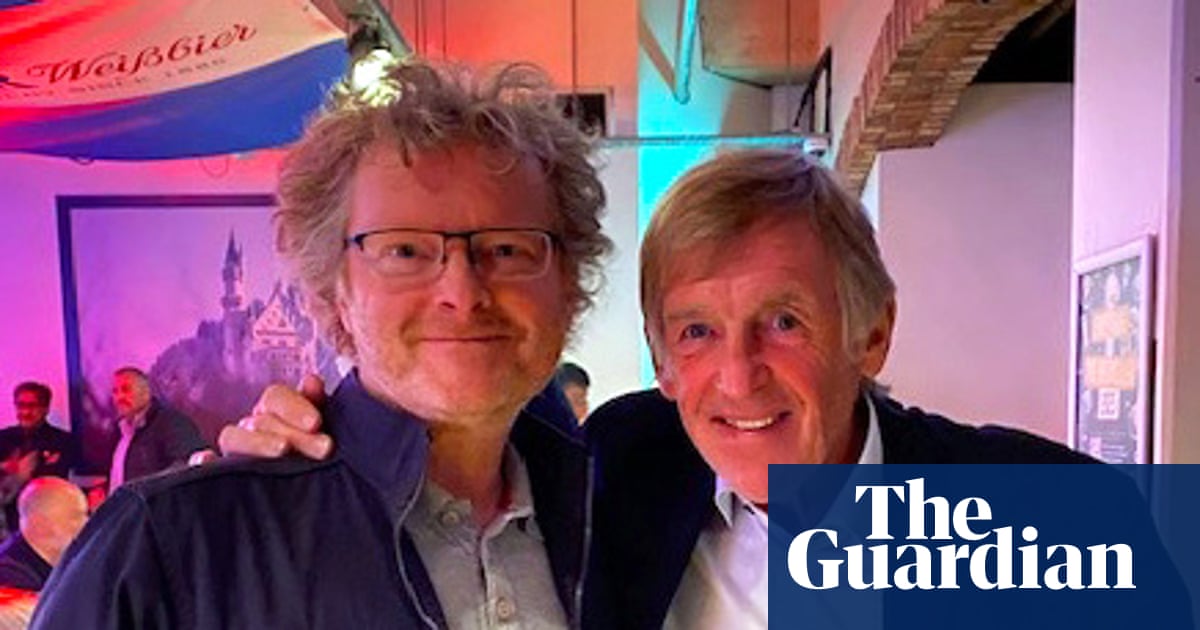
Thirty-six years on, Asif Kapadia’s documentary Kenny Dalglish finally gave me the opportunity for a second meeting. And this time I would be conscious. A mate attending the London premiere saw me on screen and told Paul Dalglish he knew me. Paul spoke to the director and the next day I received an email from the producer. Would I be willing to come to Liverpool for another premiere on home turf?
A whirlwind ensued. I drove up in a daze, grabbed a match-going mate for support and off we went to the cinema. The producer was on hand, we grabbed our wristbands and in we went. The bar was full. There was Alan Hansen. There was Steve McMahon. The producer texted me: when would be best to meet Kenny? He’d been told I was there; what did I think? I tried to text back. No reception. In the dim light of Screen 2 I saw the producer down at the side of the stage. I hopped down the steps to give him a reply. He introduced me to Asif, the director, and in an instant he’d spun me round and there, without warning, was the man himself.
Sean Luckett with his mother Corran in 1989. Photograph: Sean Luckett
He was standing with two minders, about to take the stage for the pre-screening Q&A with his daughter Kelly Cates. A firm handshake, that smile. I told him my mum wanted me to give him a hug from her. He pulled me in and embraced me and then he was gone, but not before calling after me: “Don’t fall asleep.” In that moment it felt as if he was as delighted to meet me as I was to meet him. He called me wee man, as he’d done in my hospital room, and later, as he and his family left, he made a final beeline for me, grabbed my hand and said: “Great to fucking see you by the way.”
The effect of Hillsborough on my life, and on those around me, has been profound. But after all those years, finally to be able to hug him, for me and for all of us, to thank him, to have him take the piss out of me, it was catharsis and joy but also a moment when the intervening years melted away. I was again that overexcited nine-year-old leaping on the sofa as King Kenny chipped in for European Cup number two. I remember his smile when he scored, his twinkle and his pure effervescence. But also his dignity, his normalness and his self-deprecation. And here he was in front of me as we relived a distant moment that had affected our lives hugely: his as burden-carrier for a city and fanbase, mine as one of the lucky ones, a survivor. I wish my dad had been here to see it.
I have no recollection of my first meeting with the man, but I will never forget my second. In the end though, for me, the victims, the families, for Kenny and for everybody else affected, I wish I’d never had to meet him at all. We never accept Hillsborough. We all just live alongside it. And that will never change. In early December another slap in the face arrived when the Independent Office for Police Conduct announced “fundamental failures” on the day and “concerted efforts” to blame us fans in the aftermath. Once again, no one involved will face consequences.
So, the pain and bewilderment continue. But we still have our greatest ally. And now I’ve got to hug him. And thank him. And close the circle. They say never meet your heroes. “They” are wrong. I love him, but far more important than that, we all know how much he loves us.