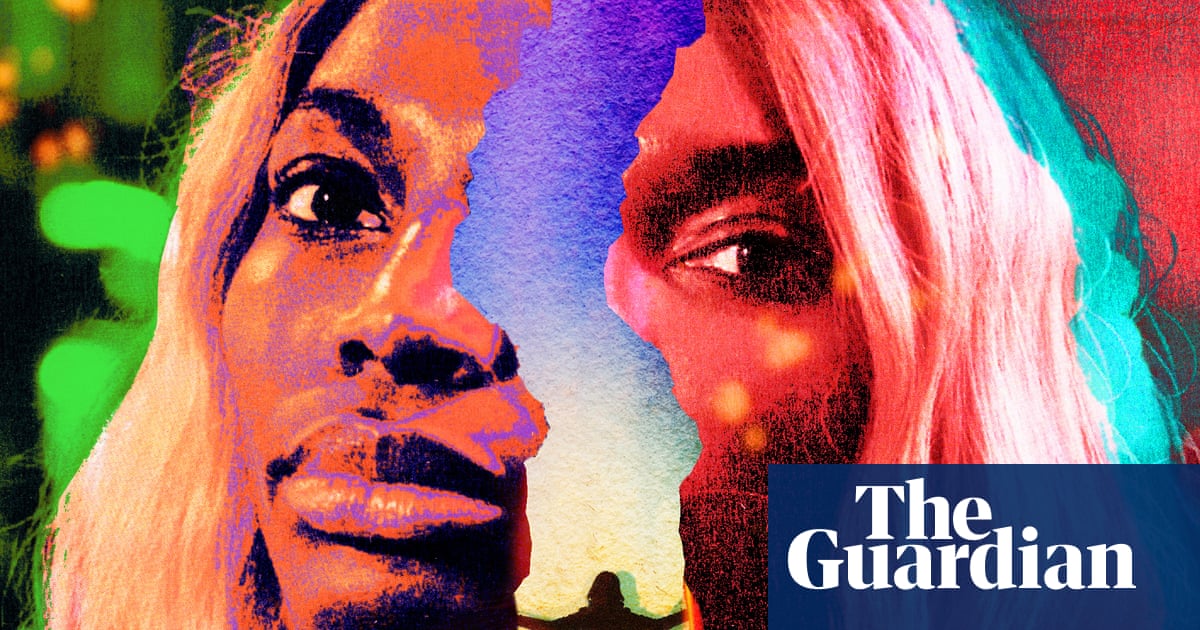
When I May Destroy You aired in the summer of 2020, I hadn’t yet been spiked. Michaela Coel’s comedy-drama, based on her own experience of sexual assault, follows Arabella (Coel) as she realises she was drugged and raped on a night out. With one in four women in Britain having experienced sexual violence, the 12-part series was a difficult watch for many. If not relatable, then confronting and familiar; something that had happened to others, but close enough to know that it could happen to you. Three months later, it did happen to me. I remember going back to a man’s flat on a second date, but then there’s a vast nothingness that I’ve been unable to make sense of since.
The morning after, confused and embarrassed by my memory loss, I asked him what had happened. When he said we’d had sex, and I said I couldn’t remember it, he seemed offended, as though my amnesia were an accusation. After tea and toast, I left to meet my sister, who, when I told her I had blacked out after only three drinks, suggested I’d been drugged. I initially dismissed this – that’s what depraved strangers do to paralytic women on sticky club toilet floors. Not men you like in nice flats with comfy sofas. Not men who you would have had sex with anyway, consciously and consensually. Then I remembered the half-empty bottle of wine, leftover from a dinner party, offered to me but untouched by him.
Twenty minutes later, I was on the phone to the police. An hour later, they were at my house. I was being swabbed, putting my nice underwear into evidence bags, never to be seen again. I tried to answer their questions in a way that didn’t seem like I was lying, even though I wasn’t. When they asked for his name and address, I wondered out loud what would happen to him. “We’ll arrest him,” they said. It all seemed so dramatic, so irreversible, so life-ruining, and how could I be sure? I could already hear my own uncertainty being used against me.
If he had been a stranger, the investigation would have continued, but as I knew him and wouldn’t divulge his details, I was withholding information, so it ended there. Either a crime had been committed or it hadn’t, and if it had, then they needed a name. In the absence of that, my samples wouldn’t be tested, but they would freeze my urine and keep my swabs in case I changed my mind. I put the police officer’s card on my bedroom shelf and to the back of my mind, where it stayed for the next five years.
I thought spiking was done by depraved strangers. Not by men you like in nice flats
This year, after a conversation with a friend who had gone through something similar, I decided to rewatch I May Destroy You, perhaps hoping it would become a catalyst. I felt nervous. It had rattled me the first time, so what would it do now that I had experienced my own version of violation? Would it be catharsis or a wound reopened? For years, I had carried the guilt that, in having protected one man, I’d probably sacrificed other women to unknowable sinister black holes.
It was during the fifth episode, when Arabella is praised for her bravery, that I pressed pause and went looking for the officer’s card. I called 101 and asked whether they still had a record of the case. I was given another phone number, and spoke to more people. No one seemed sure of how to progress after so many years, or whether my sample still sat in a freezer. I searched for his name in WhatsApp to find a profile photo of him holding a baby like a father would hold his child. I felt both more and less certain than ever about the decision I had made. Could this dad really have violated me in the way I feared he had? At the same time, I felt angry that he had gone on to have a normal, full life.
In the variations of Arabella confronting, avenging or understanding her rapist in the final episode, we see different reckonings; ones she will never have, I will never have, most women will never have. But rewatching I May Destroy You and picking up the phone to at last ask these questions – I finally have something like closure.
The case is now in limbo but I feel better for having pursued it. Although I continue to live with the uncertainty, just knowing that reopening the case would be more complicated than I thought, and unlikely to bring the resolution I had spent years secretly fantasising about, felt like a full stop, an end to the guilt and shame that should never have been mine. Anonymous
In the UK, Rape Crisis offers support on 0808 500 2222 in England and Wales, 0808 801 0302 in Scotland, or 0800 0246 991 in Northern Ireland. In the US, Rainn offers support on 800-656-4673. In Australia, support is available at 1800Respect (1800 737 732). Other international helplines can be found at ibiblio.org/rcip/internl.html
Share your cultural awakenings
Share your experiences
You can tell us how a cultural moment has prompted you to make a major life change by filling in the form below or emailing us on cultural.awakening@theguardian.com.
Your responses, which can be anonymous, are secure as the form is encrypted and only the Guardian has access to your contributions. We will only use the data you provide us for the purpose of the feature and we will delete any personal data when we no longer require it for this purpose. For alternative ways to get in touch securely please see our tips guide.Show more