LOS ANGELES — (SPW) —
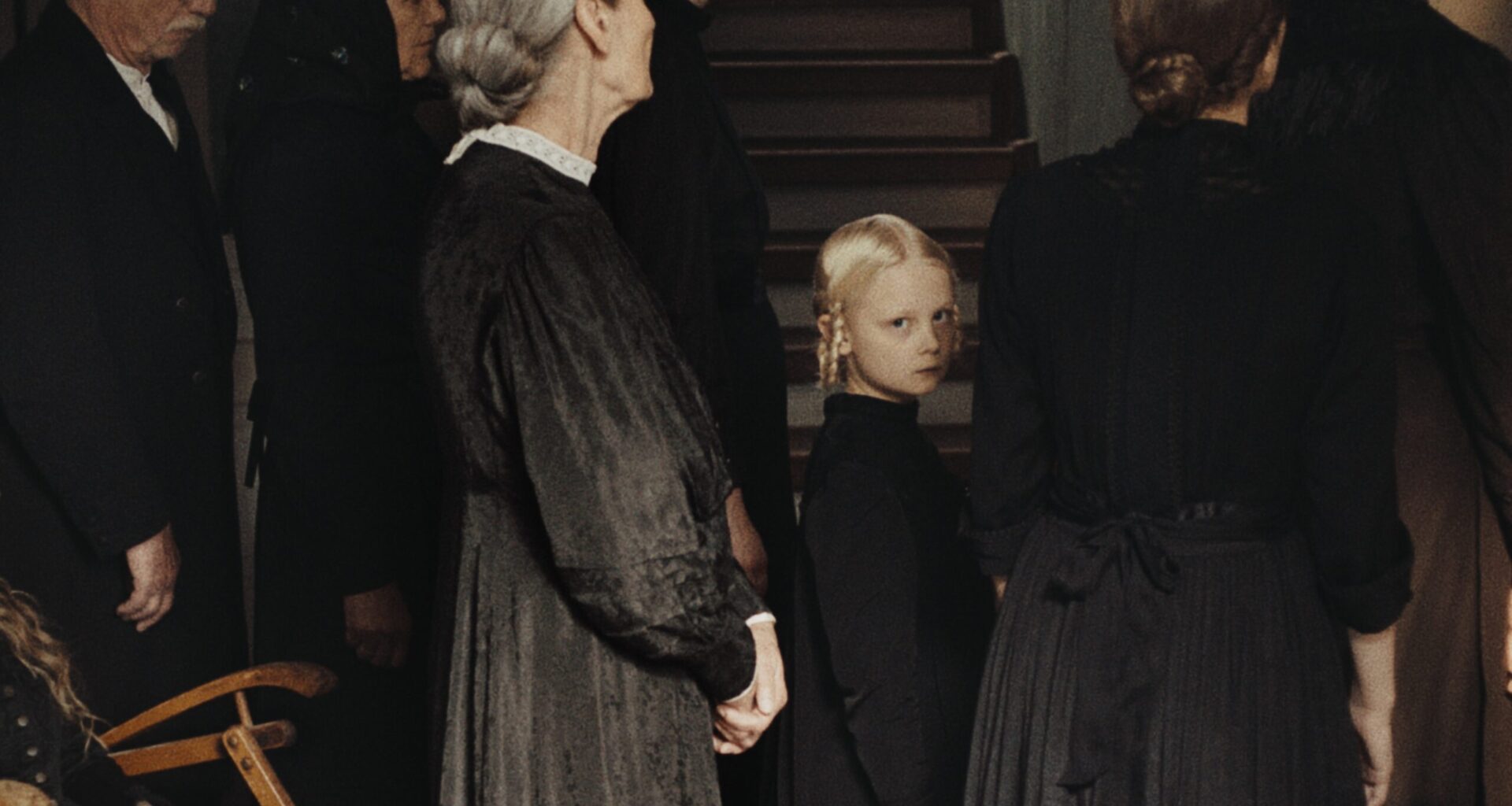
In Sound of Falling, a remote German farm harbors generations of secrets. The film follows four women, separated by decades but united by trauma, as it uncovers the truth behind its weathered walls. The feature has been Germany’s entry for an Oscar® for Best International Feature and has been just shortlisted after previously winning a Jury Prize at the Cannes Film Festival.
Evelyn Rack, the editor behind the film, sat down with us to share how she rearranged the scene order completely from the script to scene to stylize the movie for a stream of consciousness.
How did you first get started working on a project? What were some of your early conversations with the director?
I joined the project around six months before shooting began. At our first meeting, director Mascha Schilinski and I had a very open and inspiring conversation. We talked about how we both do not believe in the idea of kill your darlings. She told me that she and co-writer Louise Peter had written a film made entirely of them. And I said Great. I love that.
Darlings exist for a reason. Very often, they carry the core of a story and hold what a film actually wants to exist for. The fragments that are deeply loved but seem not to fit anywhere are precisely what make a film special. They resist narrow narrative templates. They keep a film alive. And for Sound of Falling, they were never the problem. They were the starting point.
The movie almost completely rearranges the scene order. In previous interviews, you mentioned that you wanted it to feel like a stream of consciousness. Can you share how that looks in practice in post-production?
On the very first page of the script, a quote by Bresson was placed: “I’d rather people feel a film before understanding it,” and our aim was to create an immersive emotional experience, a stream of consciousness.
In the first rough cut, where the scenes followed the script’s chronological order, this pull was missing. On the page, the script worked beautifully. Literary language evokes emotion differently from moving images, and some of its nuances cannot be fully anticipated. We had to reorder the scenes in the edit so that the emotional force would emerge from the lived experience of each moment, which is something Mascha and I already chatted about at our first meeting.
We worked with colored index cards, one color per timeline, one scene per card. They lay in front of us, and every scene, every character, every narrative strand mattered and had its own justification. Junior Editor Billie Mind, who also created the film’s sound design, Mascha, and I spent months leaning over the cards, shuffling, testing, and reordering, searching for the invisible thread to hold everything together.
In theory, almost any scene could have been placed anywhere, and the number of possible combinations was enormous. There was no way to solve this through trial and error, so we needed a different approach.
For me, every film functions like a self-contained universe with its own internal rules. In this case, the rule was the logic of memory itself. How memories surface, how one leads to another, where transitions occur, and how they carry us forward. The structure should never feel arbitrary. It needed to feel inevitable, like the sensation of falling. When we fall, we lose control and are carried inward by forces we can no longer steer. That feeling became our compass throughout the edit.
Moving to some specific examples, you moved the first scene in the script to be the last or almost the last. Can you talk more about the choice?
The script opened with a complex sequence spanning several timelines and centered on a traumatic event. On the page, this worked very well, but in the film, it felt overwhelming. Too much information made it difficult to enter emotionally, and the experience shifted toward understanding rather than feeling.
We realized that the film needed to begin not with trauma, but at the surface of memory. The audience needed to arrive sensorially before being asked to navigate the temporal complexity. That led us to start with Alma. Her childlike fascination with death allows the viewer to enter the film gently, through curiosity and presence.
Alma alone did not fully establish the film’s register, so we added a short scene with Erika from the 1940s. She moves on crutches down a hallway, slips into her uncle’s room, and, ultimately, meets the camera with a steady gaze. Cut to black. Title. This moment does not explain anything. It sets the tone. It introduces the film’s logic of gaze, bodily experience, and memory.
For the same reason, a conclusive ending felt wrong. Memory does not resolve; it keeps moving. The sequence that originally opened the script was moved to the very end, marking the deepest point of descent. The film, therefore, exists as a movement that continues beyond the screen.
You also made a lot of interesting choices with image and sound. We look through keyholes, POV of a character swinging, and you choose to add a voice-over of one male character. Can you walk us through some of those choices?
Image and sound were inseparable. A large part of the film’s sound world was developed directly during the edit. Billie and I worked extremely closely, and as scenes took shape, editing decisions and sound ideas evolved together.
Mascha also thinks very audibly, and the sound was already present in the script, which gave us the freedom to treat sound as a dramaturgical tool from the earliest stages of editing.
Early on, Mascha and Billie talked about how a black hole might sound, or how a sound can feel both distant and intimate at the same time. Inspired by NASA and ESA sonifications, they searched for tones that feel timeless and almost universal. This led us to a central question: from where are the characters observing themselves? Where does this remembering take place?
We conceived a space detached from linear time and physical reality, a collective memory space. That perspective shaped image and sound equally. Looking through keyholes or sharing a swinging POV is not observational. It mirrors the characters watching themselves from an undefined distance. Cut, image, and sound work together to create this shared position of remembering.
This approach guided our work on individual scenes. Silence, texture, and rhythm became dramaturgical tools.
Do you have a favorite sequence in the film, or maybe a character or timeline that you loved editing sequences for?
There are many moments in Sound of Falling that were deeply rewarding to edit. Irm was particularly challenging because we never enter her perspective immersively. We do not hear her thoughts. Her inner life remains opaque. Yet her trauma, the loss of her sister Erika, is one of the emotional fault lines running through the film. Instead of entering her head, we worked with brief fragments of memory. These fragments surface almost involuntarily, especially in moments of social exuberance. Short recurring images, shifts in sound perspective, small ruptures in continuity. They do not explain Irm’s trauma. They make it physically and emotionally perceptible.
In the scene with Angelika on the swing, on the other hand, we move radically inward. Image and sound align to create a space that feels less like being inside a memory as it forms. The swinging movement, the fragmentation of the image, the interruptions and gaps, and the voice-over all work together. Editing and sound do not illustrate Angelika’s thoughts. They embody the act of remembering itself, unstable, porous, and bodily.
In both cases, with Irm and with Angelika, editing was about an internal state. Through shifts between density and absence, between overwhelming texture and near silence, image and sound together created emotional access points where language would have failed. For me, these moments show what editing can do beyond structuring scenes. Editing Sound of Falling followed this principle throughout. Thinking outside the box was the concept itself. No scene had a fixed position, no sequence a predefined logic. Each choice, each cut became a small act of creation, and through that process, the film found its uncompromising form.