Multinational firms pushed for Ireland to take a “leadership role” in arguing for “pro-enterprise” regulations in Europe against a backdrop of “anti-innovation” rules.
The companies raised a litany of concerns with the State’s inward investment agency, IDA Ireland, as the Government regrouped after its St Patrick’s Day charm offensive during heightened tensions over United States president Donald Trump’s tariff reforms.
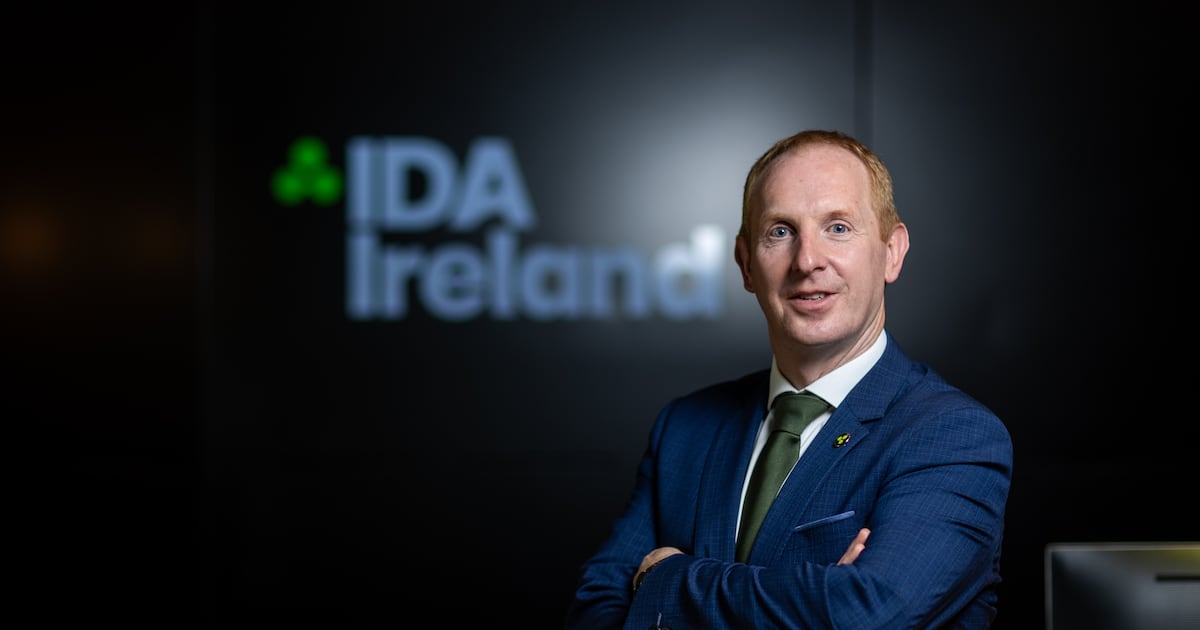
Documents released under the Freedom of Information Act show firms criticised European Union regulations in life sciences and digital services during meetings with IDA boss Michael Lohan in the week before St Patrick’s Day.
These issues were then passed on to the Department of Enterprise to feed into Cabinet discussions.
On March 18th, Mr Lohan told the department that the message coming from IDA client companies during several meetings in the previous days was that Ireland should “take a leadership role in simplification and pro-enterprise regulation”.
His note outlined that EU digital regulation was a “central theme”, being blamed for “overburden and restrictive [sic] of innovation and service provision”. Services were being limited and there was an “unnecessary and lengthen [sic] time frame of engagement with regulators and associated suggested overreach”, he said.
The EU regime for regulating life sciences was “anti-innovation and layered with administration burden”, his note said. While the companies welcomed the Government’s life sciences strategy, as set out in the Programme for Government, the firms also raised the “cumulative impact of recent employment regulations” in Ireland.
The note flagged streaming levies, which firms described as “anticompetitive”. In April 2025 the Government decided not to impose streaming levies on online content platforms.
The note emphasised the importance of legislation enabling so-called “private wires”, which make it easier for large energy users such as data centres to power themselves independently. The Coalition brought forward draft laws in this area in December
Amid heightened uncertainty over Mr Trump’s tariff agenda at the time, the firms also wanted to know what Ireland’s response would be. They called for a focus on carveouts for some sectors in talks with the US.
Competitiveness and infrastructure issues were also flagged, such as energy cost and security, housing delivery and affordability, and an overarching message of “lack of agility and responsiveness” in the Irish planning system. Examples were given, although IDA officials redacted them from the correspondence released to The Irish Times.
The firms also raised Irish tax policy and how the Government planned to respond to the withdrawal of the US from the OECD’s (Organisation for Economic Co-operation and Development) global tax deal, which seeks to ensure large companies pay a minimum level of tax and to reduce the incentive to shift profits around the world.
Mr Lohan said the companies felt there was a “need for [a] proactive policy response from Ireland beyond the current models”, while processes around energy and the Commission for the Regulation of Utilities were described as “very protracted”.
Asked if it felt the list of issues had been addressed since March, an IDA spokeswoman welcomed Government commitments to infrastructure delivery, including in the recently published accelerating infrastructure report and action plan.
She said the organisation also welcomes Government actions such as the new Planning and Development Act, a review of judicial reviews and Budget 2026 commitments to accelerate certain national projects.
She said that, “while much progress has been made, IDA Ireland recognises the need for continuous focus to maintain momentum” and to implement actions to accelerate infrastructure delivery. These, she said, would enhance competitiveness, deliver critical infrastructure and support regional development.