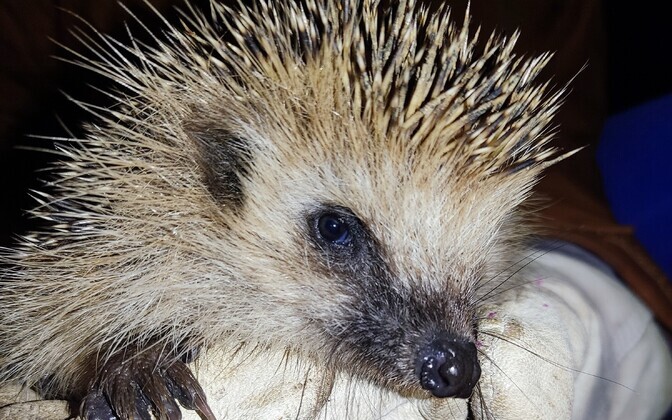
The Estonian Theriological Society (ETS) has declared the hedgehog – or rather hedgehogs – to be Estonia’s animal of the year for 2026.
Most people are well aware that hedgehogs live in their gardens. However, their lifestyle, role in the ecosystem and the dangers they face are often less well known.
According to the Estonian Theriological Society, for that reason, in 2026, the decision was made to put the focus on hedgehogs in 2026. In doing so, they aim to raise awareness about the animals, which live in close proximity to humans and are also impacted by changes to our everyday environment.
“Hedgehogs live with us in gardens, in the green areas of settlements, as well as in natural landscapes beyond them, and are directly dependent on how we care for these kinds of places,” explained Lauri Klein, a board member of the Estonian Theriological Society (ETS), and one of the organizers of the Year of the Hedgehog.
While hedgehogs are a familiar sight in Estonia, not many people know that there are actually two different species of hedgehogs living here.
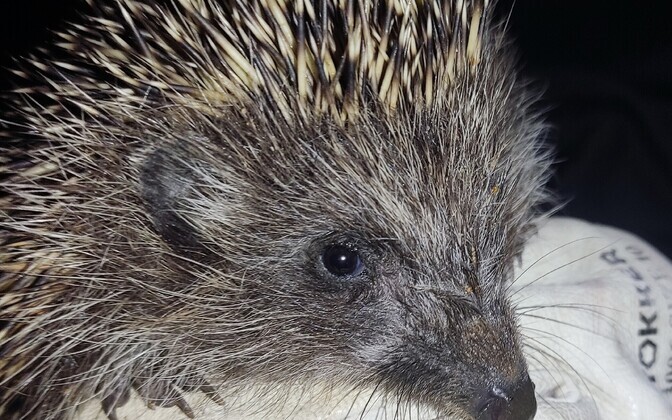 White-breasted hedgehog. Source: Reno Ramon Künnapuu
After all, at first glance, the European hedgehog and the southern white-breasted hedgehog, which both inhabit Estonia, appear to be very similar.
They were only classified as separate species at the beginning of the 21st century, based on the results of genetic research and due to certain external characteristics. Upon closer inspection, it can be seen that the white-breasted hedgehog has a uniformly gray face, and, as its name suggests, a light spot on its chest. The common hedgehog can be distinguished due to having a light-colored face and darker nose.
An Estonian animal of the year, more accurately, a mammal species of the year, has been picked annually since 2013, and is picked by Tallinn Zoo, the Estonian hunters’ society (Eesti Jahimeeste Selts),
—
Follow ERR News on Facebook and Twitter and never miss an update!