Entrepreneur Bill Gross was just 12 years old when he set up his first business – selling sweets to other kids at the bus stop.
His passion for entrepreneurship continued throughout high school and university and, in 1996, Gross set up technology incubator, Idealab, in California. Since then it has been involved with more than 100 start-ups. Some have been highly successful; others have failed.
This got Gross thinking about what makes a start-up fly or flop.
He thought he knew the answer but decided to park his assumptions and undertake a systematic review of 100 Idealab companies and 100 other start-ups (including big successes such as Airbnb and Uber) to build a better picture of what separates success from failure.
“I used to think the idea was everything but, over time, I came to think that maybe the team, the execution and the adaptability mattered even more than the idea,” he says in a TED talk about why businesses fail.
He then thought that perhaps it was the business model, or the funding or even the timing that mattered the most. Still unsure, he analysed the outcomes at the 200 companies to rank these elements in order of importance. The results were as follows: number one was timing. Team, execution and the ability to weather setbacks came second. The idea came in third followed by funding and the business model.
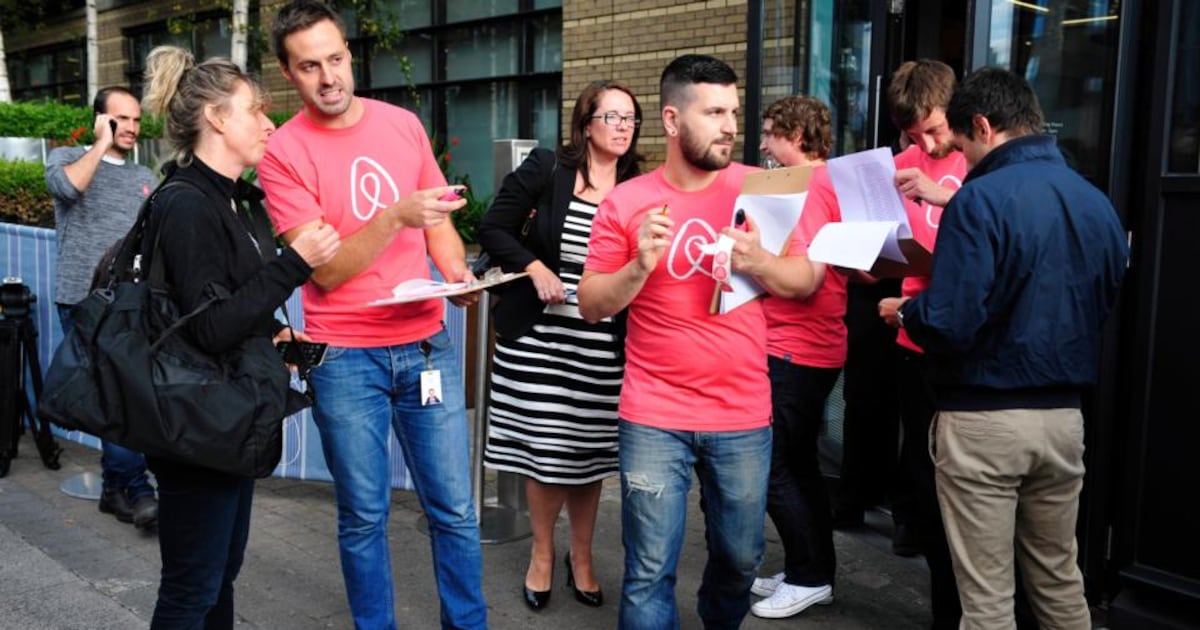
To illustrate his point about timing, Gross chose Airbnb as an example.
In theory, this concept shouldn’t have worked. Who in their right mind would allow a complete stranger to stay in their home? Even savvy investors gave the idea a wide berth and lived to regret it.
Airbnb hit the market at exactly the right time and took off. The US was in recession, so people needed a way to make extra money. At the same time those who needed overnight accommodation were sensitive to cost. This combination of factors superseded the fear that both sides felt about bunking down with strangers.
[ The journey to success for entrepreneursOpens in new window ]
Geraldine Beirne has been managing the New Frontiers programme at Atlantic Technological University (ATU) Sligo for the last four years and before that she spent two decades helping start-ups in the Offaly local enterprise office. From her experience she also ranks timing and a strong promoter or team as key contributors to success.
“A strong founder attracts attention whether that’s from someone selecting companies for an accelerator or for funding later on,” she says. “In my experience, a good idea with a weak promoter will lose out to a strong promoter with a less compelling proposition.
“What we look for in a founder is someone who is resilient, open to listening and learning, [who] can adapt and take criticism and feedback on board and is ultimately prepared to pivot.
“I’ve seen start-ups where the promoter is 100 per cent fixed on their idea and six months later they haven’t progressed at all because something isn’t right, and they won’t see it.
“Someone who realises after a few months of customer discovery that there’s an issue and pivots early is likely to fare much better.”
This was exactly the situation faced by Brian Cahill and Caroline Usher, who set up a company to provide training around the EU’s new CSRD (Corporate Sustainability Reporting Directive) in May 2024. All was going well until February this year when the EU suddenly introduced the Omnibus package to simplify the reporting burden on companies within the EU.
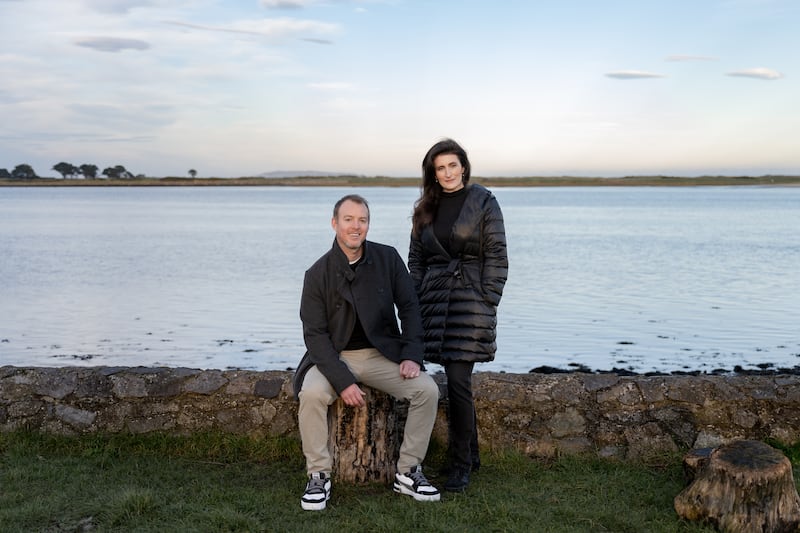 Brian Cahill and Caroline Usher are co-founders of the CSRD Institute
“The package significantly altered CSRD requirements, creating huge uncertainty for businesses throughout 2025 and reducing the immediate demand for CSRD-specific training,” says Usher who notes that there was no advance warning that this was going to happen.
“It was a surprising U-turn, especially as the CSRD had already been transposed into national law in the vast majority of EU member states. Our response was to make sure that all of our training was fully up-to-date with the latest Omnibus information – which was constantly evolving and only finalised this month.
“This ensured that we looked after our existing customer base while also having a proposition for new customers who needed the latest, accurate information. Concurrently, we began our pivot which has involved developing a suite of new training focused on global sustainability reporting standards and other key frameworks.”
Theirs is just one of the stories of perseverance, challenge and change that we found when we revisited some of the companies we have featured in the New Innovators column in recent years.
There’s nothing easy about starting a business and what generally keeps people going is the buzz when things go well. But the long hours and constant juggling can be exhausting.
The challenges of bringing a disruptive product to market are huge because you’re trying to educate people
— Sinead Crowther
Sinead Crowther, who founded Soothing Solutions with Denise Lauaki in 2017, is candid about their experience. “Oh we’ve felt like giving up at least once a week,” she says, “but eight years on we’re still here. Crowther’s company signed a significant distribution agreement with Valeo Foods earlier this year.
The company’s product is Tonstix, non-medicinal jelly pops aimed at two to 10-year-olds with coughs, sore throats or travel sickness. Using a familiar lolly pop rather than the usual syrup or lozenge hit the spot with consumers and the products are now available in more than 3,000 pharmacies in four countries.
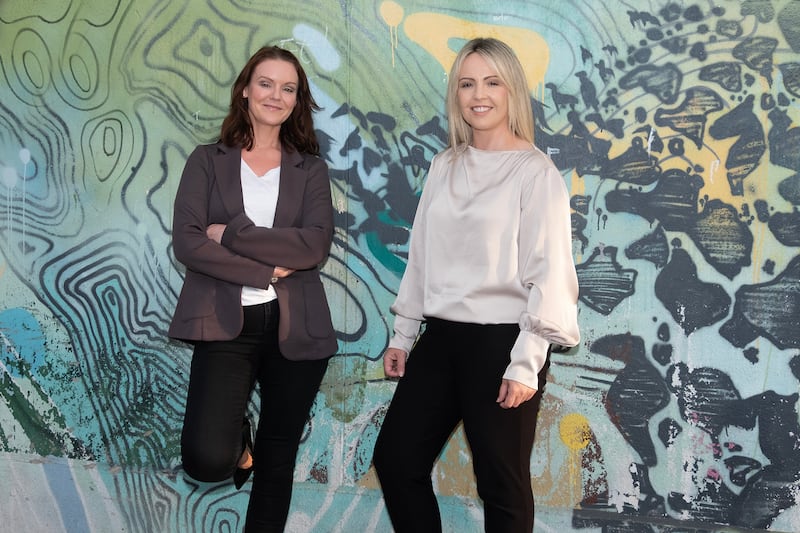 Sinead Crowther and Denise Lauaki are co-founders of Soothing Solutions
“The challenges of bringing a disruptive product to market are huge because you’re trying to educate people, which takes much longer than you might imagine,” Crowther says.
To add to the pressure, the founders opted to set up their own manufacturing operation which involved raising €1.5 million. The facility in Dundalk opened in May 2022 and employs five people.
Asked what they’d do differently if they were starting over, Crowther says: “We would probably manage our market entry differently. We focused on retail and getting Tonstix listed by pharmacies because we felt this was critical from a public acceptance and product endorsement point of view. However, if we were doing it again, we’d launch our own ecommerce platform much sooner.”
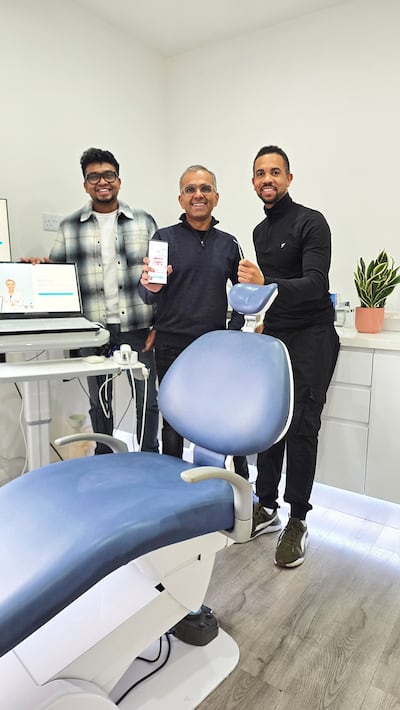 Arun Justin Robert, Nipun Kathuria and Mark-Anthony Shepherd of SmileGenius
The founders are currently focused on raising €1 million through the UK crowdfunding platform, Crowdcube. They chose this funding route because it is quicker than doing the rounds of VCs. They plan to use the money to launch in the EU and US.
“We have a number of new clinical applications in the pipeline, including products for adults,” says Crowther who adds that the company is open to the possibility of linking up with a pharma manufacturer to develop this side of the business.
As the Tonstix founders discovered, having a breakthrough product is no guarantee that people will queue up to buy it. Sectors and industries can be slow to change even if what’s on offer has clear benefits over existing systems or products.
This was the situation faced by the founders of dental tech company, Smile Genius, when it launched in 2021. Their innovation was a system that makes it hassle free for dentists to offer clear aligners (invisible braces) to their patients.
Using the company’s cloud-based platform, a dentist anywhere in the world can offer the aligners without having to buy any hardware or software or spend time managing data. “Despite this, the dental industry proved a bit difficult to change,” says company co-founder Dr Nipun Kathuria.
The founders persevered and the company now has customers in 33 countries worldwide. It has also developed its product from an aligner workflow only solution into an end-to-end lab order management platform aimed at independent clinics, laboratories and dental groups.
Pitching to investors “who find niche industries hard to understand” was also a challenge for the company, Kathuria says but, earlier this year, Smile Genius successfully raised more than €800,000 with from backing Enterprise Ireland, UK venture capital company, Haatch and angel investors.
“This marks a major step forward as we scale our platform and strengthen our footprint across the UK and Ireland. We are targeting a doubling of our clinic presence by the end of 2026,” says Kathuria whose advice to others is: “Don’t be afraid to ask for help and assistance. Most of our progress has come from accepting that we don’t know anything.”
At just over two years old, amateur sports fan app, Anyscor, is a newbie in start-up terms but founder Colin Deering has not been letting the grass grow under his feet. The company, which employs seven people part-time, has moved into the UK within the last three months and will launch in the US in the new year.
There are two sides to the Anyscor solution: a scoring app which is aimed at the back room team and a free to use fan app that sends followers live data from their club’s matches.
Most of our progress has come from accepting that we don’t know anything
— Dr Nipun Kathuria
“Anyscor will work for all sports anywhere so we very much see this as a business with global reach,” says Deering who beefed up his advisory team this year with the addition of Ireland rugby international Ross Byrne and Jack Hanratty, who was recently announced as head coach of the US women’s national rugby team.
“I’ve experienced both success and failure in my business life so I am very aware of the harsh realities and of just how important it is to gather a good team around you,” Deering says.
Anyscor (which is an Enterprise Ireland high potential start-up) is in the middle of a funding round of €750,000. “We’re looking for funding to bring our employees on board full time and continue developing the platform.
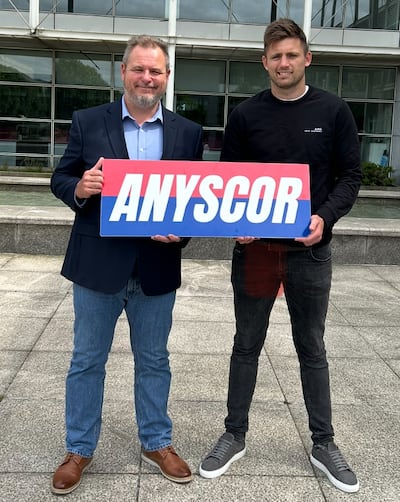 Colin Deering, founder of Anyscor, with Irish rugby international, Ross Byrne, who is part of his advisory team
“We are expanding into other sports, having started off with rugby and we will be adding US college sports into the mix. We also want to launch a white label offering so we can collaborate with club administration platforms. For us, it’s all about ramping up as quickly and as large as possible,” Deering says.
Also ramping up is health tech company PacSana, which was set up by Feargal Duignan in 2019 in response to an unsettling family event. Duignan’s mother fell while home alone and although she recovered well physically, it took months for her fear of being on her own and in need of help to pass.
“As a technology sales guy, I had to ask how we could have used technology to prevent this?” Duignan says. “I did a deep dive into this problem area and was disappointed by what was available. There was nothing proactive, nothing preventative and nothing that was effective in supporting older adults to age well independently and where they wanted to be. This was the inspiration behind PacSana.”
PacSana is a discreet, multifunctional bracelet that collects data from the user, such as their activity level and gait speed, to monitor their movement patterns. This helps to assess for frailty and fall risk and the device will pick up anomalies that may help prevent a fall in the first place. It will also detect location and whether a user “wanders” or gets out of bed.
The six years of hard work that have gone into building the company is now paying off, Duignan says, and a major partnership with the US-based Right At Home care group was agreed earlier this year. Entry to the UK and Australian markets is planned for 2026 as is the launch of Right Assist, a 24/7 remote care service powered by PacSana, which Right At Home’s Irish operation will roll out here.
Start-ups are never plain sailing and since its formation, PacSana has had to weather the pandemic and cope with the on/off tariff debacle in the US. External factors aside, Duignan says that it has taken a lot of in-house time to get everything about the product “just right” before pushing ahead with the expansion plans.
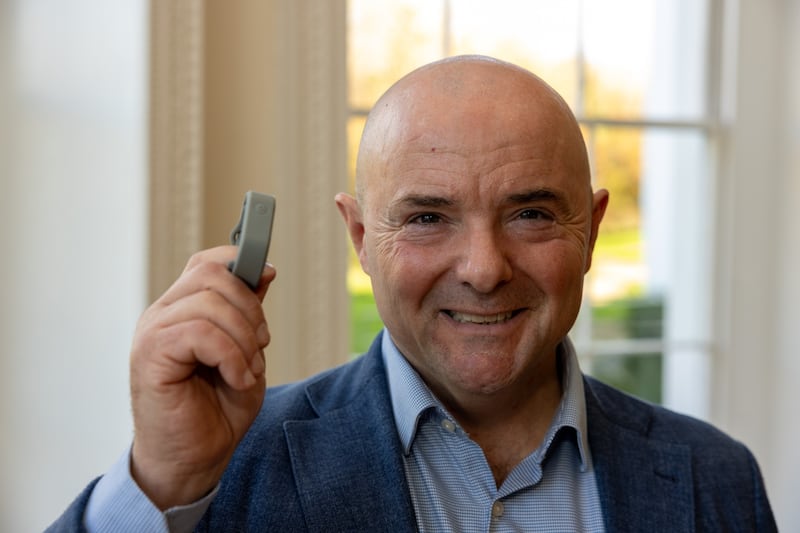 Feargal Duignan is the founder of PacSana. Photograph: Paul Sharp/Sharppix
One development that has helped PacSana gain traction for its product is the fact that older people are more tech savvy than ever before and more clued into the idea of personal wellbeing.
“It’s really a mind shift, with people in their 70s and 80s typically owning four devices and comfortable using apps on their tablets and smartphones,” Duignan says. “There’s a familiarity with how the technology works and more understanding about the importance of maintaining independence in older age.”
PacSana employs 10 people and has offices in Ireland and Boston. The US is its biggest market. The company is now looking at a substantial fundraising round to accelerate its expansion in the US and support new market entry.