Hardly anyone expected 2026 to be a year of peace, and it was barely three days old when the worst fears were confirmed.
The overnight strikes on Venezuela – and the abduction of its leader, Nicolás Maduro, and his wife – have driven another truck through international law and global norms. But that is not even the most concerning thing about it.
Donald Trump has been driving convoys of bulldozers through that increasingly fragile edifice since taking office nearly a year ago, and now it is mostly wreckage. The events overnight were preceded by airstrikes on small boats in the seas off Central America and the killing of their crews based on unproven allegations of drug trafficking, and the armed seizure of Venezuelan oil tankers on the high seas. It is not yet known how many people were killed in the capture of Maduro in the early hours of Saturday.
In terms of global stability, the worst thing about the Maduro rendition is that it worked.
Trump’s belief in his own global omnipotence, and his desire to grab the territory and natural resources of other countries has been held in check until now by his fear of entanglement in foreign wars. He claimed (falsely) to have ended eight wars, and his greatest ambition in 2025 seemed to be winning the Nobel Peace prize. Less than a month ago he was brandishing a hastily confected substitute, the Fifa peace prize. That act of self-abasement by world football’s governing body looks even more absurd now than it did when Trump grabbed the gold medal and put it around his own neck.
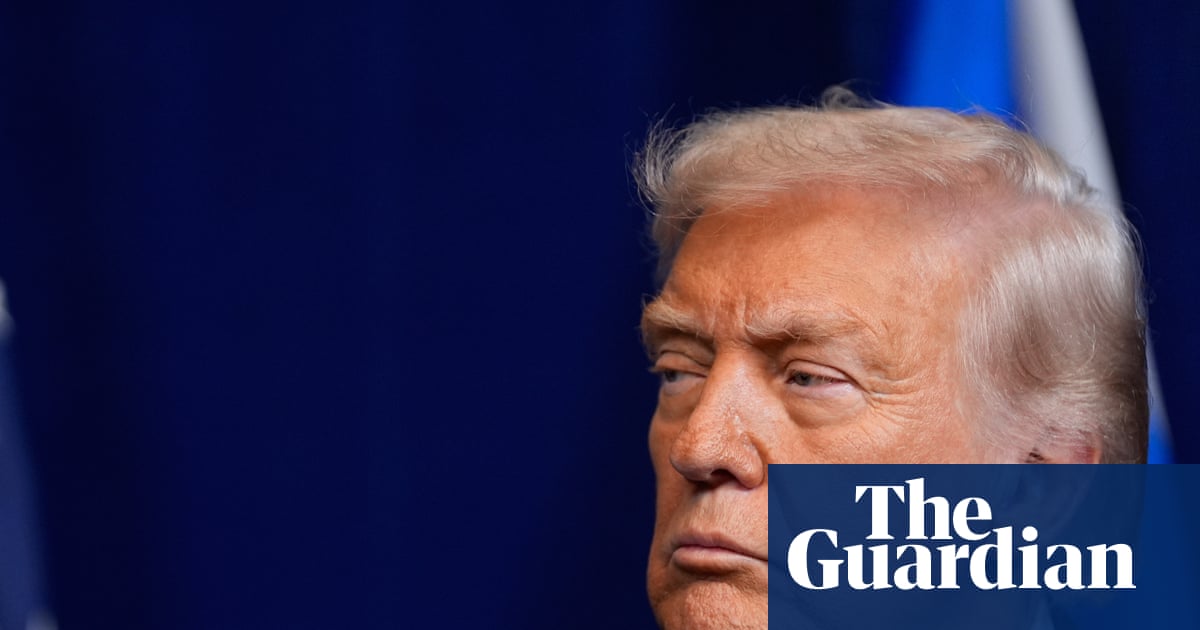
Trump’s fear of foreign wars seems to be waning. He was clearly thrilled by the drama of the Maduro operation, and the efficiency of the American soldiers who carried it out. For an ageing president, growing more petulant, irascible and incoherent with every day in office – facing diminishing popularity and desperate to distract attention from the Epstein child-trafficking scandal – a tightening embrace of military power is an ominous development.
Maduro is a dictator who has run an authoritarian state since 2013 with the help of elections widely regarded as rigged. Photograph: Leonardo Fernández Viloria/Reuters
On Saturday morning, Trump seemed giddy with military success.
“A lot of good planning and a lot of great, great troops and great people,” Trump told the New York Times. “It was a brilliant operation, actually.”
The attack on Venezuela (which was initially planned for Christmas Day, according to one US report) suggests the allure of foreign lands, oil and minerals is now glimmering brighter than the Nobel prize.
It was mostly left to others in the Trump administration to cast the attack in legal language and suggest that Maduro was being “brought to justice”. The Venezuelan leader was indicted in the US at the end of the first Trump term on corruption, drug trafficking and other offences.
Maduro is a dictator who has run an authoritarian state since 2013 with the help of elections widely regarded as rigged. But the specific drug allegations made against him by the US are seen by most experts as flimsy, and would not represent convincing grounds under international or US law for the attack on Venezuela and Maduro’s abduction. In repeated statements, Trump has made clear he is more covetous of Venezuela’s oil (the largest proven reserves in the world) than motivated by a desire to bring Maduro before a court, or deliver democracy to the people of Venezuela.
The international laws and norms Trump has barged through had already been loosened by previous US administrations. The operation most closely resembles the 1990 invasion of Panama and forced surrender of its strongman, by the first Bush administration.
That was followed by the younger George Bush with the invasion of Iraq on false grounds, and his administration’s broad use of rendition of torture. Barack Obama failed to hold his predecessor’s administration to account and pursued his own legally questionable drone assassination campaign against suspected terrorists.
These are arguably discrete acts of hypocrisy by earlier presidents, who claimed exceptions from international laws in the pursuit of US interests, but mostly embraced global norms in the knowledge that the “rules-based system” overwhelmingly favoured America.
Trump has complete disdain for that system. He looks at the world through the eyes of a 19th-century imperialist, but with 21st-century weapons.
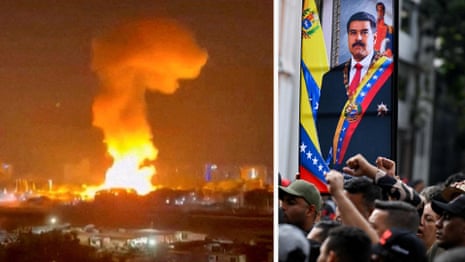 Venezuela in state of emergency after US strikes and ‘capture’ of Maduro – video report
It is unclear how far Trump intends to go in Venezuela to advance his aims, and how far the current regime is able to resist, but a peaceful outcome seems a remote prospect.
What unfolded overnight in Venezuela will cause immediate anxiety to governments like Iran and Denmark, against whom Trump has expressed enthusiasm for taking radical action.
In recent days, Trump has said the US would come to the defence of Iranian anti-government protesters, and his officials have kept up a drumbeat of threats to take control of Greenland by any necessary means. Last month, the Danish Defence Intelligence Service labelled the US as a security risk, a declaration that would have been unthinkable just a short time ago for a Nato ally.
It accelerates the slide from a mostly rules-based world to one of competing spheres of influence, to be determined by armed might and the readiness to use it. One American commentator, David Rothkopf, called it the “Putinization of US foreign policy”.
Russian commentators have frequently suggested that Latin America lies in America’s domain just as Ukraine was under the Russian shadow. Vladimir Putin thinks the same of much of eastern Europe. Xi Jinping will draw his own conclusions.
The peril made brutally clear in the first few days of 2026 is one that will ultimately be faced by everyone.