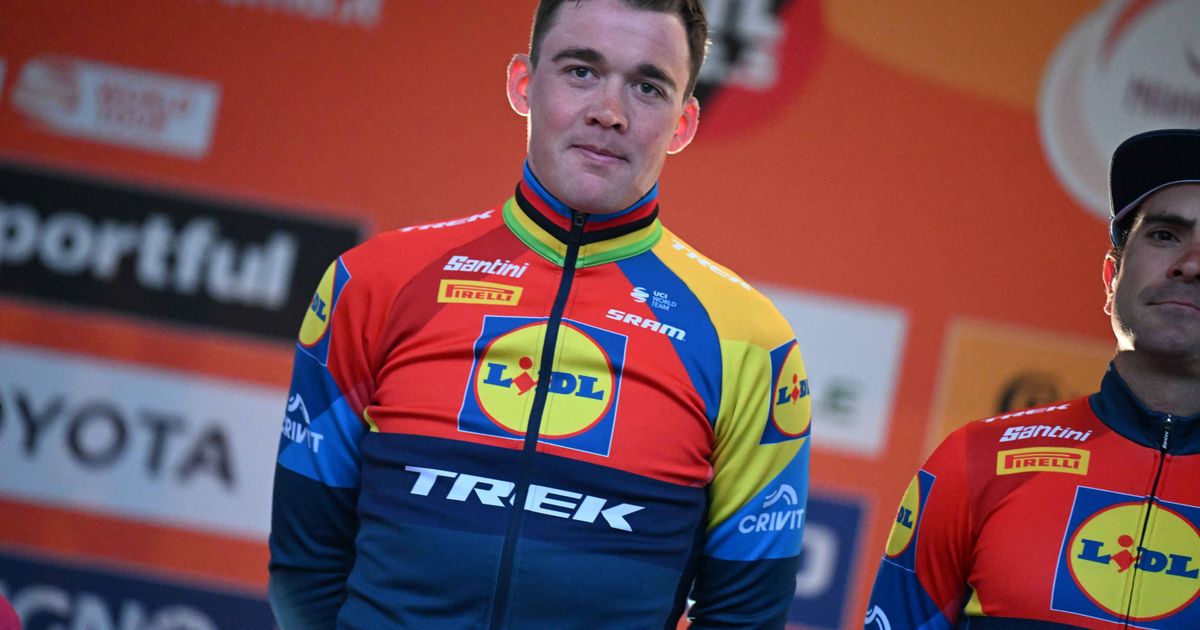
The comment was delivered with a smile, but the message behind it was serious. For Pedersen, the modern peloton demands a level of commitment that few outside the sport truly understand.
“Cycling is completely different now,” he said. “You have to be so focused and so serious. I never expected that, that’s for sure. But you grow into it. You accept it. If you want to stay in the sport, you have to do it. If you don’t want to do it, then you have to find something else to do.”
Growing up before the data-explosion
Pedersen’s career has straddled two eras. He learned his trade before nutrition plans were timed to the gram and before every training interval, sleep cycle and aerodynamic position was relentlessly monitored.
Asked whether he is glad he did not grow up in the sport under today’s hyper-scientific conditions, the 30-year-old was reflective rather than nostalgic.
“To be honest, I don’t really think about it that much,” he said. “I’m happy with the situation I’m in now. I’m happy with the experiences I’ve had from what it feels strange to call old cycling. I’m happy to have been part of that journey.”
Rather than resisting change, Pedersen sees himself as someone who has adapted alongside the sport, learning to operate within an increasingly controlled environment while still drawing on instincts developed earlier in his career.
“I’m also curious to see where we end up before I stop racing,” he added. “It’s exciting to see how everything develops. Right now, everything is moving incredibly fast. Technology is going crazy in every area of life, so of course it’s the same in cycling.”
What Pedersen describes is not nostalgia, nor criticism, but reality. The sport he entered just over a decade ago no longer exists in the same form, replaced by an environment where precision, control and constant optimisation are non-negotiable.
For today’s peloton, that shift is simply the baseline. For riders who have lived through it, the transformation has been total and, as Pedersen makes clear, it is still accelerating.