When to see the first full Moon of 2026, which coincides with the peak of the Quadrantids meteor shower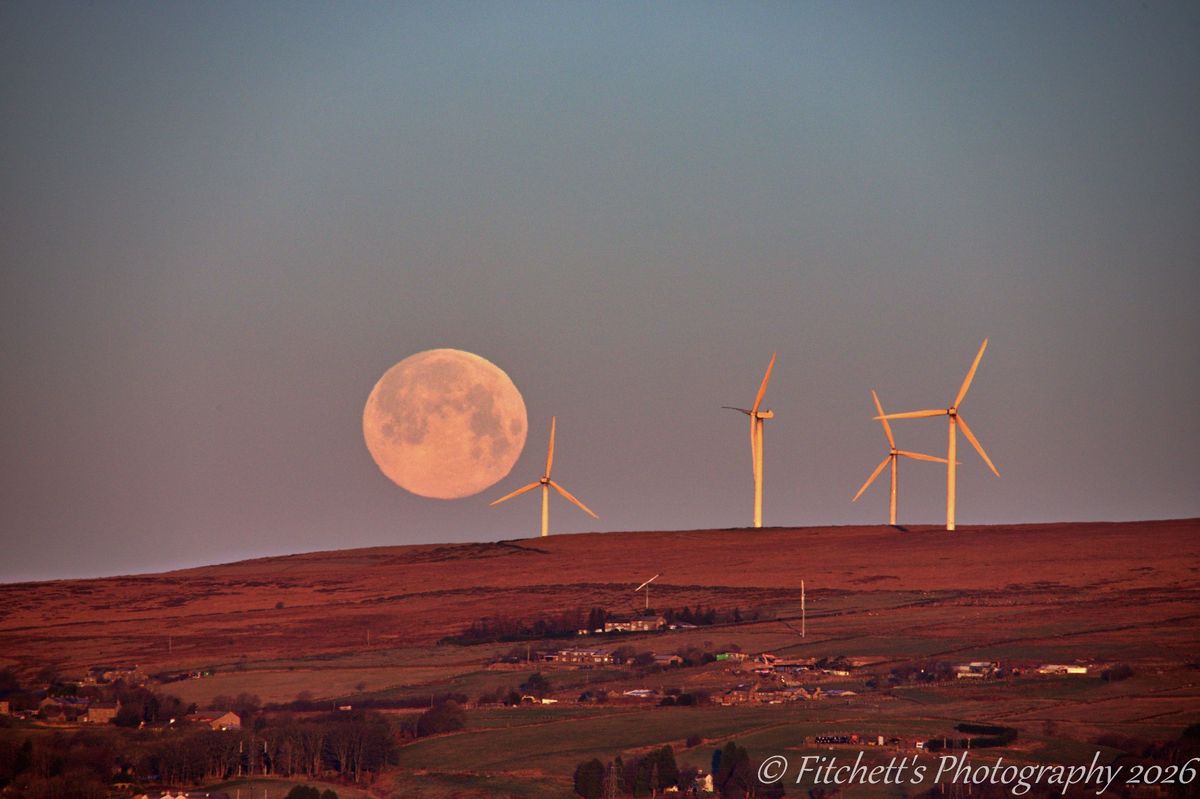 The first full Moon of 2026 lights up skies this weekend(Image: Fitchett’s Photography)
The Wolf Supermoon will rise on the night of January 3, before a dazzling meteor shower lights up UK skies. The Quadrantids are considered one of the best – and most intense – annual meteor showers, with as many as 120 ‘shooting stars’ an hour possible.
Lucky stargazers can catch a glimpse of the Quadrantid meteor shower in the early hours of Sunday morning (January 4), around 12 hours after the first full Moon of 2026 rises.
Tonight’s full Moon is known as the Wolf Moon, named after the time of year when wolves would have been heard howling in the night in North American Indigenous nations after growing hungry during the long winter season.
It is also a supermoon – which occurs when a full Moon is closer to Earth in orbit – and the fourth and final of four supermoons in a row, from October 2025 to January 2026.
What is a supermoon?
Supermoons happen as the Moon is approaching perigee, which is the point in its orbit when it’s closest to Earth along its elliptical orbit. This ‘egg-shaped’ orbit creates ‘micromoons’ and ‘supermoons’ as the Moon reaches apogee, its farthest point from Earth, and perigee, respectively.
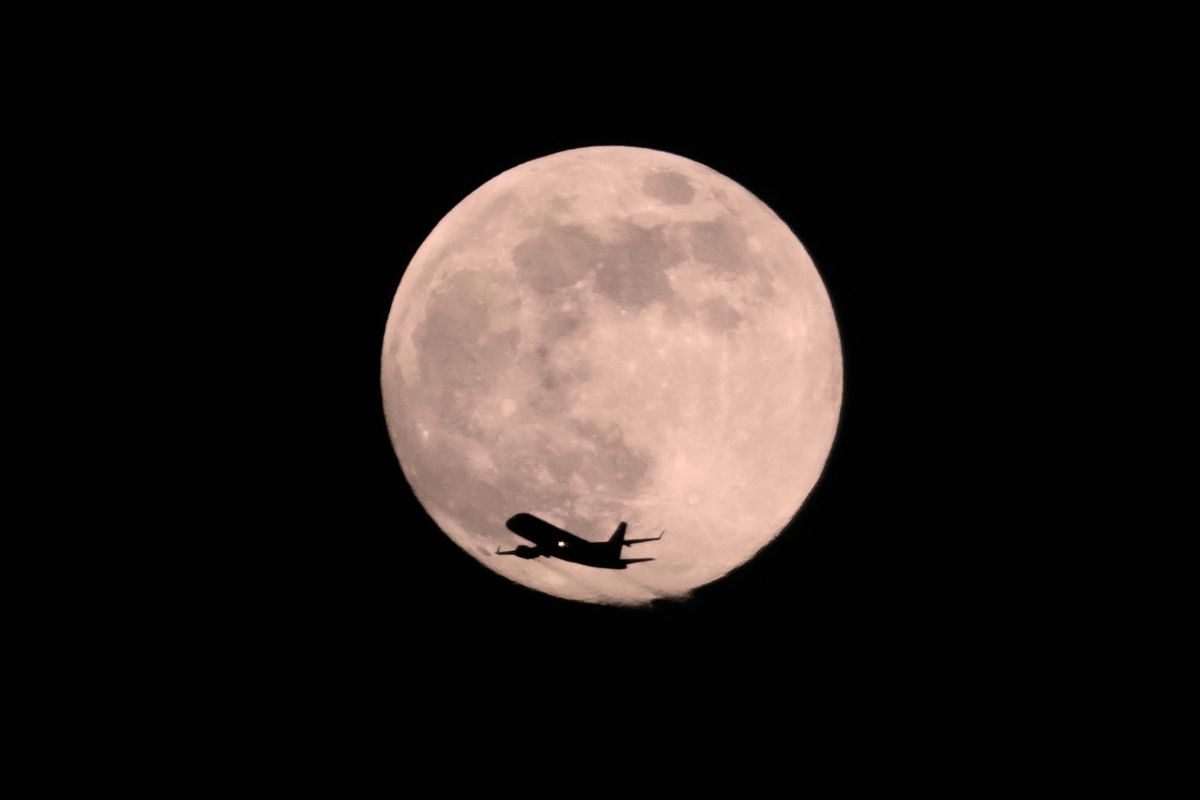 The Wolf Moon is the first supermoon of 2026(Image: AP)
According to NASA, this month’s Moon could look up to 14 per cent bigger and 30 per cent brighter than the year’s faintest full Moon.
How to see the Wolf Supermoon
The Wolf Moon will rise at around 3.45pm in the UK and be visible in the eastern sky as the sky grows dark, moving towards the southern sky as midnight approaches.
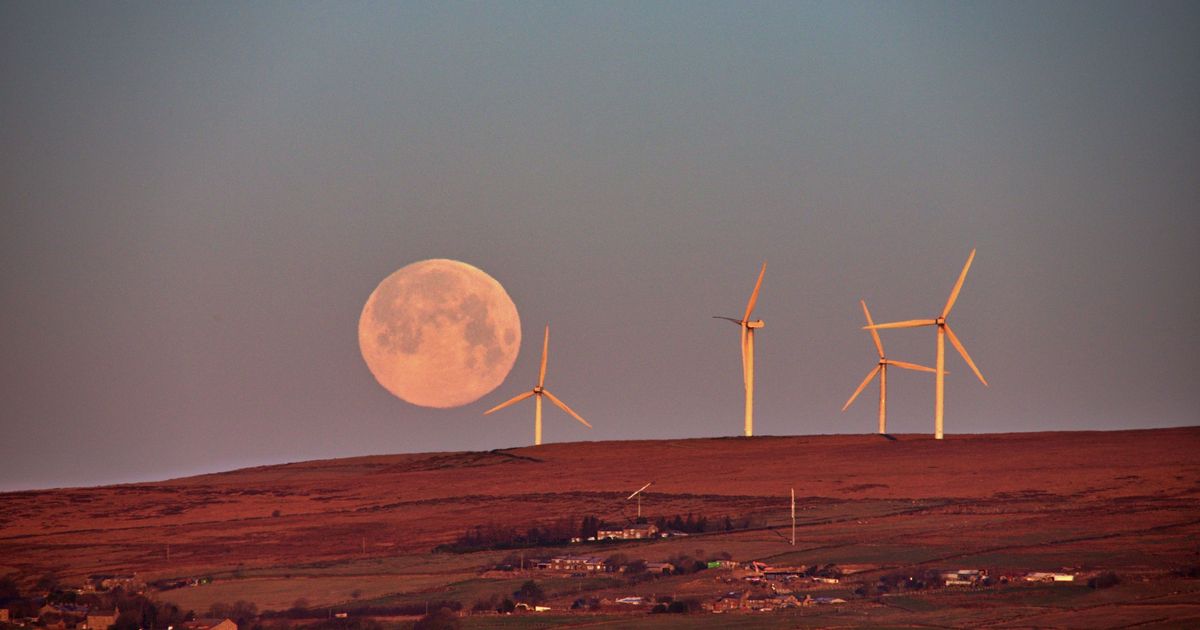
It reached its full phase at 10.03am on Saturday (January 3), meaning sky watchers enjoyed stunning views of the Wolf Supermoon as it rose last night and before it set this morning. In Greater Manchester, observers spotted the Wolf Moon setting over Scout Moor, Rochdale.
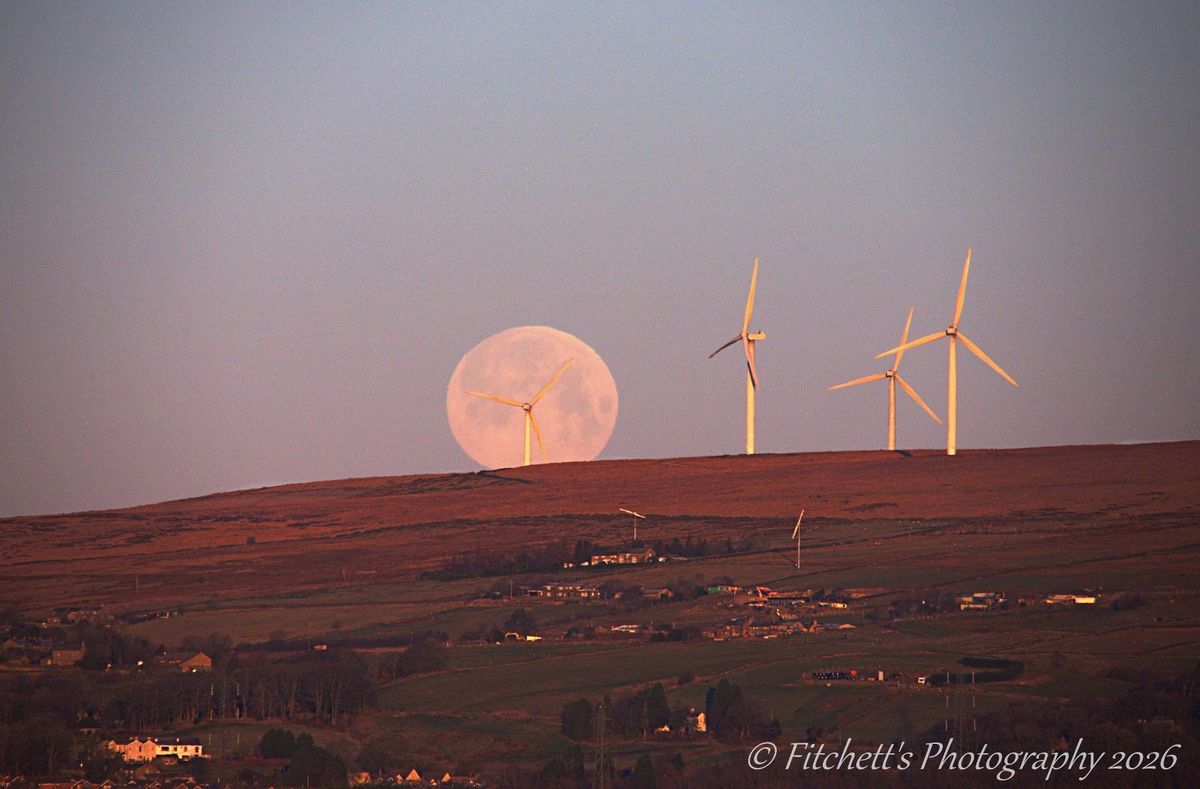 The Wolf Supermoon 2026 setting in Rochdale, Greater Manchester(Image: Fitchett’s Photography)
The Wolf Moon will set at around 9.43am on Sunday (January 4), according to the tracking website Time and Date, meaning early risers will be able to catch a glimpse of the first supermoon of 2026 before it sinks below the horizon.
How to see the Quadrantid meteor shower
While the meteor shower gets its name from Quadrans Muralis – a constellation identified in the 18th century but no longer officially recognised – the meteors now appear to radiate from within the constellation Boötes, close to the handle of the Big Dipper. In the early hours of January 4, this constellation will appear above the eastern horizon.
No telescope or binoculars are needed to enjoy the display. For the best chance of spotting meteors, experts recommend finding a safe spot away from streetlights and light pollution, allowing at least 15 minutes for your eyes to adjust to the dark, avoiding looking at your phone, as screen light can ruin night vision, and wrapping up warm.
 A meteor shower could dazzle UK skies tonight(Image: Anadolu via Getty Images)
However, viewing conditions won’t be perfect this year due to the bright light of the Wolf Supermoon, making fainter meteors harder to spot. Despite this, experts say the shower’s brighter ‘shooting stars’ should still be visible.
Full Moon schedule for 2026
- Wolf Moon – January 3 (10.03am)
- Snow Moon – February 1 (10.09pm)
- Worm Moon – March 3 (11.38am)
- Pink Moon – April 2 (3.12am)
- Flower Moon – May 1 (6.23pm)
- Blue Moon – May 31 (9.45am)
- Strawberry Moon – June 30 (12.57am)
- Buck Moon – July 29 (3.36pm)
- Sturgeon Moon – August 28 (5.18am)
- Corn/Harvest Moon – September 26 (5.49pm)
- Hunter’s Moon – October 26 (4.12am)
- Beaver Moon – November 24 (2.53pm)
- Cold Moon – December 24 (1.28am)