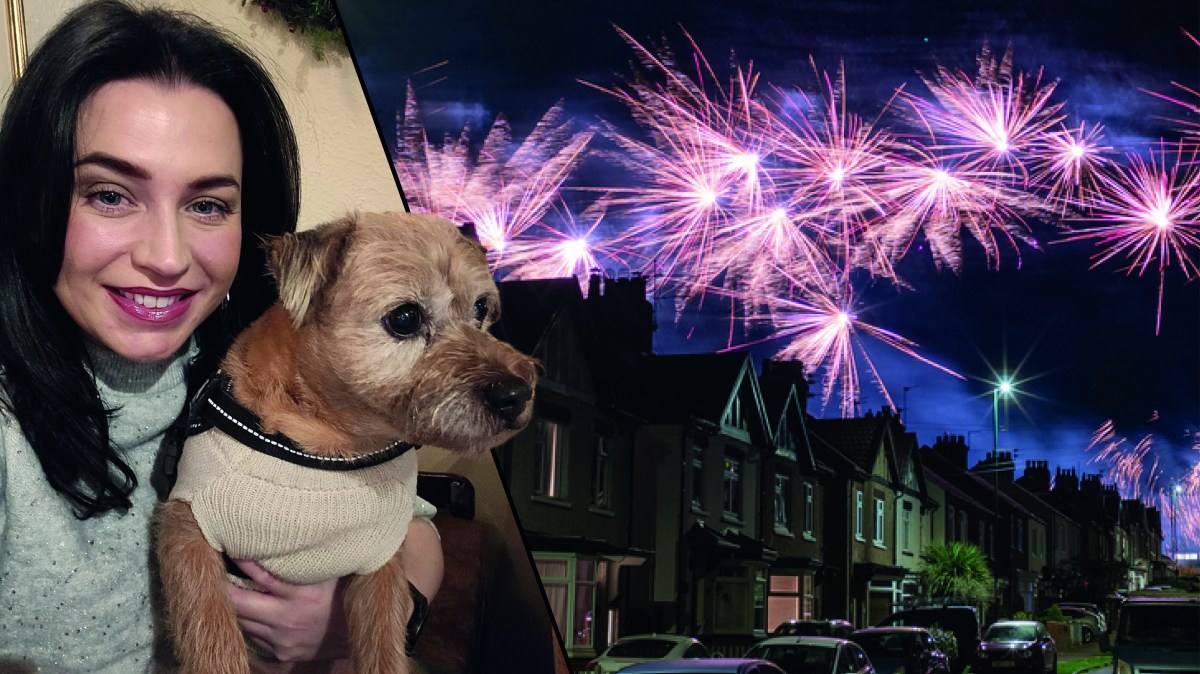
As midnight approached on New Year’s Eve, Karen Bond was not with friends. Instead, she was hunkering down in a small shepherd’s hut in the Shropshire Hills with Doris Day, her six-year-old cavachon dog.
“We have to get away from all the fireworks because Doris gets really terrified, she tries to bury her head in the walls and pants profusely,” says Bond, 66. Such is Doris’s fear that every year Bond drives 54 miles from their West Midlands home to escape.
Bond and her dog aren’t the only ones escaping the noise. Rachael Gardner, a 35-year-old administrator from Liverpool, spends thousands of pounds on trips away over new year and Bonfire Night to protect her nine-year-old border terrier, Nessie, who trembles, shakes and pants excessively when fireworks are going off outside.
“I’m so scared she’ll have a heart attack,” says Gardner. She has just returned from a rural hotel in Lancashire where she met three other anxious dog owners hiding out.
Fireworks, as many of us witnessed last week, are hugely popular, be they large-scale professional displays or back-garden shows for family and friends. Industry figures suggest 5,500 professional shows are held annually, attended by roughly 14 million people. They’re a British tradition that began with the wedding of Henry VII and Elizabeth of York in 1486 and are most commonly associated with bonfires commemorating the Gunpowder Plot of 1605.
But for those with pets and livestock the season can cause anxiety, and there is growing pressure on the government to act. On January 19 calls for quieter fireworks will be debated in parliament, in response to two petitions. The first, signed by 177,000 people since September, including Sir Stephen Fry, is calling for the maximum noise level of consumer fireworks to be reduced from 120 decibels to 90. Another, with 188,000 signatures, calls for firework sales to be limited to those running council-approved events, similar to Scottish law. This will be the seventh time MPs have debated the issue, and the first since December 2024.
In England and Wales it is illegal to set off fireworks between 11pm and 7am, except on Bonfire Night when the curfew is midnight and New Year’s Eve, Diwali and Chinese New Year, when it’s 1am. Most retailers can only sell fireworks in the run-up to these events. Consumer fireworks cannot be set off in public places or bought by under-18s, and a licence is required for professional use.
‘Our horse was so terrified she ran though a fence’
For many people, these rules aren’t enough. In 2023, Joanna Barnett’s horse Talullah died after neighbours let off new-year fireworks in their garden in Outwood, Surrey. Barnett says she had not been warned and Talullah became “so terrified that she ran through a solid wooden fence, injured herself, ran onto the road and eventually collapsed”. Talullah had to be put down on New Year’s Day after suffering from colic, an abdominal condition commonly triggered by stress. Redwings, the charity behind the Fry-backed noise petition, has recorded 49 horse deaths from fireworks between 2010 and 2024.
Horses are particularly vulnerable because “if they’re scared they will just keep running,” says Lucinda Ticehurst, an equestrian vet. Ticehurst says she treats colic, muscle damage and injuries caused by fencing and stabling every year as a result of fireworks. Some horses can be sedated as a precaution or use ear bonnets to muffle the sound, but not all horses respond well. It means that for many people like Mark Kennedy, a horse welfare expert at the RSPCA, fireworks season “completely disrupts our life, I absolutely dread it”. In November, Kennedy stood out in the dark fields in Colchester trying to calm his horses for ten nights straight.
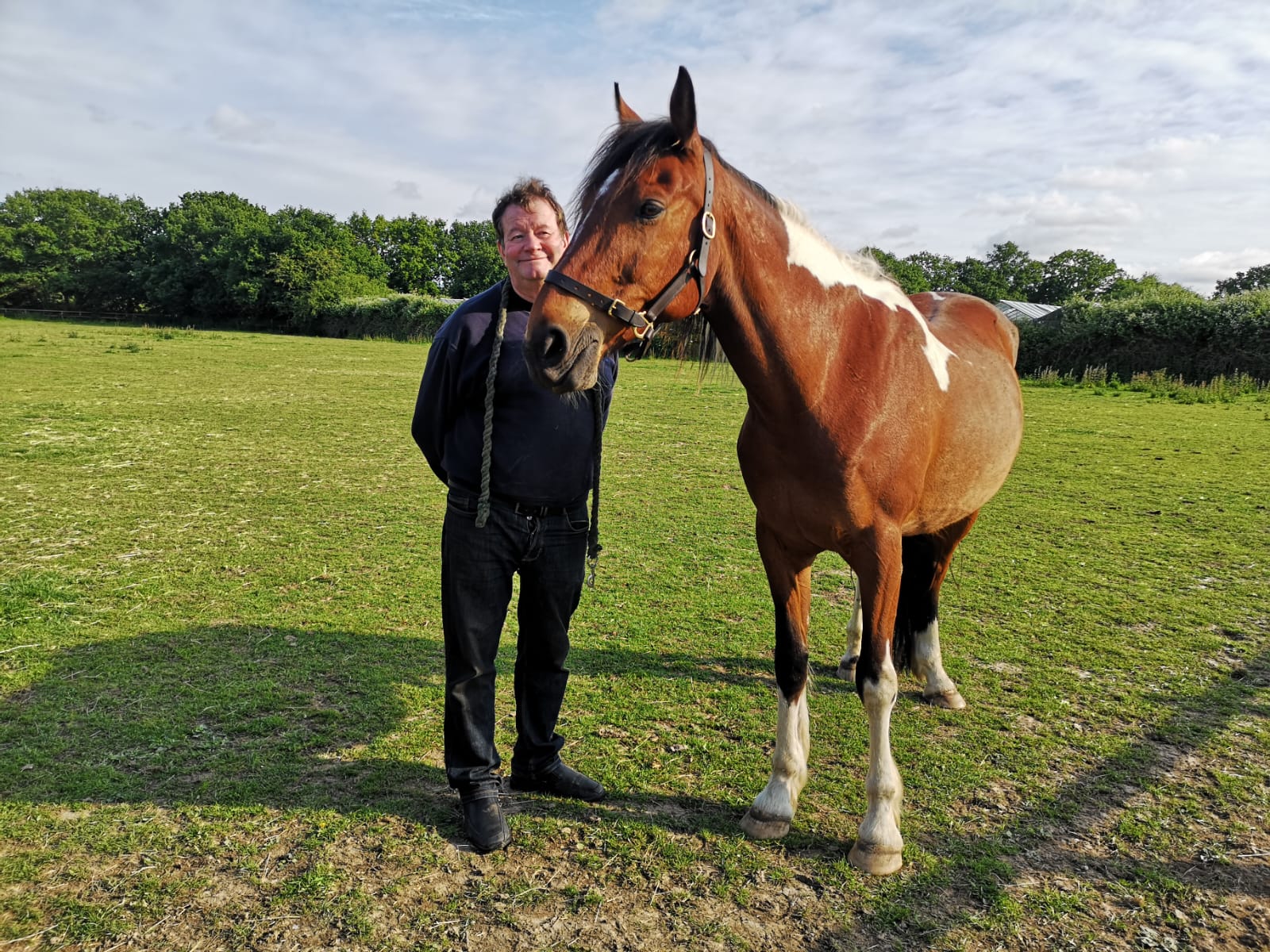
Mark Kennedy with Vincent, a rescue horse
COURTESY OF MARK KENNEDY
‘She was inconsolable’
The Animal Welfare Act makes it an offence to cause unnecessary suffering to any captive or domestic animal, but many people believe harm caused by fireworks is a grey area.
On November 15, Viv Lee’s nine-year-old golden retriever Molly died after a neighbour on the Isle of Wight let off fireworks for 40 minutes. “Molly had been a little nervous of fireworks before, but never frightened,” says Lee. “But that night she was spinning around in circles and absolutely inconsolable.” Lee had taken her usual precautions of playing classical music and trying to distract her dogs with toys and treats, but within a few hours Molly died of suspected heart failure.
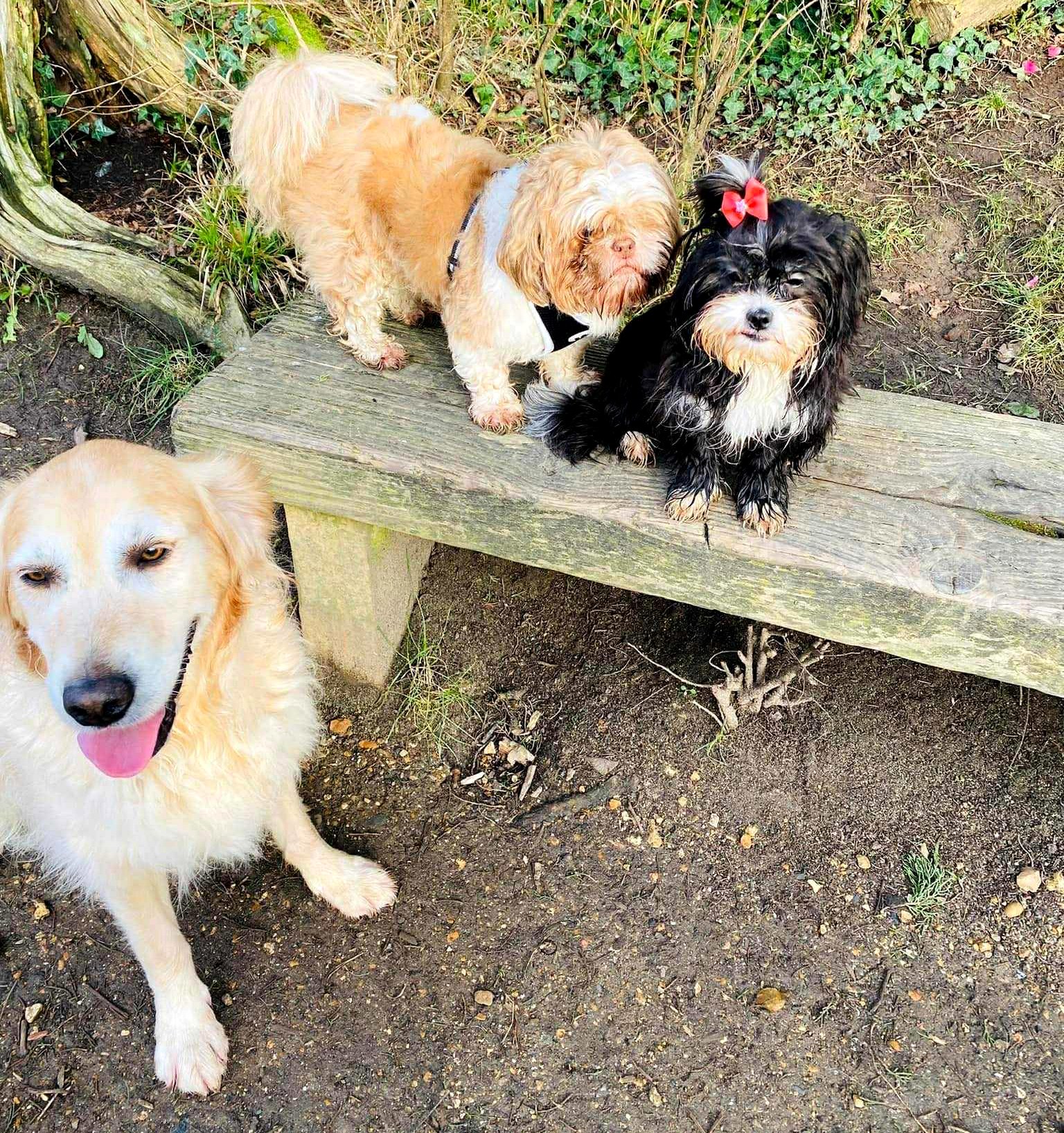
Molly, left, with Lee’s other dogs, Flora and Cody
VIV LEE
Pets are not the only ones panicked by the bright lights and loud bangs: Geoffrey Digby, a 70-year-old farmer in Bodham, Norfolk, suffered a hernia after one of his pigs ran into him while trying to bolt during fireworks in November. “They completely lost it, there was nothing I could do,” he says. Research has shown that geese fly higher and further during firework events. Weather monitors have recorded a thousandfold increase in birds taking flight on New Year’s Eve.
Professor Claudia Wascher, a behavioural ecologist at Anglia Ruskin University, recently conducted a study in Berlin which found that new-year fireworks caused significant distress to urban birds. Flocks of crows showed erratic flight patterns and gathered in unusual locations. “The change in behavioural patterns is suggestive of prolonged stress and disruption, which increases danger and potential injury,” Wascher says.
Still, firework displays are a joyous occasion for many families in the gloomy winter months. Matthew Tosh, a pyrotechnician, says that lots of people find the noise “celebratory. Hearing a loud bang is a visceral experience. Lots of audiences and cultures demand that.” Quieter fireworks would be a challenge too, he says, as “bringing the noise level down is only possible for certain types. If you want to create a larger burst in the sky, then you need a lot of energy to release that energy in a very short amount of time … Physically, that is going to create a bang.” Ninety decibels “is not that loud”, he says, comparing it to standing next to a kitchen blender. “You’d have some fireworks, but you wouldn’t have anywhere near the range of artistic effects.”
Displays can help local business too. “October and November can be quieter months but the fireworks event is always a success and gives a much-needed boost,” says Michael Graham of the Railway pub in South Woodham Ferrers, Essex.
Other countries are facing similar challenges. Consumer fireworks are being banned in the Netherlands, following the example of countries such as Ireland, Singapore and Chile. Last year the Czech Republic banned displays near sites such as hospitals and animal shelters.
Whether another Commons debate will lead to change remains to be seen, but on social media and from animal welfare groups, the argument against fireworks is getting louder. On New Year’s Day, within hours of returning home from the shepherd’s hut, Karen Bond packed a hot water bottle and blankets and got back in her van with Doris.
“The fireworks started going off again. Doris is on edge with every noise she hears now,” she said. “I’m sick and tired of living in fear and not being able to sleep in my own bed. I’m exhausted.”