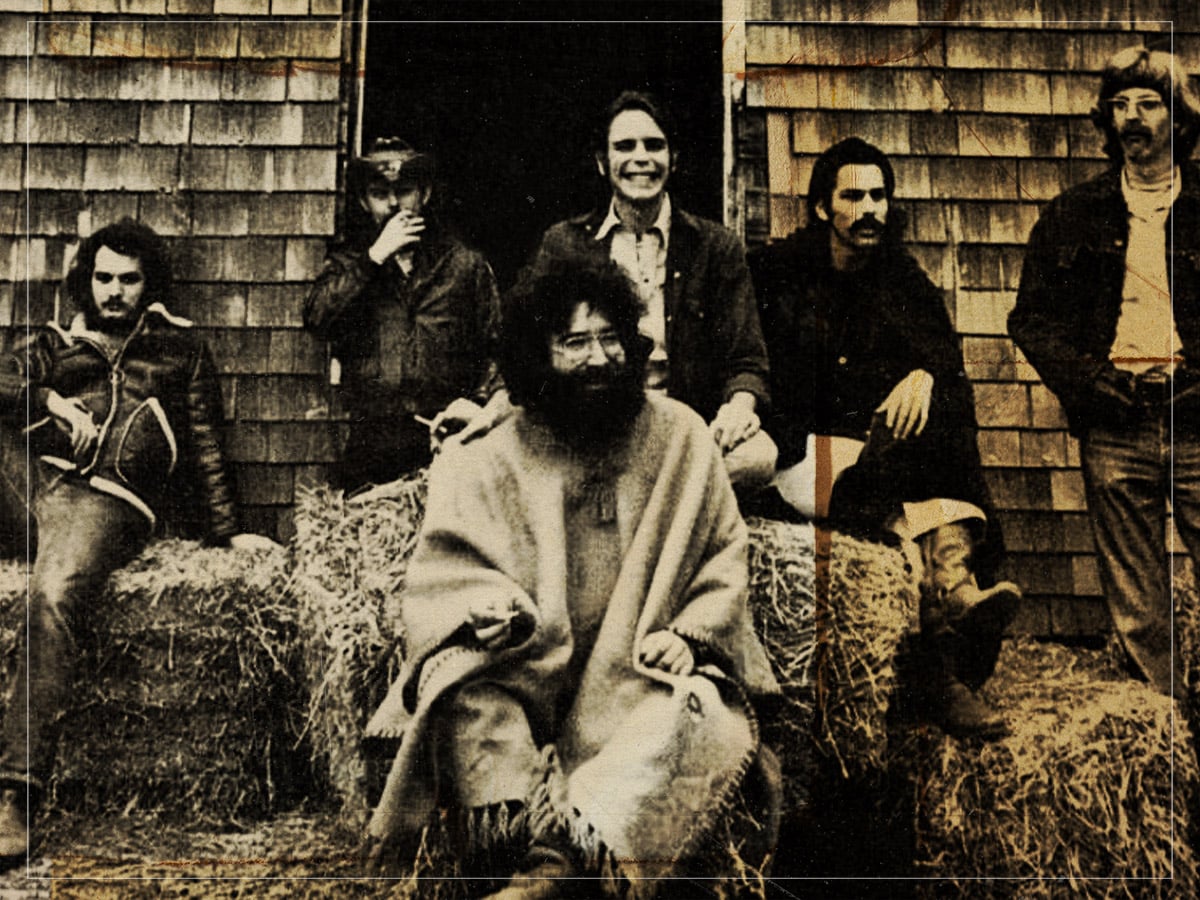
(Credits: Far Out / Herb Greene / Public Domain)
Sat 3 January 2026 21:00, UK
The Grateful Dead are truly one of the most beautiful anomalies in music. Impossible to explain, and yet a band that nobody would rush to change.
Even though plenty of original members of the band are sadly no longer with us, fans still listen to their music relentlessly and refuse to miss any live shows that may be happening. The reasoning for this is pretty simple: this is a band that exists beyond its members, a true amalgamation of music as a whole rather than just a vessel for a few songs here and there.
Lenny Kaye probably captured the essence of the band the best when he discussed their record Live / Dead. When talking about the album, Kaye said that he felt it was one of the best records ever made because it wasn’t just a list of songs played as you would expect. Instead, those songs give the live show some form of skeleton, which the band steadily adds flesh to, with each member being able to have a feel for the music and contribute to it in a way that helps the song evolve but doesn’t feel out of character.
“A list of song titles would mean very little in terms of what actually goes on inside the album,” said Kaye, “Like the early Cream, the Dead in concert tends to use their regular material as a jumping-off point, as little frameworks that exist only for what can be built on top of them.”
It’s impressive, and made even more so when you consider just how big of an operation the Grateful Dead live shows are. We’re not just talking about a small group of musicians going from town to town in the back of a van. You had the band, which consisted of an ever-changing number of members but was always a pretty big operation with a mixture of instrumentalists and backing singers helping bring the sound to life. On top of that, you have sound engineers looking after all of these different instruments and a lighting crew who were assisting with adding another layer of in-the-moment psychedelia to the group. How do you even practice this stuff?
Pete Townshend likened the group’s attitude to live performance to Bob Dylan’s, which seems fitting given the two used to tour together frequently. Townshend said that they were able to learn how to play their songs inside out because of how relentlessly they were playing them in front of live audiences. It gave them not just a knowledge of the Grateful Dead, but a knowledge of music as a whole that they could keep drawing from to keep their sound fresh.
“It was a bit like with the Grateful Dead. [They] could playing f*cking anything that you came up with,” said The Who guitarist, “So somebody in the crowd would sort of say: ‘Play Beethoven’s ‘Fifth Symphony!’ And they would have a go, you know (laughs).”
So, how did the Grateful Dead split their money?
It’s all well and good having a band the size of the Grateful Dead playing in perfect harmony on stage, but what happened when the show ended? How harmonious were they when it came to things a bit more boring, such as admin and logistics?
You would think that having a band and a crew the size of the Grateful Dead would lead to a range of money disagreements, but that didn’t happen. The band’s connection on stage travelled down into how they split their money, which helped prevent ego and keep everything in check.
Pete Townshend was also a big fan of this aspect of the band. “The big thing about the Dead I remember, was that they gave their road crew the same share that they got themselves, did you know that?” said Townshend, “Yeah, it was a true cooperative, so nobody got rich, nobody. They made a living but they didn’t get rich.”
Related Topics