Home » Airlines News of Germany » Flight Cancellations at Munich Airport Creates Travel Disruption in Germany as Passengers Face 11 Suspensions and 281 Delays by KLM, Lufthansa Cityline, SAS Link and Air Dolomiti, New Update
Published on
January 4, 2026
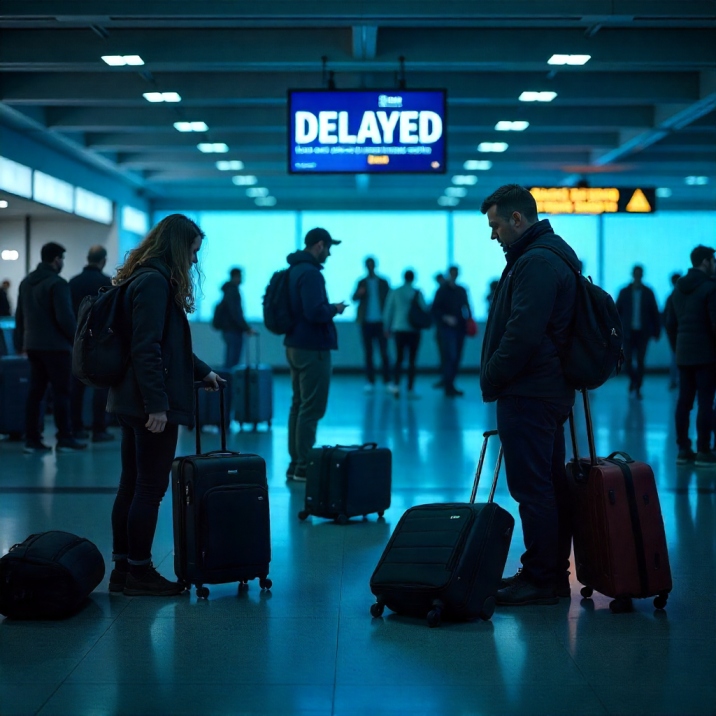
Flight operations at Munich Airport are currently facing hurdles. These disruptions have created a challenging environment for travelers across Germany. Today, authorities reported 11 total cancellations alongside 281 flight delays. Major carriers are struggling to maintain their scheduled services. Specifically, Lufthansa Cityline and KLM, leaving many passengers searching for alternatives. Meanwhile, Air Dolomiti and SAS Link continue to report additional setbacks in their daily rotations. These issues ripple through the terminal, affecting both business and leisure travel plans. Travelers should check their flight status immediately before heading to the airport. This report provides a detailed look at the current aviation crisis affecting these specific airlines. Understanding these figures helps passengers navigate the ongoing travel instability effectively.
While the primary focus of this disruption remains centered on Munich, Germany, the impact is widely regarded as a critical event for the country’s broader aviation infrastructure. As the second-largest airport in the nation, the facility in Munich serves as a vital gateway for both domestic and international traffic. When 281 flights are delayed in a single day, the resulting backlog often puts immense pressure on ground handling services and terminal capacity. The logistical strain is not confined solely to the departure halls. Arriving flights and connecting passengers are also being caught in the cascade of delays. The interconnected nature of European aviation means that a delay at a primary hub like the one in Munich, Germany, can quickly manifest as schedule “knock-on” effects at other secondary airports across the continent.
A detailed breakdown of the affected carriers reveals that both national subsidiaries and international partners are grappling with these operational hurdles. The following table illustrates the scale of the disruption per airline:
Lufthansa Cityline, a regional partner of the German flag carrier, has been particularly hard-hit with 43 recorded delays. KLM and Air Dolomiti also face substantial challenges, with KLM recording the highest number of cancellations among the group. These figures highlight a period of instability for carriers that provide essential links between Munich, Germany and the rest of Europe.
Beyond these specific figures, delays were being experienced by several other Airlines, like Lufthansa, City Airlines, SunExpress, Pegasus Airlines, Air Baltic, Air France and more.
The disruption of nearly 300 flights is expected to have a measurable effect on the tourism sectors within the region. In Munich, Germany, the influx of business travelers and leisure tourists has been significantly slowed by the high volume of suspensions and delays. This bottleneck in passenger flow can lead to immediate financial consequences for the local hospitality industry.
Hotel providers often see a rise in last-minute cancellations when transit passengers are unable to reach their destination on time. Furthermore, local transport services and tourism landmarks in the city may experience a reduction in visitors. For a city that thrives on its reputation for efficiency and accessibility, these recurring disruptions pose a challenge to the seamless experience typically expected by international guests.
For those currently caught in the disruption at the airport in Munich, Germany, several immediate steps are recommended to secure passenger rights and minimize further inconvenience:
- Request Written Confirmation: Passengers are advised to seek written statements from airline ground staff or information desks detailing the specific reason for the delay or cancellation. This documentation is essential for future claims.
- Retain All Receipts: If a delay extends for several hours, airlines are generally required to provide refreshments and meals. If these are not provided directly, all receipts for food, beverages and necessary communication should be kept for reimbursement.
- Inquire About Accommodation: In instances where an overnight stay is necessitated by a cancellation, the operating carrier is typically responsible for arranging hotel accommodation and transportation between the airport and the lodging.
- Monitor Flight Status Digitally: Travelers should utilize airline mobile applications and the official airport website for real-time updates, as schedules remain in a state of flux.
As the situation develops, passengers are encouraged to remain in close contact with their respective carriers to explore rebooking options or ticket refunds.
-The information provided is sourced from FlightAware.
