
Published
03/01/2026 às 01:07
Updated
03/01/2026 às 01:09
Found in the Chishan Formation in the Qianshan Basin, the dinosaur egg, dated to approximately 70 million years ago, revealed calcite crystals inside, allowed for the identification of a new species, and expanded the scientific record on microstructure, fossilization, and environmental conditions of the Late Cretaceous in China.
A dinosaur egg approximately 70 million years old, found in the Chishan Formation in China, surprised researchers by containing calcite crystals, allowing them to identify a new species and generate unprecedented data on the microstructure, fossilization, and environmental conditions of the site.
Discovery of the egg and the natural geode.
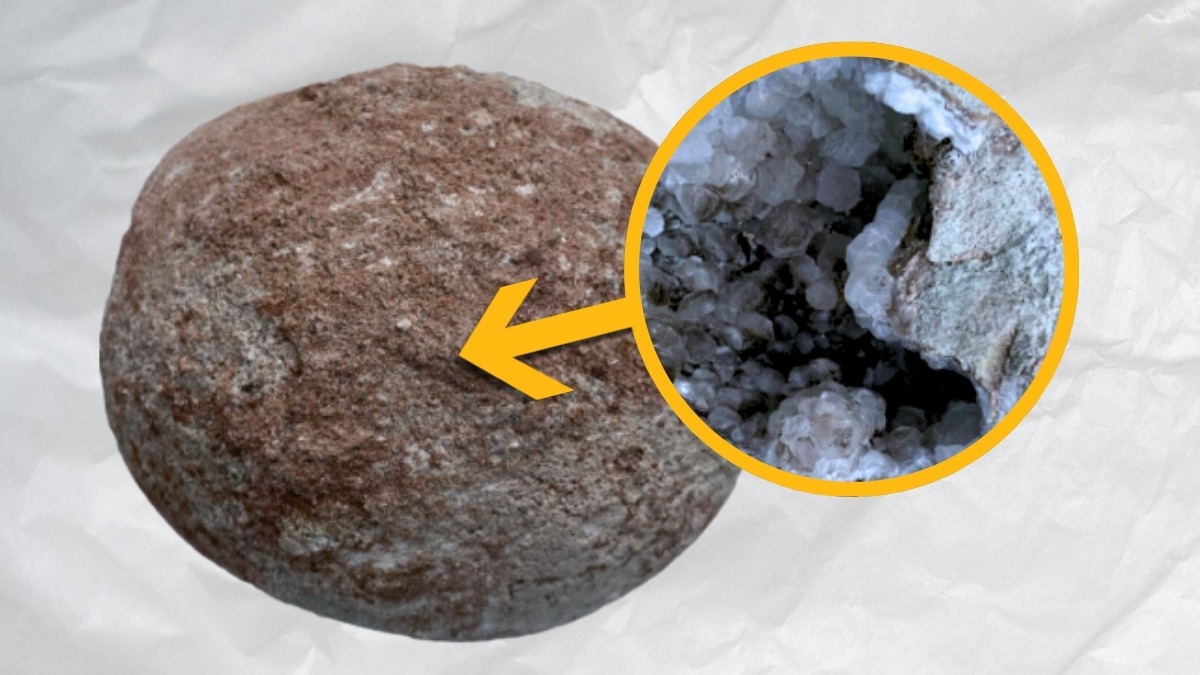
The fossil, about the size of a grapefruit, was found at a Chinese fossil site and presented an unusual condition. Instead of an embryo or sediment, the inside of the egg was lined with shiny calcite crystals adhered to the inner shell.
This configuration transformed the egg into a natural dinosaur geode, something rare in the paleontological record.
— ARTICLE CONTINUES BELOW —
Are you in favor of US military intervention in Venezuela and the arrest of Nicolas Maduro?
— Click Oil and Gas (@clickpetroleoeg) January 3, 2026
The material caught the researchers’ attention because it preserved the shell intact, while also revealing a mineralogical process that is poorly documented in this type of fossil.
Analysis showed that the crystals are not part of the egg’s original structure, but result from processes that occurred after burial. This unusual preservation offers new possibilities for studying events that occurred after the material was deposited in the soil.
Identification of the new oospecies
Detailed study of the shell microstructure led to the identification of a previously unknown oospecies, named Shixingoolithus qianshanensis. The description was published in a 2022 article led by paleontologist Qing He of Anhui University.
The classification was based on the microscopic organization of the shell, considered more similar to that of other dinosaur eggs than to that of reptile or bird eggs. This characteristic was decisive in recognizing it as a new species of fossilized egg.
Two eggs were discovered and classified within the same oogenus. However, neither contained a preserved embryo, which limits the identification of the animal responsible for laying them and prevents direct associations with known skeletons.
Geological context of the Chishan Formation
The eggs are among the earliest evidence of dinosaurs recorded in the Chishan Formation, an Upper Cretaceous unit estimated to be about 70 million years old, located in the Qianshan Basin.
The region is traditionally known for fossils of turtles, mammals, and birds from the Paleocene. Therefore, the presence of dinosaur eggs broadens our understanding of the local faunal diversity at the end of the Cretaceous period.
The finding suggests that dinosaurs frequented or nested in the area, even though skeletal remains have not yet been identified. This data contributes to reassessing the paleontological importance of the formation.
Process of calcite crystal formation
For mineral crystals to form inside a dinosaur egg, a specific sequence of events must occur. Initially, the embryo decomposes completely, leaving the inside of the egg empty.
Subsequently, groundwater slowly seeps through the crust via micropores and small fissures. The minerals dissolved in this water begin to deposit inside, gradually accumulating until they form calcite crystals.
This process indicates that mineralization occurred after the egg was buried. Analysis of the shells and crystals can provide relevant information about the underground fluids and geochemical environment of the fossil site.
Scientific applications and preservation of life history.
In a paper published earlier this year, scientists used calcite crystals from another dinosaur egg to directly date the egg itself, something unprecedented in paleontology. The method takes advantage of mineral precipitation that occurs after burial.
In addition to dating, these crystals can retain information about the fluids that circulated through the fossil bed and about the environment. geochemical from the original nest. This data expands the possibilities for studying fossilized eggs.
The egg with a calcite geode exemplifies how natural processes preserve the history of life. From bones encrusted with minerals to structures replaced by opals, these records offer lasting evidence of extinct organisms and their environments.
This article was prepared based on information from scientific study published in 2022, led by paleontologist Qing He of Anhui University, and in a scientific article published earlier this year on the use of calcite crystals in dinosaur eggs for direct dating in paleontology.