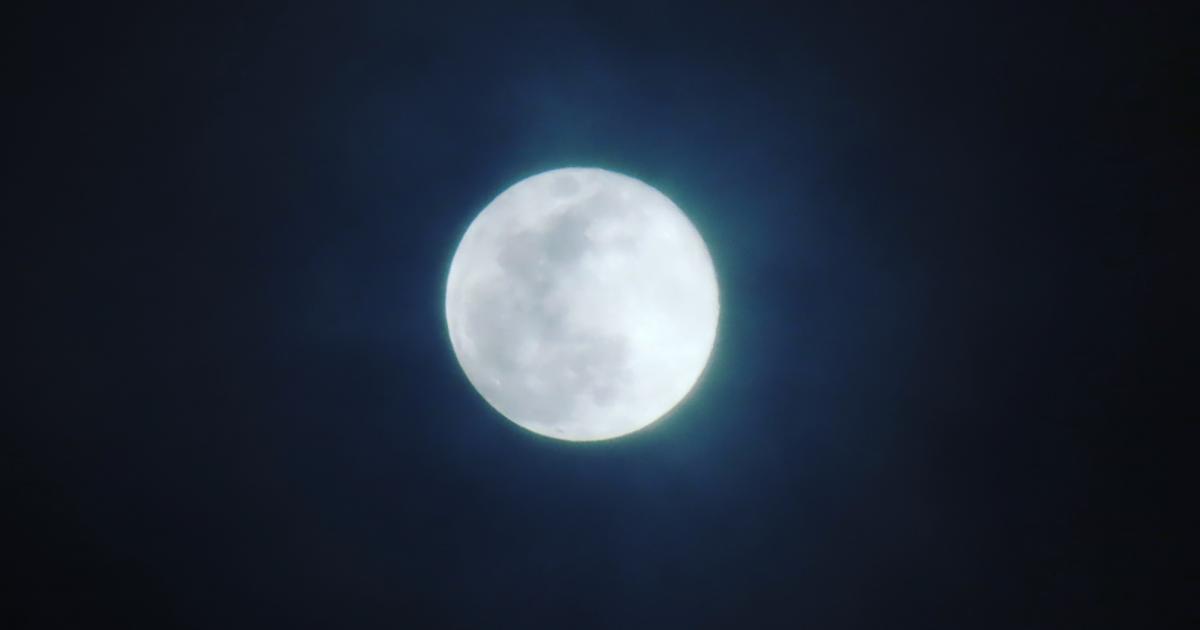
The Wolf Moon will be visible on the evenings from January 2 to January 4 and is the fourth and final supermoon in a row.
It follows the Harvest Moon, Beaver Moon and the Cold Moon in October, November and December, respectively.
The next supermoons don’t occur until November and December 2026, so it is your final chance to see one for several months.
Why is it called a supermoon?
As explained by the Royal Museums Greenwich : “A supermoon happens when the Moon is at its closest point in its orbit to the Earth at the same time as a full Moon, making it appear bigger and brighter than usual.
“The term ‘supermoon’ originates from a concept in astrology, but now has been adopted by some astronomers.
“One strict definition of a supermoon is that if the Moon is within 10 per cent of its closest distance at the moment of full Moon, it is considered a supermoon.
“During a supermoon, the Moon appears up to 14% bigger and 30% brighter compared with when the Moon is furthest away.”
The Wolf Moon is the last supermoon in 2026 until November (Image: Getty Images)
Why is it called a Wolf Moon?
The Wolf Moon gets its name from the howling of wolves typically heard in midwinter.
Other names for the full moon in January include Old Moon and Ice Moon.
Further examples of moon names throughout the year include the Worm Moon in March, the Strawberry Moon in June and the Hunter’s Moon in October.
How to see the Wolf Supermoon in January
The Wolf Supermoon this weekend is the final supermoon in the UK until November and December.
However, it is the first of 13 full moons this year, with one a month.
Two will occur in May, named a Blue Moon, an event that occurs once every few years.
January Full Moon 2026 is the Wolf Supermoon! 🐺🌕
On January 3 at 10:03 GMT, the first Full Moon of 2026 rises – known as the Wolf Moon. Named for the howling of wolves on cold winter nights in the Northern Hemisphere, this Moon has been part of folklore across cultures for… pic.twitter.com/TwosGLtBPu
— Star Walk (@StarWalk) January 2, 2026
The Wolf Moon will rise on Saturday, January 3, and will be at its fullest at 10.03am UK time.
It will be one of the highest full moons of 2026 and is visible low in the eastern sky.
Recommended reading:
Although it rises early in the day, the Wolf Moon will be at its best in the evening when it rises and is closest to the horizon.
The Met Office cloud coverage forecast shows clear skies for much of the UK on Saturday evening.
The moon can be best seen and photographed in areas with low light pollution.