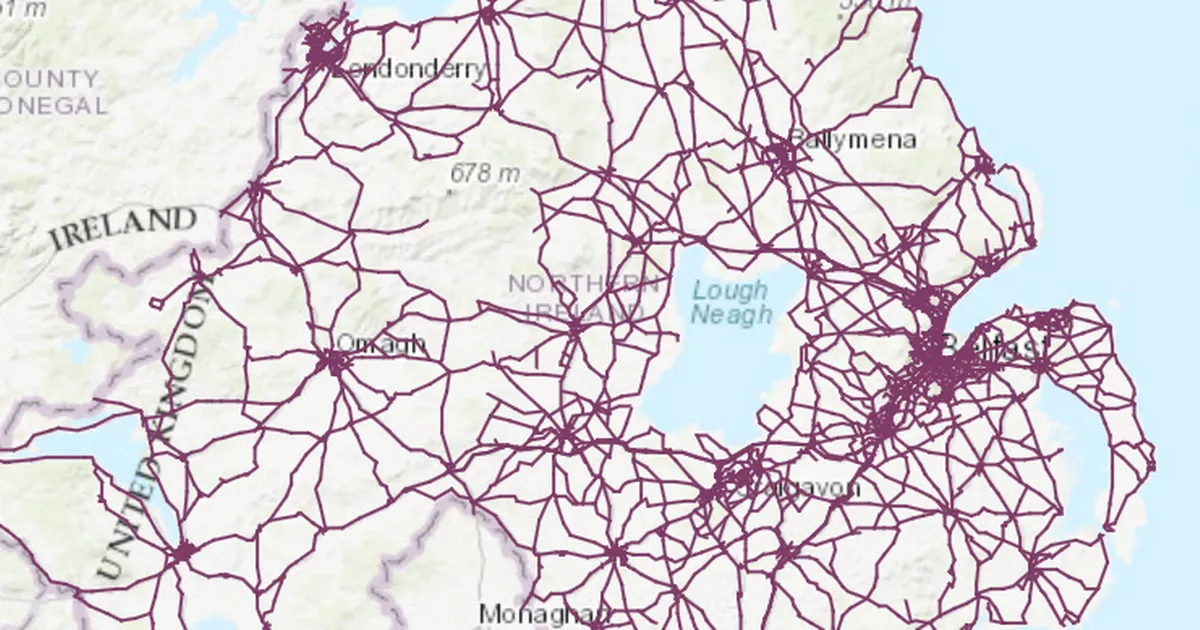
Around 300 staff and 130 gritters salt the roads around Northern Ireland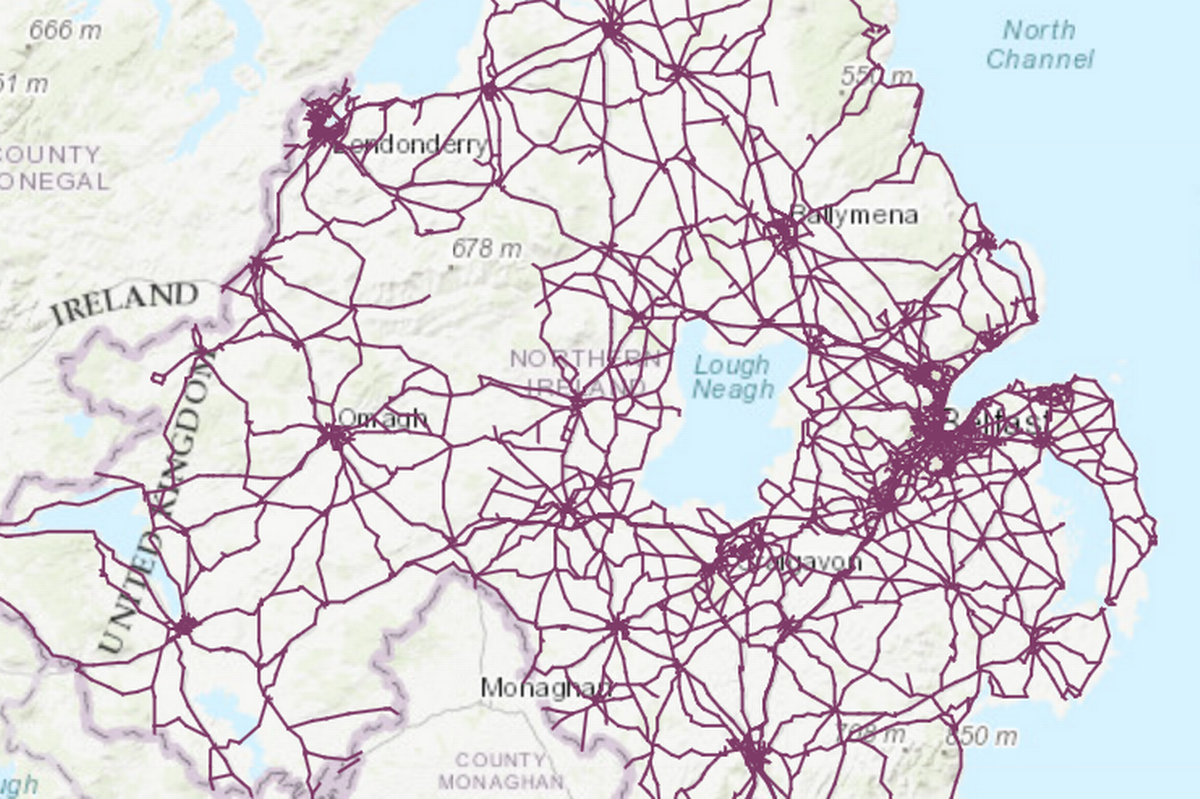 A map showing the gritting network around Northern Ireland(Image: DfI)
As Northern Ireland is covered in snow and ice as temperatures plummet, the Department for Infrastructure’s winter service is taking action to keep the region moving.
The main through routes in Northern Ireland carrying more than 1,500 vehicles per day are salted as part of the service. In exceptional circumstances, roads with difficult topography carrying between 1,000 and 1,500 vehicles daily will also be salted.
This means that 28% of the road network will be salted, directly benefiting around 80% of road users. A weather warning for snow and ice is currently in place across much of Northern Ireland, and will remain in place until midday on Monday, January 5.
READ MORE: Simple kitchen hack to de-ice your frozen windscreen safely this winterREAD MORE: NI weather: All you need to know as Met Office forecasts snow for weekend
Around 300 staff and 130 gritters work hard to salt the main roads to keep traffic moving safely and freely. Twelve specialist snow blowers are also available to be deployed if required.
Speaking as the winter service began in November 2025, Infrastructure Minister Liz Kimmins said: “Prior to the start of each winter service season, my Department carries out a significant amount of pre-planning to ensure a state of readiness. Staffing arrangements have been finalised, pre-season checks on winter service equipment are now complete and salt stocks have been replenished.
“Our winter service operation remains in place from October to April and every night up to 300 people will be on standby ready to salt around 7,000 kilometres of the main road network main roads helping drivers to cope with the wintry conditions.”
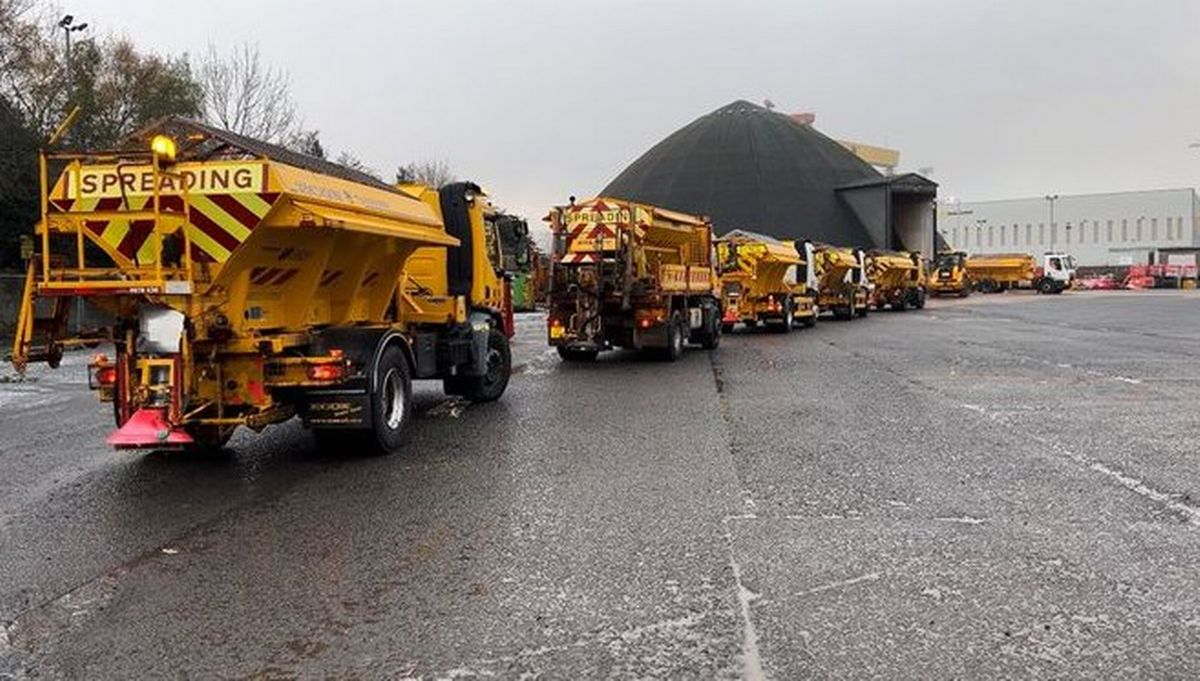 Gritter lorries in Northern Ireland (stock image)(Image: DfI)Which roads are gritted
- Resources are focused on roads carrying the most traffic.
- A schedule of salting routes has been drawn up covering the main through routes carrying more than 1,500 vehicles per day.
- Other roads carrying more than 1,000 vehicles per day may also be included if they are in hilly areas or there are other difficult circumstances.
- Special allowance is made for school and other buses by a weighting factor. For example, a 40-seater bus is counted as 40 vehicles.
- Almost 7,000 km (4,300 miles) of roads are salted which is 28% of the length of the road network and salting it costs £4.5M in an average winter.
- This caters for 80% of all traffic. To cover 90% of traffic the length of roads salted would be doubled, at twice the cost.
- On more lightly trafficked roads, salt boxes or grit piles may be placed at hills, bends or junctions for use by the public.
A map showing the routes in Northern Ireland on the gritting network can be found by clicking here.
When does gritting take place?
DfI duty controllers are on call 24 hours a day in each of their four divisions. Based on all of the forecast data and local knowledge, they will make the appropriate decision for their local area.
The season usually lasts from early November to late March but winter service will be provided outside this period if necessary.
Report an issue with ice or snow
You can report an ice or snow issue on a road or street by using the online map. You can also apply for a salt bin or pile, or a salt bin refill. Salting of main roads takes place to help traffic move safely.
Find out more by clicking here.
For all the latest news, visit the Belfast Live homepage here and sign up to our daily newsletter here.