Syrian military expert Adham Tareq: “IS today is no longer a traditional organization that controls cities, but rather a flexible network that relies on clandestine work”
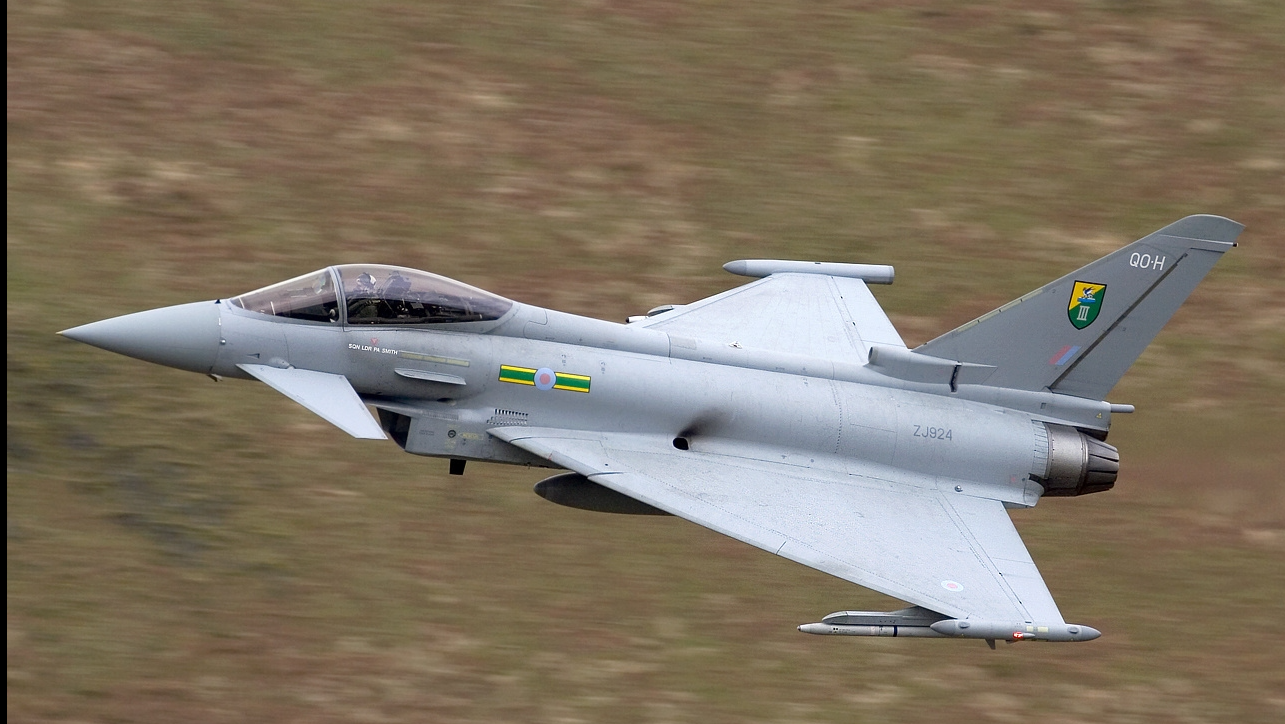
British and French air forces carried out a joint military operation targeting a site in Syria suspected of being used by the Islamic State (IS), reflecting continued international concern over the group’s ability to regenerate despite its battlefield defeat years ago.
According to a statement issued by the British Ministry of Defence, the airstrike targeted an underground facility containing a network of tunnels and multiple entrances believed to have been used as a logistical warehouse or an operations center for the group’s members.
The statement confirmed that the operation was carried out using precision-guided munitions, and that initial assessments indicate the objective was achieved without collateral damage or civilian casualties, given the selection of an uninhabited location.
Despite losing territorial control over its last strongholds in Syria in 2019, international security reports indicate that IS has not been completely defeated but has regrouped by relying on small, mobile cells operating in remote areas and exploiting security vacuums and instability across the country.
The British-French strike comes amid sporadic operations by the international coalition aimed at preventing the group from rebuilding its capabilities or launching large-scale attacks inside or outside Syria, as affiliated cells have shown renewed activity in several areas in recent months.
In an official comment, a spokesperson for the Syrian government, who preferred not to be named, told The Media Line that Damascus “affirms its commitment to combating terrorist organizations in all their forms,” stressing at the same time that “any military movement inside Syrian territory must be carried out in a manner that respects the sovereignty of the Syrian state and in coordination with its official institutions.”
The spokesperson added that government forces continue their security operations to pursue the group’s cells in a number of areas, warning that the continuation of regional chaos contributes to giving extremist groups room to reorganize and spread.
Airstrikes may weaken its capabilities temporarily, but they do not end the danger unless accompanied by sustained intelligence and field efforts
Syrian military expert Adham Tareq said in a statement to The Media Line that the airstrike “carries an important tactical dimension,” but does not represent a radical solution. He said: “IS today is no longer a traditional organization that controls cities, but rather a flexible network that relies on clandestine work. Airstrikes may weaken its capabilities temporarily, but they do not end the danger unless accompanied by sustained intelligence and field efforts.”
The expert pointed out that Syria’s complex geography, along with the multiplicity of controlling forces, still constitutes a favorable environment for the movement of extremist cells.
In turn, an expert on extremist groups, who preferred not to be identified, explained that IS has “entered a new phase of activity,” based on limited attacks and individual recruitment instead of direct control. He added: “The organization invests in economic and social crises and re-presents itself as an extremist alternative in areas suffering from weak services and a lack of stability.”
British Defence Secretary John Healey said the operation “demonstrates the United Kingdom’s leadership and its determination to stand shoulder to shoulder with its allies to eliminate any return of the Islamic State organization and its dangerous and violent ideologies in the Middle East.”
The organization invests in economic and social crises and re-presents itself as an extremist alternative in areas suffering from weak services and a lack of stability
He added that “the operation aims to eliminate dangerous terrorists who threaten our way of life and shows the readiness of the British armed forces to intervene throughout the year to maintain Britain’s security at home and its strength abroad.”
Healey thanked all members of the British armed forces who participated in the operation for their “professionalism and courage,” noting that they were among thousands of British personnel deployed during the Christmas and New Year period.
The British-French strike reflects continued awareness by the international community of the danger posed by the persistence of IS as a latent security threat. However, observers believe military treatment alone is insufficient and that the final eradication of the group requires a comprehensive approach combining security, politics, and development to address the deep causes that allowed its emergence and continuation.
Previously, US forces launched military strikes against the IS in Syria on Dec. 20, following a pledge by President Donald Trump to respond “decisively” to the Palmyra attack on Dec. 13.
The strikes targeted both the Maadan Desert in the Raqqa countryside and the Al-Hammad Desert in the Deir ez-Zor countryside.
US Central Command (CENTCOM) announced the launch of Operation Eagle Eye against the Islamic State group in Syria. It said its forces hit more than 70 targets at multiple sites across central Syria using fighter jets, attack helicopters, and artillery.
The command also revealed that the Jordanian Armed Forces provided support with fighter jets and that the operation used more than 100 munitions for the precise targeting of infrastructure sites and weapons depots belonging to the Islamic State group.
CENTCOM commander Gen. Brad Cooper called the operation “decisive” in preventing the Islamic State group from planning terrorist attacks against the United States.
He confirmed that US forces will continue relentlessly to pursue terrorists seeking to harm Americans and their partners in the region.
A US official told NBC News that the goal of the operation is to strike locations where the group is attempting to reorganize, to uproot those forces, and to destroy their sites on a wide scale.
The official said the US military used A-10 and F-16 aircraft, Apache helicopters, and HIMARS systems, while Jordanian F-16 aircraft also provided support.
The strikes could continue for several weeks or even a month, according to two US officials.
On Dec. 13, two US service members and one American civilian were killed, and three others were injured in an armed ambush carried out by a member of IS against a joint patrol of US forces and the Syrian army near the city of Palmyra, according to CENTCOM.