
Published
03/01/2026 às 22:54
The planned action for the forests of Guam It went from being planned to being included in the list of measures used to combat the arboreal brown snake.
The method uses dead rodents with 80 milligrams of paracetamol, a lethal dose for the species, placed in the environment in a way that makes it easier for snakes to find them.
In addition to the impact on wildlife, the spread of snakes also affects the island’s infrastructure, with the risk of problems in electrical systems and power outages.
— ARTICLE CONTINUES BELOW —

What happened and why did it attract attention?
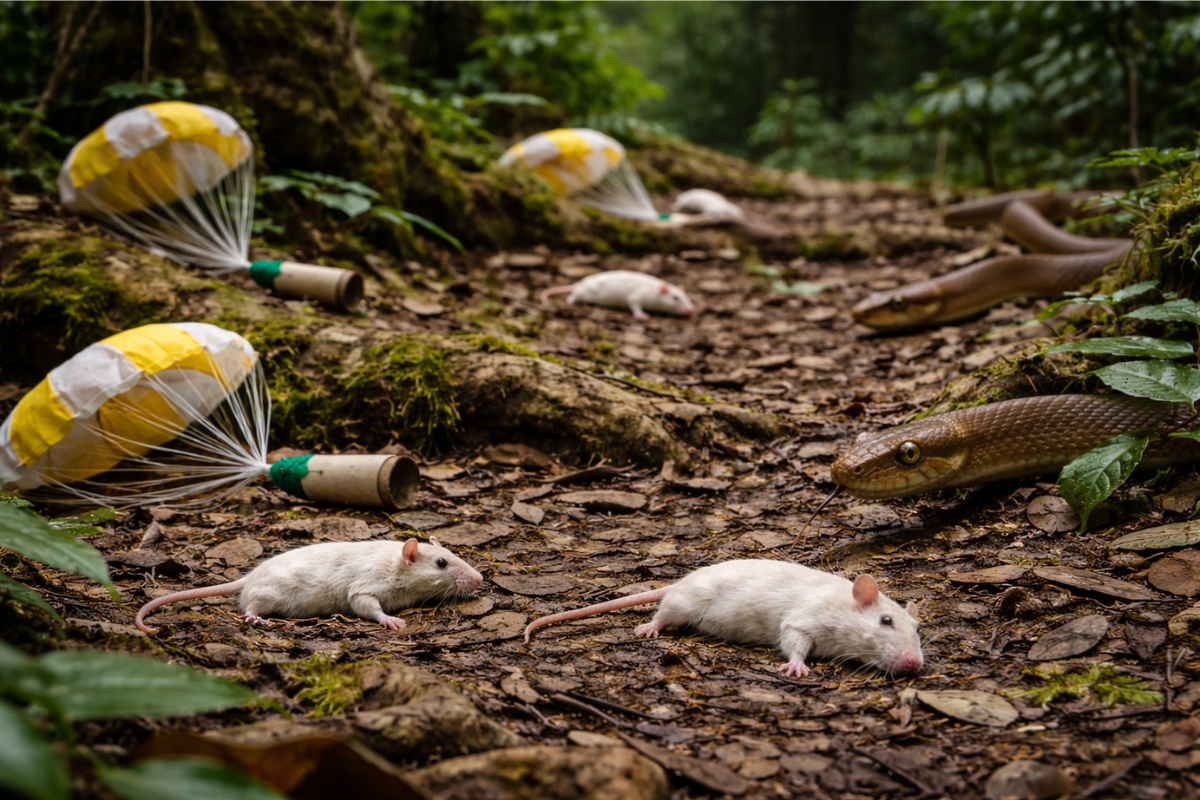
The operation involved the launch of 2.000 rats already dead, prepared to serve as toxic bait for snakes.
The target is the arboreal brown snake, which can reach three meters and it spread aggressively across the island.
The strategy attracted attention for using paracetamol as a toxicant for an invasive reptile, taking advantage of the species’ high sensitivity to the compound.
How does the bait fall into the trees?
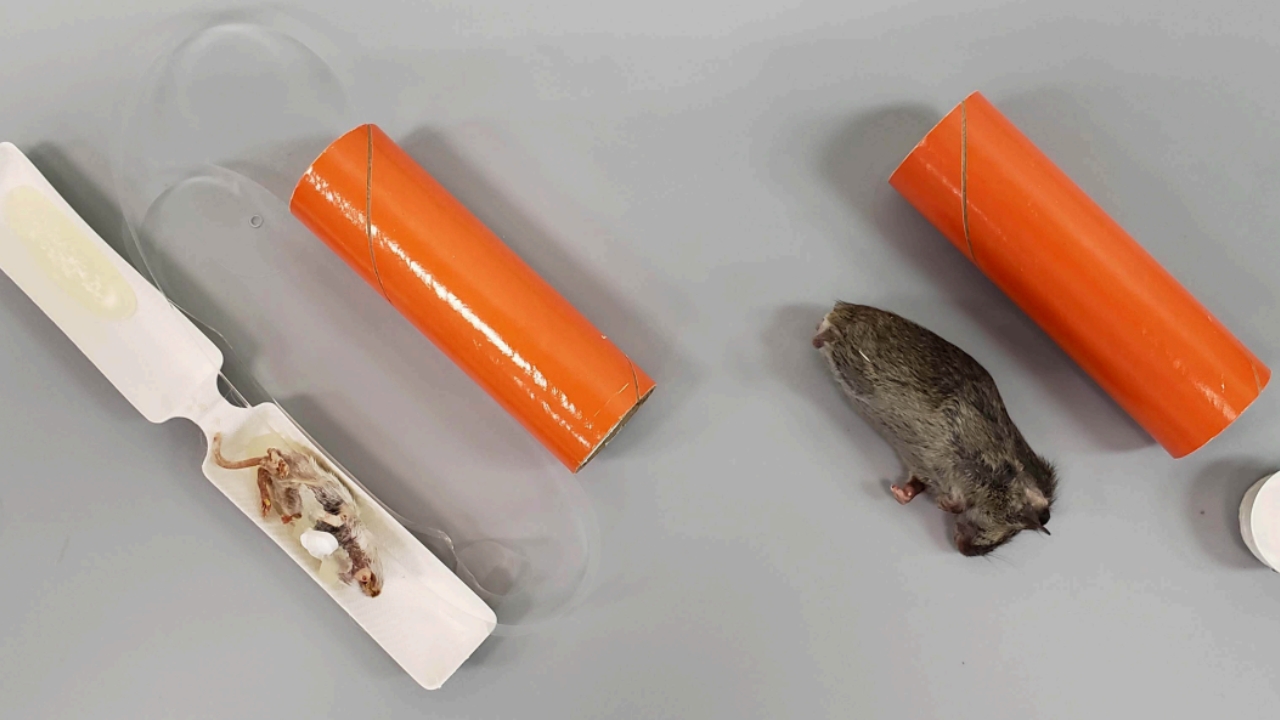 Left: Standard Air Delivery System (ADS) with dead rat bait. 4 to 6 g e one 80 mg acetaminophen tablet fixed externally.
Right: proposed alternative ground bait consisting of a dead rat. 13 to 17 g on two 80 mg tablets inserted into the body.
To reduce the risk of other animals finding the bait on the ground, the delivery method was designed to get caught in the vegetation.
The procedure calls for the rodents to be released. one by one, with a mini parachute, to get tangled in the trees where the snakes roam.
Radio tracking was also used on some of the baits to monitor the snakes’ movements before death, during the evaluation phase of the method.
Why did paracetamol become used to control snakes?
O paracetamol It is an effective oral toxicant for the brown arboreal snake, with a dose of 80 milligrams associated with very high mortality in the species.
Large-scale control gained momentum with the development of a automated air delivery system, designed to distribute bait in wooded areas quickly and consistently.
Tests and validations indicate that the technique can reduce the abundance of snakes in treated areas, although it does not eliminate the problem permanently.
The scale of the problem in Guam and the daily damage it causes.
 Arboreal brown snakes can vary greatly in size. The image shows a small juvenile (713 mm of snout-cloaca length, 36 g of body mass; on the left) and an exceptionally large male (1.800 mm, 1.285 g; on the right)
Estimates suggest approximately 2 million of snakes in 541 square kilometers from Guam, with a density between 50 to 100 snakes per hectare in critical areas
The species is linked to the loss of native birds, with extinction of nine out of 12 Native species mentioned in the history of the problem.
Pressure is also appearing in the infrastructure sector, with a focus on reducing blackouts and risks in electrical installations.
What could happen from now on?
The program was not limited to a single action. and became part of a set of control measures, with ongoing research and method adjustments.
Aerial spraying can suppress snakes for a period, but reinvasion from untreated areas occurs over the course of months, reinforcing the need for repeated applications and combination with other tools.
Guam remains an unincorporated associated territory of the United States, with 160 thousand People and military relevance, while snake control remains an environmental and essential service issue, like energy.