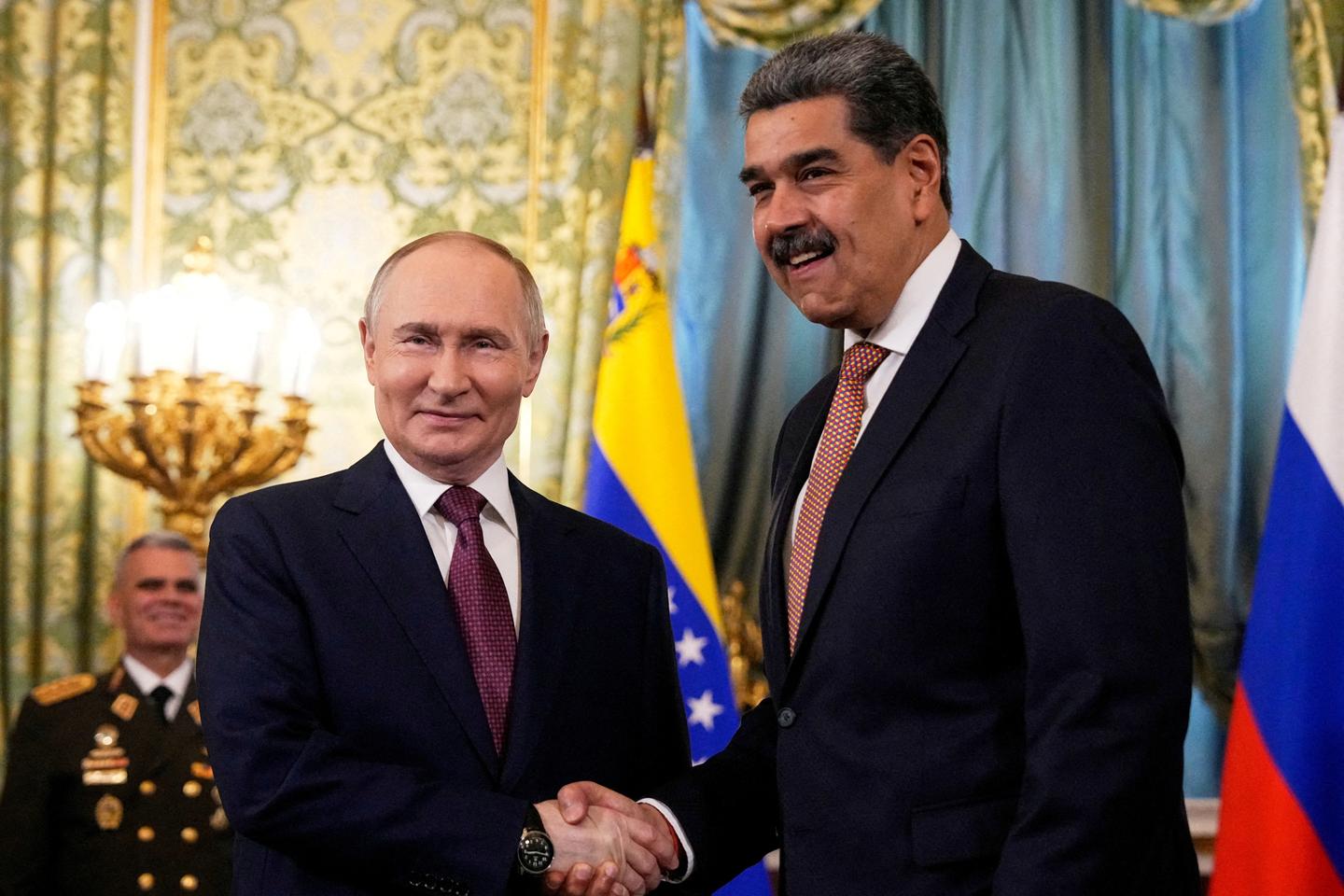
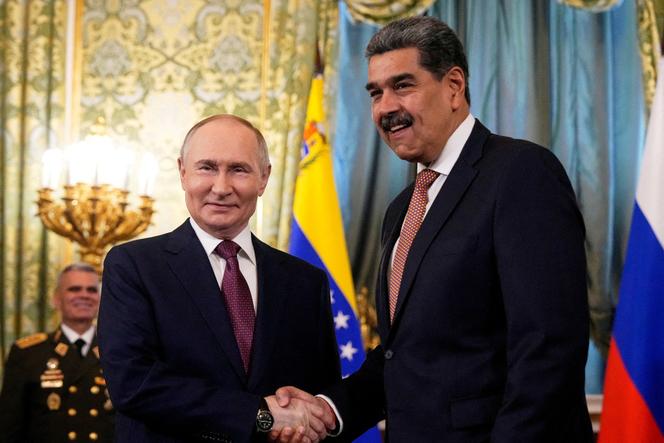
 Russian President Vladimir Putin shakes hands with his Venezuelan counterpart, Nicolas Maduro, during a meeting at the Kremlin in Moscow on May 7, 2025. ALEXANDER ZEMLIANICHENKO / VIA REUTERS
Volodymyr Zelensky could not suppress a wry smile, likely borne of frustration. Just hours after the announcement, on Saturday, January 3, of the dramatic US military operation to capture Venezuelan President Nicolas Maduro, who stands accused of drug trafficking, the Ukrainian leader allowed himself to dream. “If you can do this with dictators, so easily, then the United States knows what needs to be done next,” he told a room full of journalists gathered in Kyiv. No subtitles were necessary. Zelensky was referring to Vladimir Putin, his Russian counterpart, who is under an International Court of Justice arrest warrant for war crimes.
For more than a decade, Ukraine has fought to defend its sovereignty, challenged by the imperial ambitions of the Russian leader. After annexing Crimea in 2014 and backing and arming separatists in the Donbas region, Putin launched Russian tanks into the country in February 2022, bombing both military targets and civilian populations under the pretext of seeking to “denazify” Ukraine.
At its core, the swift American operation could be interpreted as a win for Moscow. Did not the world’s leading power also flout international law, just as Russia did in its invasion of Ukraine?While claiming to end the suffering of the Venezuelan people and pledging to protect Americans from the scourge of drugs, the US appears, in reality, to be coveting Caracas’s oil wealth. According to geopolitical experts, the US offensive has all the hallmarks of neocolonialism.
You have 78.4% of this article left to read. The rest is for subscribers only.