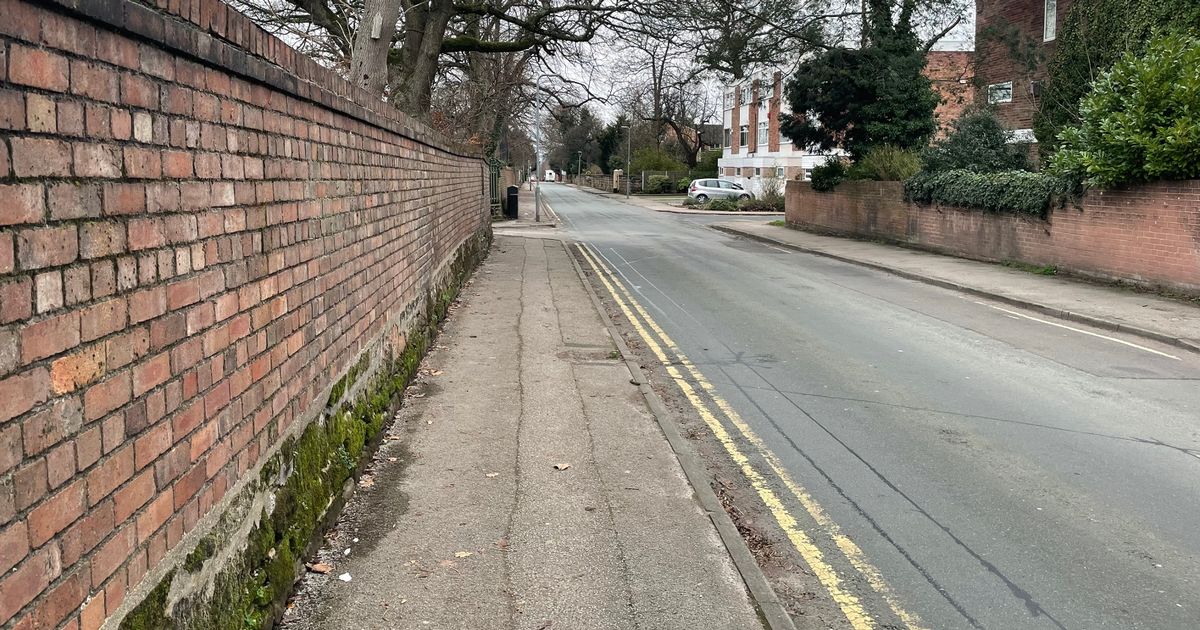
What happened there is the cause of much debate to this day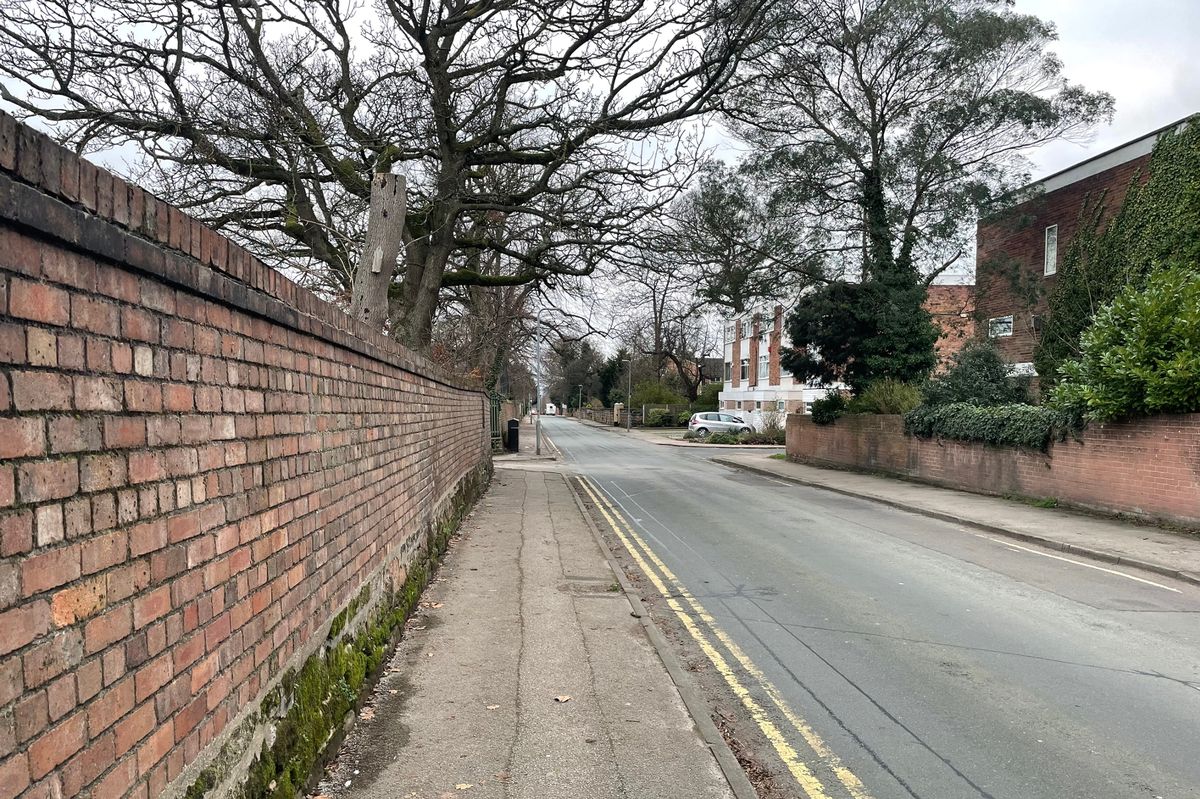 The street has the River Mersey at one end and a huge road junction at the other(Image: Liverpool Echo)
Riversdale Road is always a hive of activity. At one end of the road, you’ll find the Otterspool Promenade and banks of the River Mersey.
At the other, there is the historic Liverpool Cricket Club and a huge junction connecting Aigburth to the city centre, Mossley Hill and Garston. But hundreds of dog walkers, runners and drivers who use this road every day are unaware that it was part of one of the most famous murder investigations in British history.
In 1889, Florence Maybrick was convicted at St George’s Hall of murdering her husband, James Maybrick, at their home in Battlecrease House on Riversdale Road. They lived there with their two children, James and Gladys. James was later found to have died from arsenic poisoning.
Florence denied murder and many believe she was wrongfully convicted after she admitted having an affair. It was later ruled that it could not be proven whether Florence had killed her husband at the family home, which spared her from the death penalty. She was later released from prison.
 Florence Maybrick in 1889(Image: Hulton Archive/Getty Images)
Some have since argued it was simply the 19th century’s “appalling sexual double standards” that cemented her guilt in the minds of a Victorian jury.
Author Kate Colquhoun, who wrote a book revisiting the notorious case in 2014, argued that owning up to an affair as a woman in 1889 was fatal.
She said: “Both James and Florence had affairs, but men and women were treated in very different ways. Male transgression made men seem rather interesting to their friends in the drawing room – but if a woman committed adultery, she was a complete pariah.
“She would be cut loose from all her friends and family, she would have no money, and she would probably have her children taken away, too.”
In 1880, then Florence Chandler, a 17-year-old from Alabama, met 40 year-old James, a Liverpool merchant on board a steamer making its way across the Atlantic. They married in London in 1881 before later moving to Riversdale Road.
When Florence admitted to the court she had had an affair with a young family friend, Alfred Brierley, she was spat at in court by other women, accused of indulging in “degrading vices” by the judge and sentenced to death by an all-male jury.
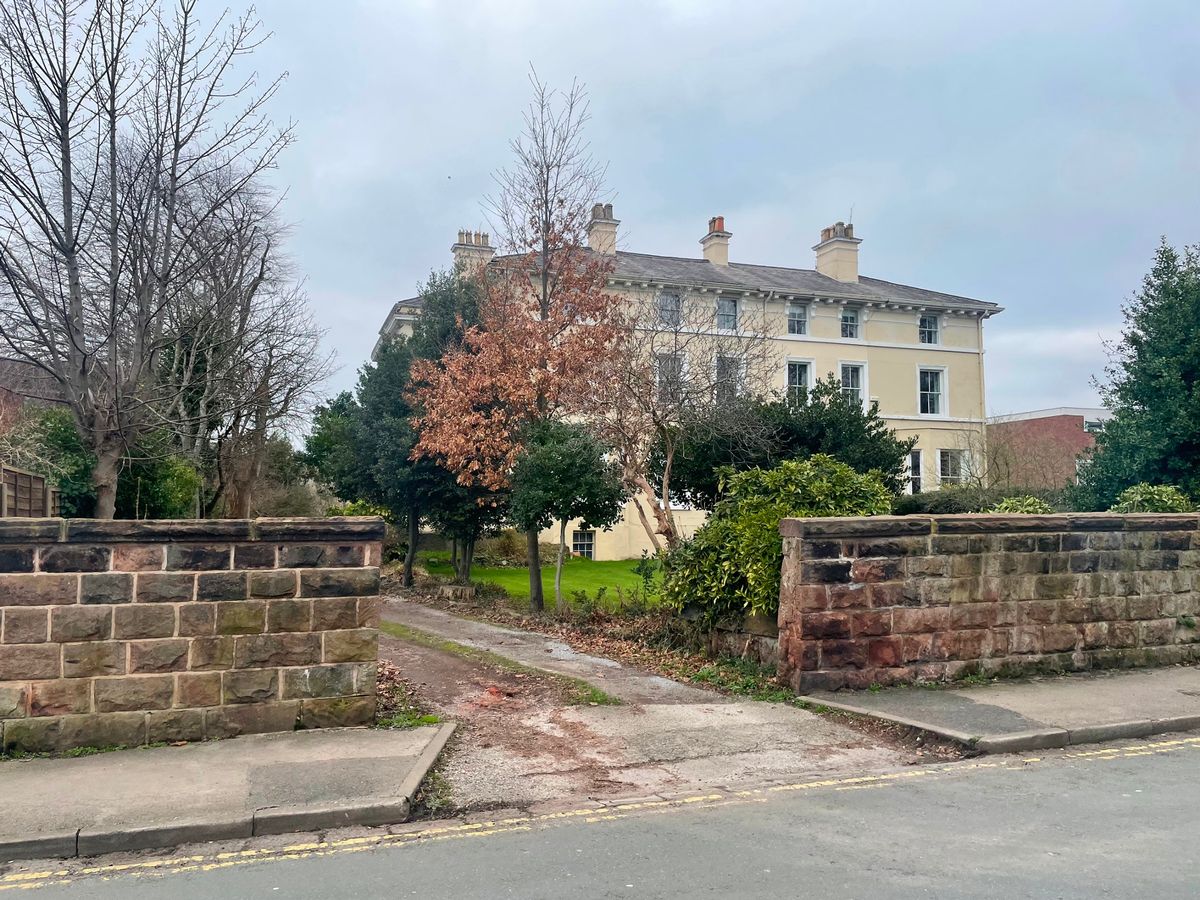 Battlecrease House on Riversdale Road in 2026, where Florence and James Maybrick lived in the late 19th century(Image: Liverpool Echo)
Throughout the trial, Kate argued Florence was portrayed in a very sexual way, with forensic details about her “tiny waist” and “tiny hands”.
She said: “She was naive in thinking she could appeal to the male jury by putting her hands up and admitting to adultery – that’s when the case was lost.
“The judge, James Fitzjames Stephen, was enraged. He told the jury if she was admitting adultery, she was no better than a murderess anyway.”
There was plenty of evidence that James was seriously unwell leading up to his death. James had always been a hypochondriac, and as he aged he was increasingly inclined to take an array of patent medicines. Many of his preferred tonics contained strychnine, belladonna, phosphoric acid or arsenic.
In the spring of 1889, his health deteriorated dramatically. He was taking a potent mix of poisons given to him by medics, including hydrogen cyanide. Doctors were summoned, and they prescribed further quantities of poison. Three weeks after he had first fallen ill, he was found dead at Battlecrease House.
James also had a violent streak. A public row at the races once left Florence with a black eye. Kate described James as “a monstrous drug user and addict, he was an adulterer, he pushed her around, he hit her in fits of fury and he was a dreadful hypochondriac”.
 James Maybrick in 1885(Image: Hulton Archive/Getty Images)
However, some doubts about Florence’s innocence remain. Florence was suspected by the family and some of the domestic staff of having played a part in James’s sudden decline.
She had soaked fly-papers to extract their arsenic, although women sometimes used fly-papers as the basis for a cosmetic face wash at the time. Bottles of meat juice bought for James’ consumption were discovered to have been contaminated with arsenic.
James was known to have been a firm believer in arsenic’s restorative qualities, and Florence maintained that she had adulterated the juice at his urgent request. However, she could not prove her claim.
Home Secretary Henry Matthews later agreed to reassess the case. He concluded that it couldn’t be proven Florence had killed James in their Aigburth home.
His decision rescued her from the gallows, but she remained in prison for 15 years, first in Woking and then in Aylesbury. At Woking Convict Prison, Florence endured solitary confinement, hard labour and frequent ill health.
In a book she wrote after her release, she describes her experiences in Victorian prisons as “torture”, “hideous” and “tyrannous”.
Florence was finally released in 1904 but never saw her children again, who were raised by the family doctor. She returned to the United States and died in New Milford, a town in Connecticut, in 1941.
Leading cotton broker Fletcher Rogers, foreman of the jurors at Maybrick’s inquest and a longstanding associate of the dead man, later moved into Battlecrease House.
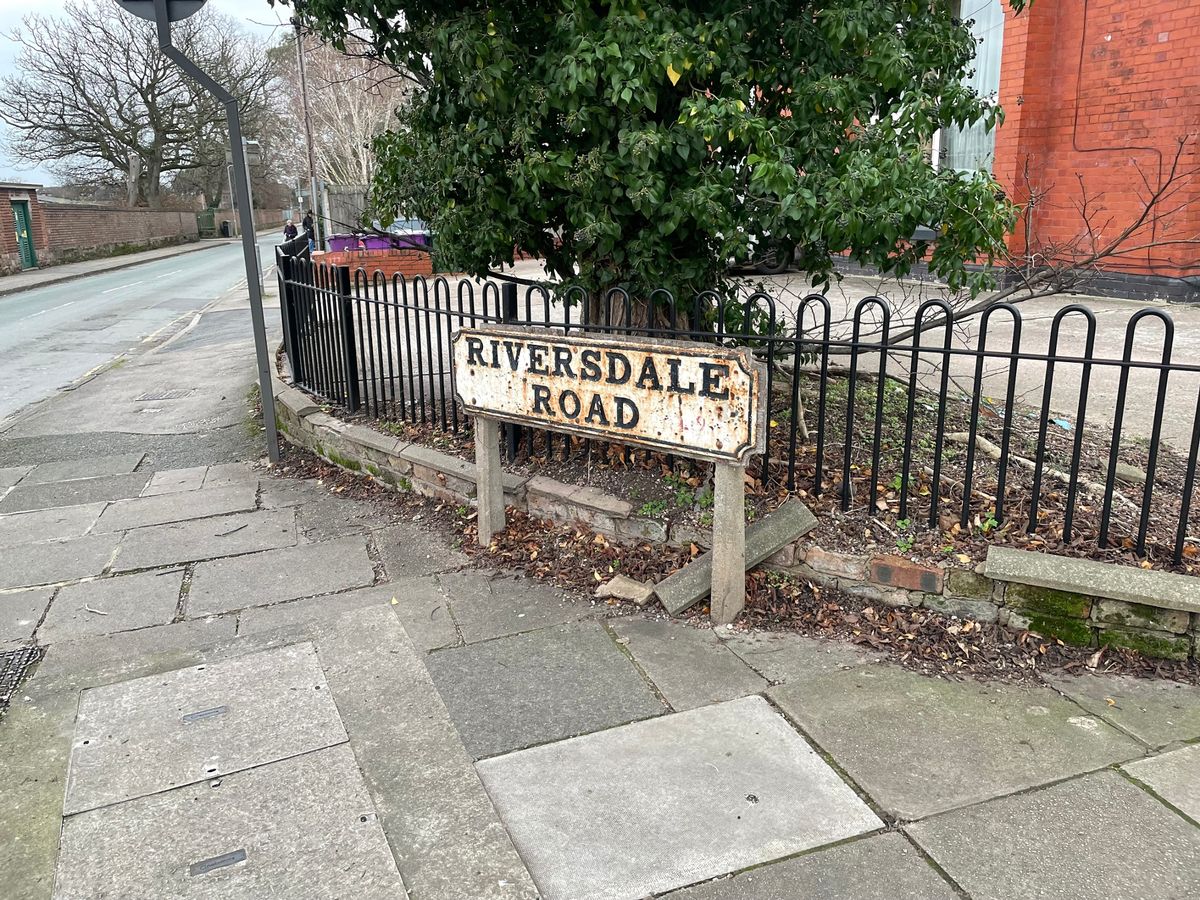 Riversdale Road at the junction with Aigburth Road(Image: Liverpool Echo)
The case is regularly revisited in books, TV documentaries and dramas because of the debate around Florence’s innocence. Many argue Florence was the victim of domestic abuse by her husband and misogyny by society at large.
A further twist came in the 1990s, when an anonymous diary, signed only as “Jack the Ripper”, was traced to James Maybrick.
Jack the Ripper killed at least five women in the Whitechapel area of London in a little over two months in 1888, a year before James died, but the Ripper’s identity was never confirmed.
Though the diary’s author did not refer to himself by name, the names of family members and associates provided – along with his self-proclaimed nickname of “Sir Jim” – made it clear it was intended the reader should assume James was the author.
But its authenticity remains debated. Some have also argued that the Ripper struck again with 11 more brutal murders nearby between 1888 and 1891.
You can visit the very cell where Florence was held after her arrest in The Old Police Station on Lark Lane, a community centre which is a short drive away from Riversdale Road.