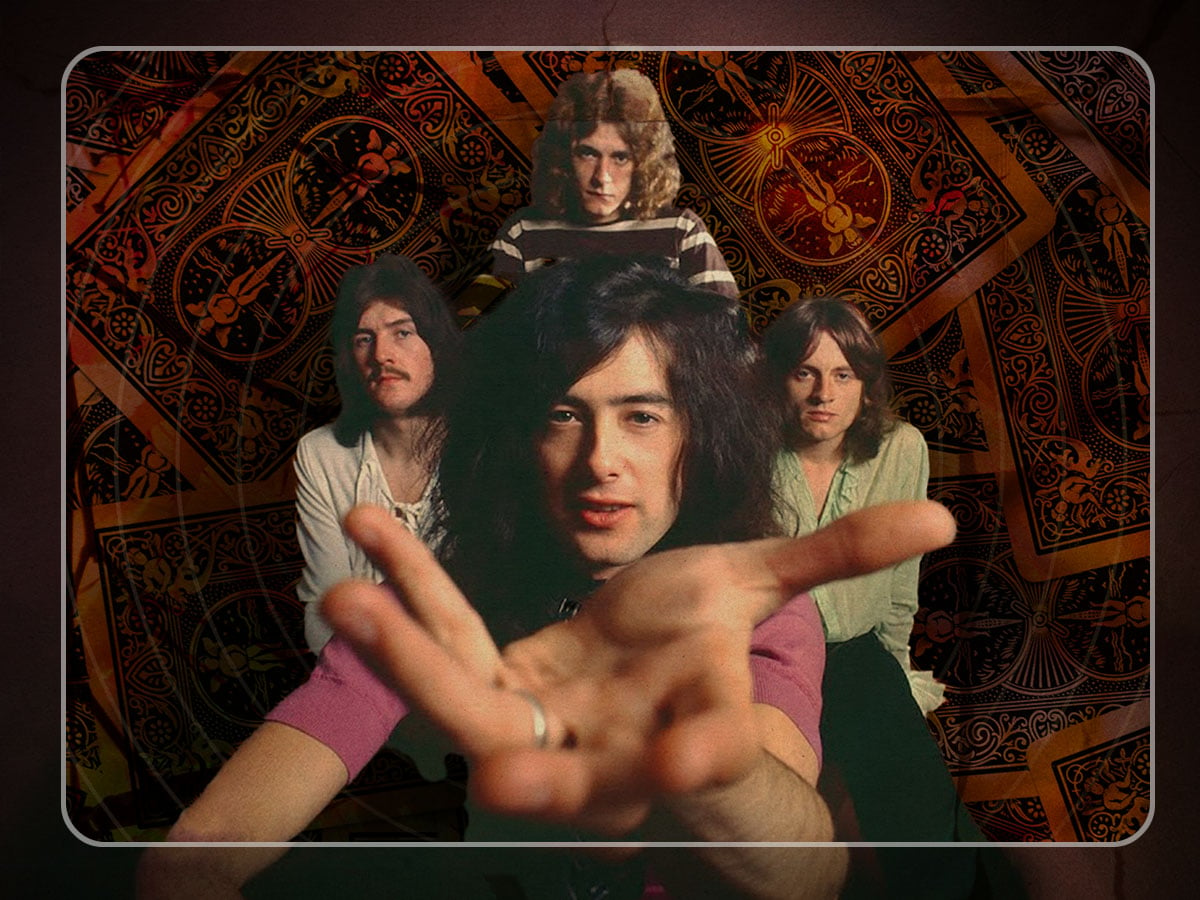
(Credits: Far Out / Sony Pictures Classics / Led Zeppelin)
Sun 4 January 2026 17:45, UK
When their reign was over, everything about Led Zeppelin felt like it had been forgone.
After all, a survey of thousands of classic rock fans comically crowned them the greatest band in an inadvertent manner: people were asked to vote for the best singer, guitarist, drummer, and bassist in rock ‘n’ roll history, and each member of Led Zep triumphed. That might give the impression that they were always assembled as an elite team of the world’s finest. But that’s not entirely accurate.
The band came about through fate and happenstance. Prior to founding the band, Jimmy Page was stuck between two poles in the 1960s. He had already established himself as a leading session guitarist and producer in the early part of the decade, esteemed among his peers, so when the Yardbirds needed a new guitarist, the group tried to prise him out of the studio.
They were successful, but the issue was that they were not necessarily a group in the traditional ‘band of brothers’ manner; they were more so an ensemble of individualists. In fact, Page’s arrival inadvertently furthered this with the likes of Jeff Beck so impressed that he knew he had to depart and abide by his wont for personal experimentation.
So, by mid-1968, Page was somehow the only member of the Yardbirds left. At that point, he may well have called it a day and returned to the studio forevermore, but the band still had some US dates on the horizon, and ever a man of his word, Page was determined to fulfil them. This determination made him realise that his days as a studio man were in the past. He vowed to start his own band, but he didn’t have anyone in mind.
 Chris Dreja back in his Yardbird days. (Credit: Chuck Boyd)
So, he simply looked to those around him. While the Yardbirds were largely noted for their ridiculous roster of defining guitarists, Chris Dreja on bass could jam with the best of them. And he certainly had musical chemistry with Page.
“Jimmy was a real professional,” he said of their days together in the Yardbirds. “I liked that period because we became a four-piece and I got to play my bass really loud.”
So, as Page transitioned the group from the Yardbirds to the New Yardbirds, and finally, Led Zeppelin, he had an eye on Dreja being a firm fixture in his next project: an orchestral reinvention of the blues.
The issue was, Dreja’s journey in the Yardbirds had been the inverse of Page’s. While Page had festered in the studio before joining the flagging band seeking something fresh, Dreja had joined a fledgling band, pushed them to historical heights, saw them wane, and now was ready for some studio time himself.
So, he shrugged off advances, deciding that he wanted to try something new, and pursued photography, even taking early snaps of Led Zep themselves. And the ever-modest former musician, who passed away last year, held no grudges, happily saying, “John Paul Jones was the best bass player in Europe at that point. He was a perfect match.”
And simply kicking back and enjoying the force of Led Zep from afar, satisfied in the mindset that in some distant way, he had helped shepherd them into shape anyway.
Related Topics
The Far Out Led Zeppelin Newsletter
All the latest stories about Led Zeppelin from the independent voice of culture.
Straight to your inbox.