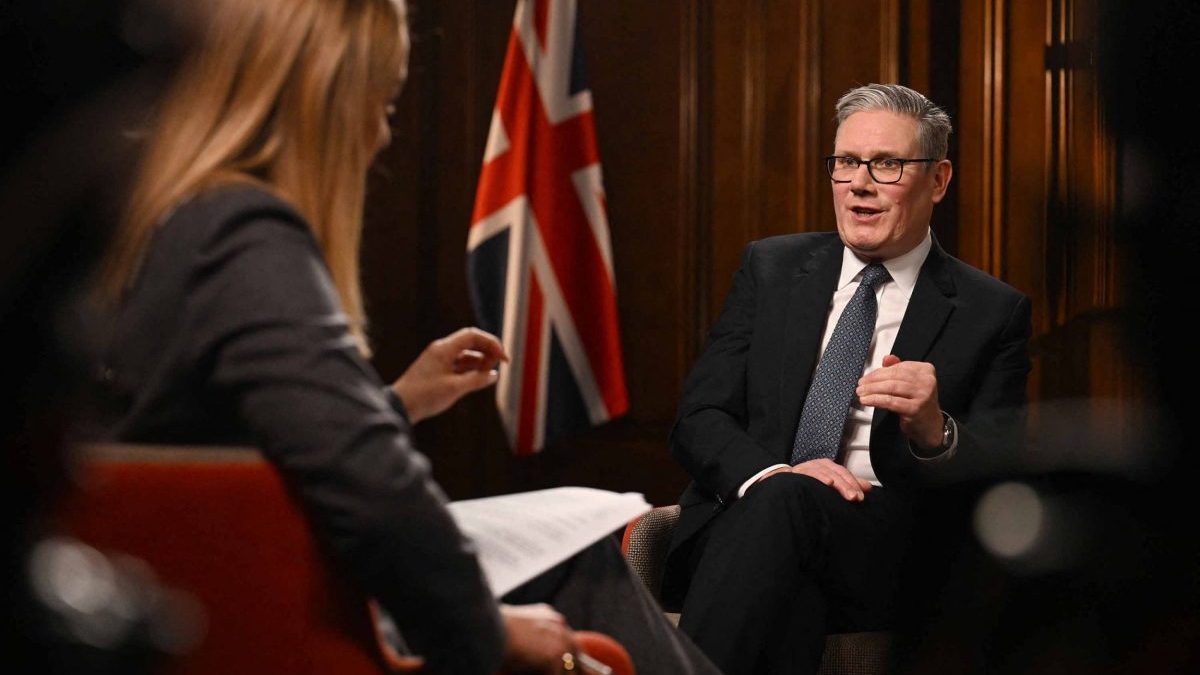
Starmer revealed he is prepared to move to an “even closer alignment” with the EU Single Market – arguing it would be in the country’s ‘national interest’ to do so
Sir Keir Starmer’s push for a softer Brexit has been labelled as an attempt to appease unruly Labour MPs posing a threat to his leadership.
The Prime Minister has said that he is prepared to move towards “even closer alignment” with the EU’s single market – arguing it would be in the country’s “national interest” to do so.
Under pressure over sticky economic growth, and continued whispers of leadership threats, Starmer said the UK should seek to mirror the bloc’s trade rules more closely but not rejoin a customs union.
The EU’s single market was totemic in the Brexit debate because it embodied the central conflict between economic trade and freedom of movement.
Starmer’s pitch-rolling for a cosier EU-UK relationship came after The i Paper revealed the PM’s leadership rivals are seeking out policy proposals for a softer post-Brexit deal – and amid pressure from Labour backbenchers to change course over joining a customs union.
‘Brexit hasn’t worked’, Labour MPs believe
One Labour source said there was a “fairly clear consensus” in the party that “Brexit hasn’t worked” and the economy would not see “nearly enough growth” under the current reset.
But economists argue that it is only through rejoining the single market entirely – or becoming a member of the EU again – that the UK would see a significant economic boost from its ties with the bloc.
Starmer’s comments were the starkest signal yet from the Prime Minister that he is prepared to seek a radically softer Brexit deal with Brussels.
However, Anand Menon, director of the UK in a Changing Europe think tank, argued there is limited scope for genuinely closer alignment without fully rejoining the single market, which would include allowing freedom of movement, which has been ruled out by Starmer.
“I think the EU has been absolutely clear that beyond what we’ve agreed already, which is basically emissions, agriculture and electricity, if we want greater alignment we’d have to think about the single market,” Menon said.
As part of Starmer’s current Brexit reset, the UK and EU have agreed to strike deals on food and drink trade to boost the economy, on energy and linking carbon markets, and on improving the movement of young people in both directions.
Menon said even a Swiss-style model, which allows tariff-free trade for most goods without Switzerland being in the EU, still requires the country to accept key rules and the free movement of people, as well as making financial contributions.
“To all intents and purposes, for political purposes, that is being in the single market,” Menon explained.
He accused Starmer of seeking to send a message to Labour members and MPs in an attempt to quell rumoured leadership threats, rather than proposing a serious plan.
“When Europe becomes an issue in party politics, and particularly in inter-party politics, we start talking nonsense about it,” he said.
“It seems to me this is the Prime Minister signalling there is a debate being kickstarted by the prospect of a leadership election and they can’t just stay schtum on it.”
While Starmer’s position does not appear to be in immediate danger, big defeats in May’s local elections could accelerate the possibility of a leadership contest and candidates are staking out softer Brexit positions with one eye on a future leadership challenge.
Health Secretary Wes Streeting appeared to back joining a customs union with the EU last month, while Greater Manchester Mayor Andy Burnham at Labour conference called for the UK to rejoin the bloc. Both are seen as frontrunners for any battle to replace the PM, alongside the likes of Angela Rayner and Home Secretary Shabana Mahmood.
Aligning with single market ‘a betrayal of Brexit’
Starmer’s political opponents on the right accused him of trying to rip up Brexit to placate his own backbenchers and kill speculation about his future as Labour leader.
Reform UK MP Danny Kruger, who defected from the Tories last year, said Starmer was being “pushed by his party back into his own preferred position on the EU”.
He told The i Paper that the Prime Minister was moving back towards a pro-single market position “even though it’s a betrayal of his manifesto, successive general election verdicts, and the referendum”.
Labour’s 2024 election manifesto pledged to remain outside the EU, single market and customs union while resetting the relationship with the bloc.
Conservative MP John Hayes, a leading Brexiteer who chairs the party’s Common Sense Group, said any attempted alignment with the EU single market would be a “betrayal of Brexit”.
Hayes said it could mean following EU rules on food and agriculture, since Brussels will be uninterested in any negotiations. “I suspect it would mean kowtowing to the EU,” he told The i Paper.
“Is this an attempt to bolster his credibility among elements within his own party, who remain in denial about Brexit? Is it a reflection of his own instincts? It may be a mix of the two.”
Senior Tory Priti Patel, the Shadow Foreign Secretary, said Starmer was embarking on “a desperate bid to appease his backbenchers” by “pursuing alignment with the single market – surrendering our freedom to cut regulation and strike our own trade deals”.
In an extended interview with The BBC ahead of Parliament returning from Christmas recess, Starmer said: “If it’s in our national interest to have even closer alignment with the single market, then we should consider that, we should go that far.”
Your next read
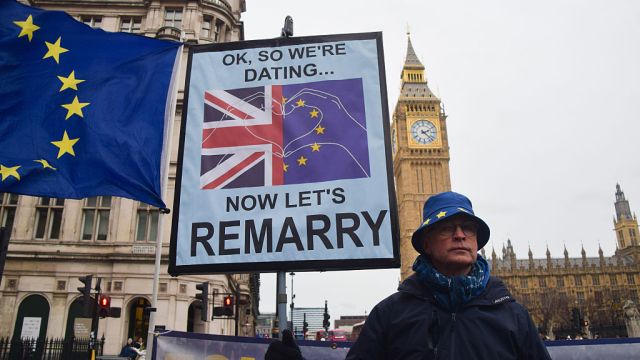
He added: “I do understand why people are saying ‘wouldn’t it be better to go to the customs union?’ I actually think that now we’ve done deals with the US which are in our national interest, now we’ve done deals with India which are in our national interest, we are better looking to the single market rather than the customs union for our further alignment.”
His comments appeared to be in response to a push from Streeting for a “deeper trading relationship” with Europe last month.
Downing Street said in December the Government will be sticking to its “red lines” on the EU relationship, which include not rejoining the single market, customs union or returning to freedom of movement.