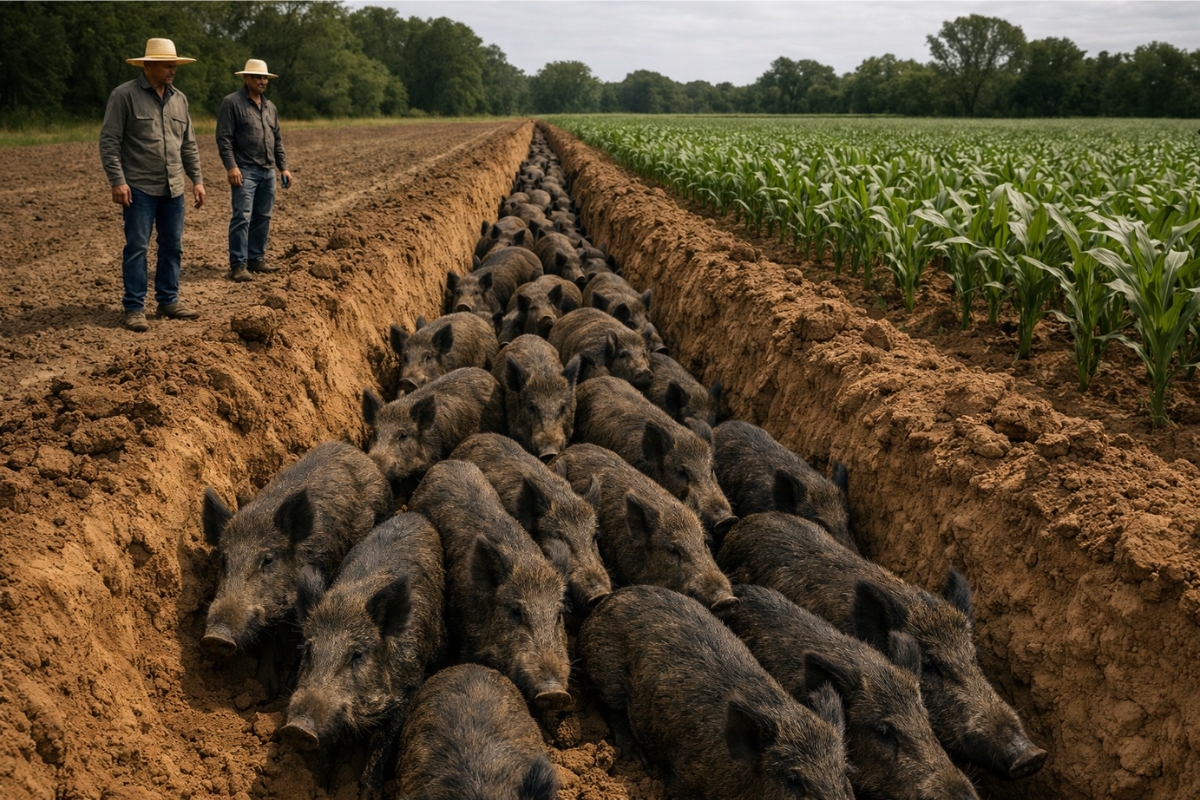
Os wild boars They have been causing destruction in rural areas, with a direct impact on crops, fences, and livestock.
In a single night, a gang with 30 or 40 Individuals can undo months of work, trample crops, and leave behind damage that is difficult to recover.
In Brazil, a practical solution gained traction. earthen trenches around the production areas, used as a last line of defense.
— ARTICLE CONTINUES BELOW —

What happened and why did it attract attention?
The pressure of wild boars This led producers to seek more direct measures after seeing fences fail and other methods create new risks.
The solution was to dig trenches around the plantations, forming a barrier that does not depend on electricity or constant operation.
The idea seems simple, but it changes the game when the gangs arrive at dawn and advance as a disciplined group, capable of devastating an entire field.
How do trenches contain wild boars in practice?
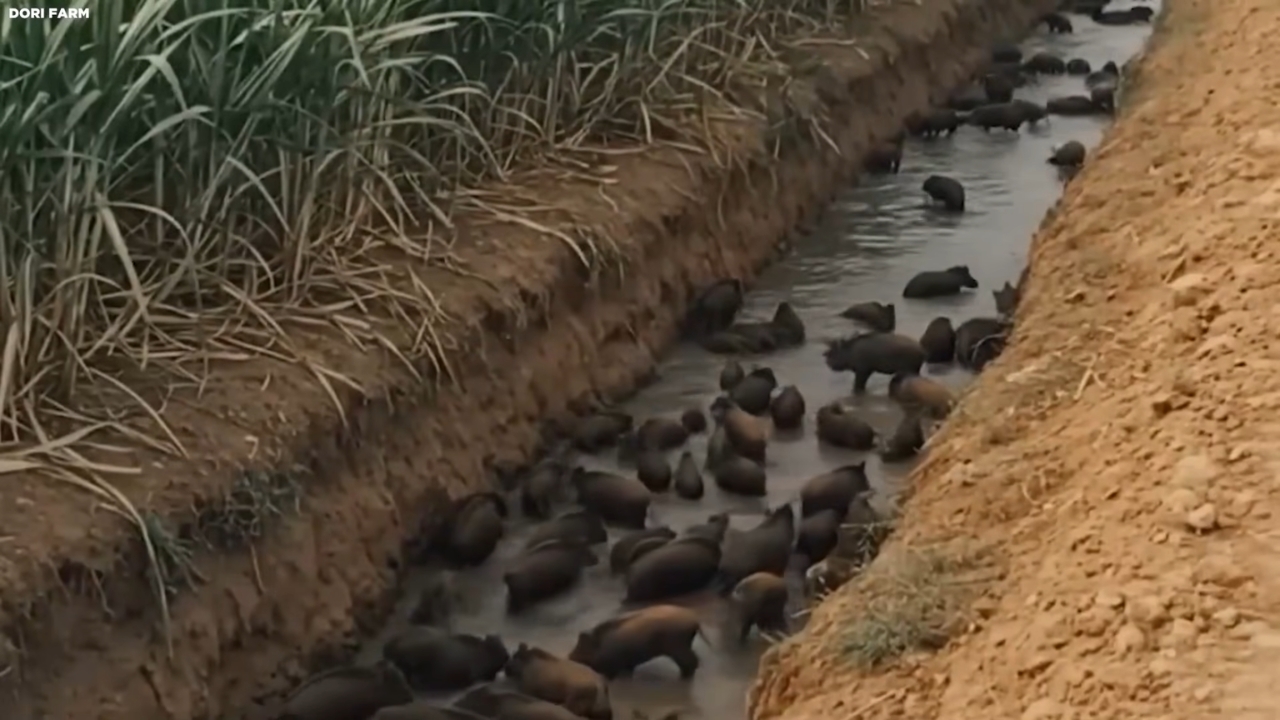
The process is straightforward: when the animal approaches, it encounters a steep ditch and has difficulty crossing it.
Many try to pass through and end up falling into the hole, with little chance of getting out due to the weight and shape of the hull.
The result tends to be one of these scenarios: the wild boar gets trapped, retreats disoriented, or avoids the area altogether.
What are the rules, deadlines, and conditions?
The trenches mentioned in the Brazilian countryside usually have approximately 1 to 1,5 m deep e more than 1 m wide.
The steeper the walls, the harder it is for any animal to escape after falling.
In some regions, producers have created defensive lines that extend through 10 or 20 km surrounding the properties, forming a continuous barrier of earth.
Costs, hard work, and risks that require attention.
Digging large trenches requires heavy machinesExperienced operators and plenty of fuel are required, which can turn into a significant investment.
For a larger farm, the cost can reach… tens of thousands of dollars Or more, which weighs even more heavily on family-owned properties.
Maintenance is also important; heavy rains can erode the soil, knock down ditch walls, and turn the area into mud, requiring drainage and reinforcement at critical points.
Points to consider and common questions
Unmarked ditches can cause accidents, posing a risk to tractors, trucks, and workers, especially at night.
There is also the concern of displacement of the problem; a protected farm could push the wild boars into a neighboring area that has no defense.
The most effective solution tends to be the coordinated use of trenches along with other measures to reduce escape routes and prevent gangs from simply changing direction.
Other threats that also put pressure on crops.
In addition to the wild boars, there appeared the Java pig, a hybrid of domestic pigs and wild boars, described as larger, more resilient, and more aggressive.
They also circulate peccaries in large swarms, with the potential to devastate crops of corn, sugarcane, cassava, and peanuts.
To the capybara It can become a problem when it encounters a young crop, as it devours the plants, leaves the soil exposed, and creates opportunities for subsequent losses.
Why the threat of wild boars is likely to grow in the coming years.
The pressure is not only Brazilian; there are reports of extreme measures in other countries, including aerial manhunts, large traps, and the use of dogs.
In Canada, in 2024Hunters shot down a wild boar with more than 500 kg, reinforcing the magnitude that the problem can reach.
There are also attempts at control through sterilization, with records showing a reduction in the population in over half em only 18 months in a province.

Os wild boars They remain a real threat to those who live off the land, because a nighttime attack can destroy an entire crop and compromise income and planning.
As trenches They became a simple and constant solution, functioning day and night as a physical barrier to reduce intrusions and protect productive areas.
In a scenario of continuous adaptation, creativity in agriculture becomes as important as planting, harvesting, and maintaining the property.