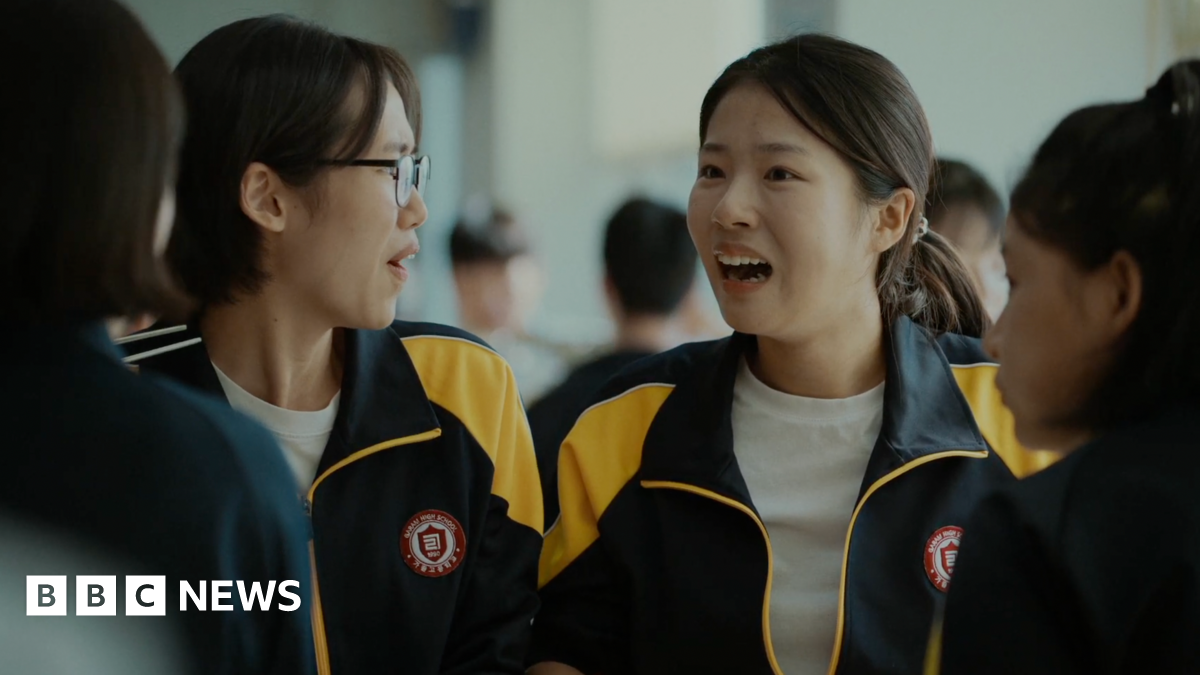
Tension begins over her refusal to sign a petition at school. A man who assaulted a 10-year-old child is about to be released from jail into her neighbourhood. So a fellow student starts a petition calling for the suspension of his release. Joo-in is the only one who refuses to sign.
She objects to a single line in the petition: “Sexual violence leaves deep wounds that never heal and completely destroys a person’s life and soul.”
“I can’t agree with this statement,” Joo-in tells the student who drafted it.
The standoff ends up revealing her secret: she was raped by a relative when she was younger.
Despite the harrowing theme, Ms Yoon is determined to explore the fullness of Joo-in’s life, whose name means “owner” or “master” in Korean, alluding to the autonomy Ms Yoon envisioned for her character.
Journalists who attended the media screening received a hand-written letter from Ms Yoon asking them to avoid mentioning sexual violence while covering the film.
“The story is more about how we look at her,” Ms Yoon explained to the BBC, adding that she didn’t want to pin a label – childhood sexual abuse survivor – on her protagonist.
“Because Joo-in herself refuses that. It’s one part of her identity and it shakes her, but she insists, ‘That’s not all I am’.”
When she decided to make a film about sexual violence, Ms Yoon was clear about one thing. She did not want it to be predictable.
During her research, she said she “watched pretty much everything that was out there” on this subject. She spoke with survivors and consulted activists. Those conversations shattered the “prejudice” she carried, an ignorance that “reduces a person entirely to their wound”.
“We spent so much time talking about completely ordinary concerns,” she said. “Worries about work, family, friendships and romances, about needing to lose weight or gain weight or exercise more. I think those moments dissolved even that last tiny bit of prejudice I still had.”