The global economy is on course for another year of steady if unspectacular growth in 2026 but there is a novel risk preoccupying economists: that the world’s most important financial institution will fall under the political sway of the White House this year.
Around two thirds of the 48 economists surveyed by The Times said the independence of the Federal Reserve, the central bank whose decisions have financial ramifications in the rest of the world, will be undermined in 2026.
This is the first time the question of the Fed’s independence has featured in the annual survey of economists. Last year, the central bank’s potential politicisation under the Trump administration was raised by none of the participants. This year, the threat of a compromised central bank “will continue and should be a major source of concern to the global economy”, Jonathan Haskel, professor of economics at Imperial College Business School and a rate-setter at the Bank of England until last year, said.

The threat of a compromised US central bank “will continue and should be a major source of concern to the global economy”, said Jonathan Haskel, professor of economics at Imperial College Business School
TOBY MELVILLE/REUTERS
The responses came after the Fed’s last decision of the year to cut interest rates by another 0.25 percentage points. Three voting members dissented. Two were in favour of no change and one, Stephen Miran, Trump’s recently appointed ally on the Fed’s board, wanted a larger half a percentage point easing. It marked the biggest split on the committee in six years and sets up the Fed for a series of tense meetings in the coming months, starting with its next decision on January 28.
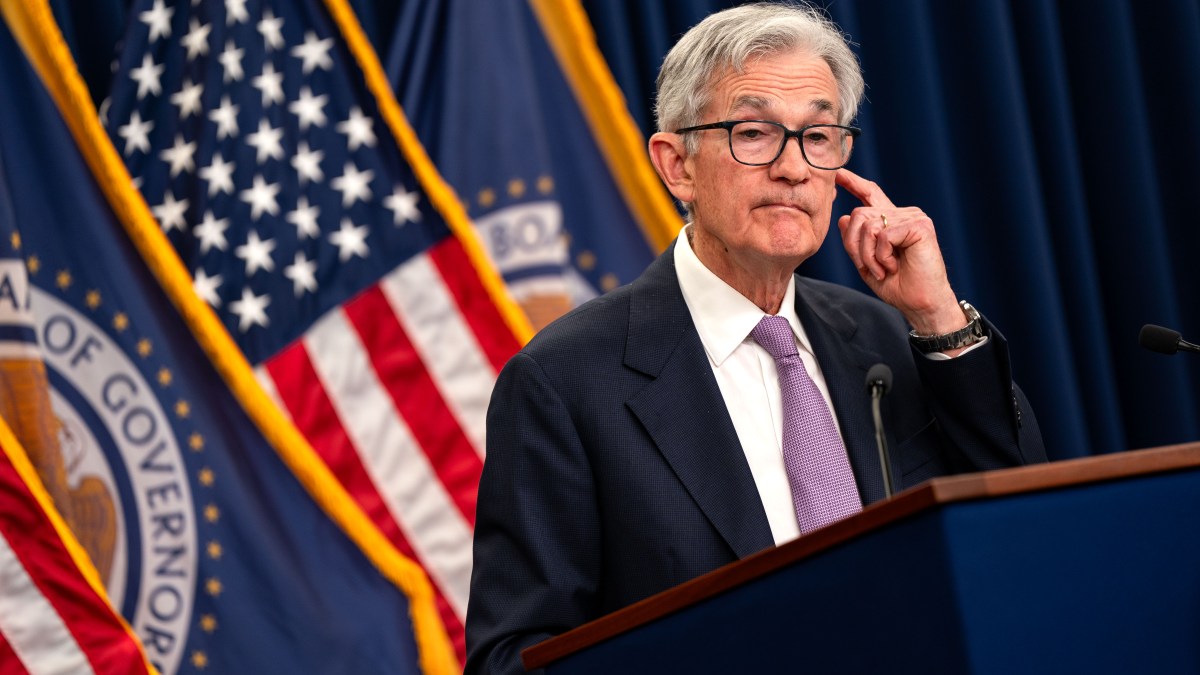
Trump is also poised to announce his candidate to replace the chairman, Jerome Powell, whose term ends in May. The president, who appointed Powell in his first term, spent last year attacking Powell for failing to cut interest rates fast enough. The Fed reduced borrowing rates three times in the latter half of 2025 over worries about a slowing labour market.
Financial markets are speculating that Kevin Hassett, who has called for much faster interest rate cuts and is a staunch ally of the president, will be the choice.
“The pressure [to cut interest rates] will become unbearable,” Scott Knight, head of growth and strategy at BDO, a professional services firm, said.
Giles Wilkes, senior fellow at the Institute for Government, said: “[Trump] puts a patsy in charge, the patsy gets his way a little, under pressure from the White House, and the short run effect is re-inflationary.”
Philip Shaw, chief economist at Investec, said any “general perception that the Fed is not independent would run the risk of a major sell-off in bonds and perhaps other markets that could leave overall financial conditions tighter than looser”. This is because short-term interest rate cuts would be followed by a rise in longer term borrowing for the US government if investors respond by dumping government debt.
“There will clearly be further political pressure applied on the Fed chair to ease policy through next year in the run up to the midterm elections. While it seems likely that interest rates will come down after that point, the Fed’s committee as a whole will be careful to ensure that the White House is not seen to be running the Fed,” Shaw said.
Two dozen respondents said the Fed would be able to withstand threats to its independence, with most citing the central bank’s set-up which includes a seven-strong board of governors. They have the power to confirm or veto nominees for regional governors, providing a layer of protection against Trump choosing acolytes to fill the voting committee.

The US economy under President Trump’s tariffs is still expected to outpace its peers in 2026
EPA
“The board of governors moved quickly in December to approve the reappointment of regional Fed presidents for another five-year term ahead of the typical March 1 deadline, calming some concerns about potential threats to the central bank’s independence,” Liz Martins at HSBC said.
The choice of the next Fed chair, splits among policymakers, and Trump’s demands have created an uncertain outlook for US interest rates in 2026.
A booming economy, but tariffs are here to stay
The US economy is still expected to outpace its peers in 2026 as it did last year. Nearly 80 per cent of respondents said the world’s largest economy would expand at an annual pace between 2-3 per cent of GDP, powered by continued investment in AI infrastructure, fiscal stimulus in the form of tax cuts, and more monetary easing. This compares with expectations of growth between 1-2 per cent in in the UK, and 1-1.5 per cent in the eurozone, forecast by a majority of economists.
“The US continues to be a high productivity economy, despite impairments to labour supply and trade,” Simon French, chief economist at Panmure Liberum, said.
Private sector investment in the US is on course to expand by 7 per cent in 2026, with a chance it could accelerate to as much as 10 per cent, the best rate since the 1990s, Shaan Raithatha, senior economist at Vanguard, said. This would help the economy grow by 3 per cent in 2026, he said.
The biggest drags on the economy would come from deportations, which will hurt the labour market, and the continued impact of trade protectionism. Nearly three quarters of respondents said Trump would maintain the highest tariff rates since the 1930s, around 15 per cent to 18 per cent, on the rest of the world this year. This is despite a legal challenge that will be presided over by the Supreme Court in a judgment next month that could declare around two thirds of the tariffs as illegal.
James Smith, economist at ING, said a negative decision for the White House would force Trump into finding “other means” to impose levies on imports from the rest of the world.
“Though it would be messy and the net result may ultimately be a lower overall effective tariff rate,” he said.
Fhaheen Khan, senior economist at Make UK, said the administration would come under pressure from domestic businesses to lower tariffs and protect sectors like retail, cars, and luxury goods. “I expect the president will consider these impacts and be more open to negotiations with partner countries.”
UK and tax rises
Another year of political and fiscal tumult is expected in the UK in 2026, with growing speculation that Sir Keir Starmer and Rachel Reeves could both be replaced this year.
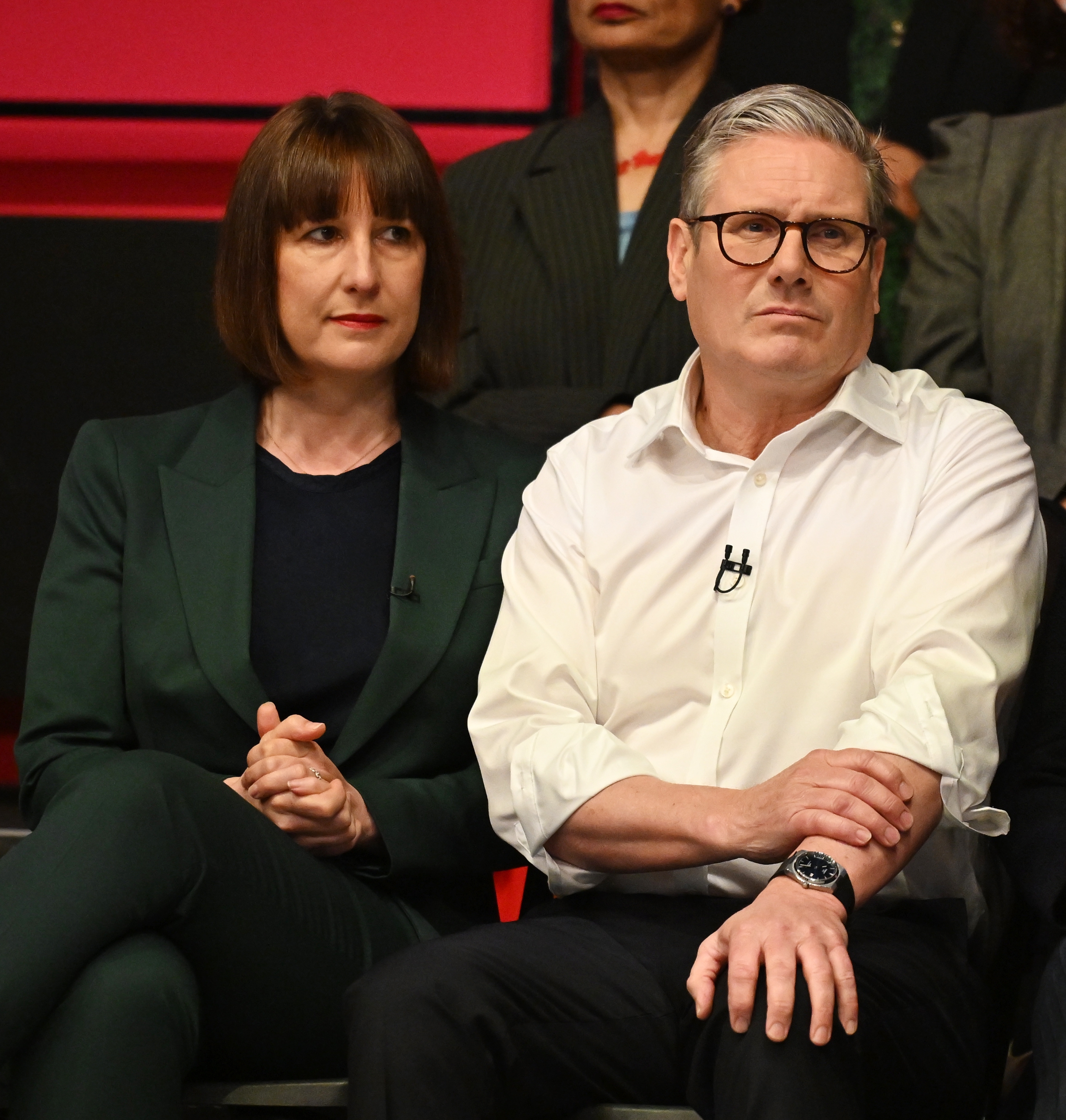
The spending plans of Rachel Reeves and Sir Keir Starmer “lack credibility”, Gerard Lyons said
GETTY IMAGES
Economists were split over whether Labour would have to find more tax revenues or make spending cuts to stabilise the public finances in 2026. Just over half, 57 per cent, said the chancellor would be able to avoid more painful decisions, and 43 per cent said Reeves or her successor would have to come back for more even after the budget raised the buffer against the fiscal rule to £21 billion.
Gerard Lyons, chief economist at Netwealth, said the government’s spending plans over the course of the parliament “lack credibility. Given the persistent upward pressure on public spending, future additional tax hikes cannot be ruled out, even if unjustified. But I do not expect additional tax hikes in 2026”.
Respondents said a leadership change after May’s local elections could decisively push Labour into a higher spending, higher tax direction compared with the current fiscal plans.
Sir John Gieve, a former deputy governor at the Bank of England, said a leadership change raised the possibility of higher spending on public services. “Politics will require higher expenditure than currently planned in core public services so tax rises will have to follow,” he said.
Julian Jessop, economics fellow at the Institute for Economic Affairs, said: “If Rachel Reeves is still in post, the Treasury could simply dust off some more of the “smorgasbord” of increases in taxes on the slightly better off that were floated in the run-up to the last budget. But a more left-wing chancellor could increase spending even further, requiring bigger tax increases including new taxes on wealth.
Henry Cook, senior economist at MUFG, said the government could be forced into more radical tax raising measures after avoiding raising income tax at the last budget. “There is no low hanging fruit after the government has scratched around for revenue at consecutive budget events. If fiscal conditions were to deteriorate further, the first port of call for the government might be to reconsider proposals to partially merge national insurance into income tax,” Cook said.
China
The sources of China’s economic growth will come under global scrutiny in 2026, after the country’s export dominance has pushed its trade surplus to the rest of the world to record levels and raised hackles in the US and across Europe.
• China’s BYD set to overtake Tesla as world’s biggest EV seller
Just over a third of economists expected China to get close to the Communist Party’s goal of achieving annual GDP growth of around 5 per cent, a target it is likely to have hit in 2025. Just under half, or 46 per cent of respondents, said the economy would expand at a slower pace in the region of 4-4.5 per cent with perennial concerns that officially published GDP figures will not accurately reflect the state of the economy.

China has managed to withstand the impact of punitive US tariffs by selling goods to markets in Africa, Europe, and Latin America as well as its neighbouring economies.
AFP
Raithatha at Vanguard said China was heading for growth of 4.5 per cent as the economy will continue to struggle from “weak domestic demand and declining property values outweigh any wealth effects from a stock market rally”.
Paul Hollingsworth, head of developed markets at BNP Paribas, said: “The structural and cyclical growth slowdown looks set to continue. We expect economy wide deflation to be alleviated but not ended by the official anti-involution campaign” — China’s policy initiative to curb excessive competition and overcapacity in key industries. “Fiscal policy is likely to be reactive, aiming at countering a further cyclical slowdown, rather than spurring considerable new growth momentum.”
China has managed to withstand the impact of punitive US tariffs by selling goods to markets in Africa, Europe, and Latin America as well as its neighbouring economies. Vicky Pryce, chief economic adviser at the Centre for Economics and Business Research, said Beijing’s Communist Party had proven to be “expert negotiators” on tariffs, threatening to impose major export restrictions on all companies that use rare earths mined or processed in China.
“China can continue to rely on strong export performance despite the impact of US tariffs and against whom they have shown themselves to be expert negotiators,” Pryce said. “The Chinese authorities will do all they can, including any additional stimulatory measures to achieve the growth rates in their plan.”
Germany turns on the spending taps
The outlook for the eurozone was dominated by Germany’s fiscal policy turning stimulative in the form of mass investment and defence spending after the country did away with its debt brake in 2025.
Three quarters of respondents said annual growth in the 21-country eurozone would average at 1-2 per cent, with the main change from last year coming from German spending.
Dario Perkins, managing director of global macro at TS Lombard, said there will be “big spillover effects from Germany’s fiscal boost” to the rest of the eurozone. Vanguard estimates that domestic spending will lift Germany’s GDP by an additional 0.5 percentage points this year, and by 0.2 percentage points in the single currency area.
The stimulus should mark an end to Germany’s lurch into a shallow recession after 2022, with its industrial output and manufacturing sector suffering from the double whammy of a global energy price shock and waning import demand from China.
Andrew Wishart, senior economist at Berenberg, said the German economy would expand at a rate of 0.8 per cent this year but warned the average growth figures for the bloc would remain steady over the year “due to the end of an Irish boost in 2025 driven by corporate profits booked there for tax reasons”.