This is where Invisible Cities comes in, a social enterprise which has operated in Glasgow since 2016, offering a side of the city you wouldn’t see on a typical tour.
All the tours are led by people who have been affected by homelessness, and they are specifically focused on raising awareness around the issue.
I was taken round the city by Angie, a lovely guide who was bursting with energy. Her tour was called the “People of Glasgow”, because – in her words – this is “the most important thing about the city”.
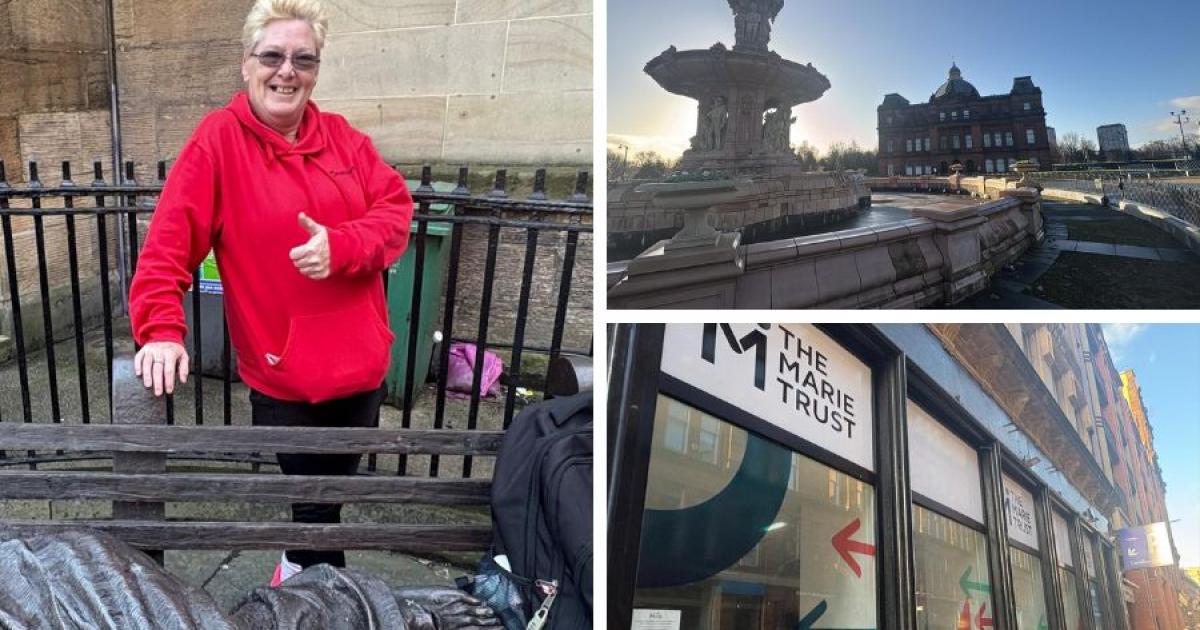
We started the tour outside the People’s Palace, which is currently shut for renovation until around 2027. The museum houses a unique collection of objects which give an insight into how Glaswegians lived, worked and played.
A view of the People’s Palace (Image: NQ)
The People’s Palace has been closed since I moved to Glasgow, and after listening to Angie reminisce about the discos she used to go to inside, and all the amazing artefacts on display, I’m looking forward to visiting when it re-opens. It’s also not too far from here where public hangings used to take place at the McLellan Arch – the last one of which took place in 1865.
From here we went on towards the Barras Market, which has become one of my favourite places to visit since moving to Glasgow. We learned all about the history of the market – including that it was first started by a woman, Maggie McIver, which I didn’t realise.
“At one time she had 10 buildings and thousands of different stalls, and it was open seven days a week,” Angie tells me.
“If you didn’t have fleas when you went in – you had them when you were coming out. If it wasnae fleas, it was scabies.”
We then headed into the city centre, through Barrowland Park, where some of the most famous acts to perform at the legendary venue (which sits just above the market) are inscribed on the path, and past Rachel Maclean’s well-known “Big Yin” mural of Billy Connolly, which was one of three murals created to mark the comedy icon’s 75th birthday.
Barrowland Park (Image: NQ)
Big Yin mural (Image: NQ)
From here we cut through to Merchant City, stopping off outside the Marie Trust on Albion Street, a charity which does vital work to support homeless people in Glasgow. It was great to include this stop on the tour, as it raises awareness of homelessness in the city to tourists who might otherwise have been unaware.
The Marie Trust (Image: NQ)
We also got to see a number of artworks from renowned street artist Smug, including this one near the Old Fruitmarket which depicts all the seasons – and includes some Highland cows from Pollok Park. If you look closely into the animals’ eyes, you can see the artist has painted reflections of the buildings behind.
The tour then took us outside the Gallery of Modern Art, where the Wellington statue stands – perhaps one of the most recognisable symbols of Glasgow. I knew the story behind the traffic cones which are perpetually thrown on top of Wellington’s head, but I didn’t know about the other tradition of placing a cigarette in the hand of a sculpture of a boy on the side of the statue. I’m sure I’ll be telling this to everyone who comes to visit me in Glasgow.
Duke of Wellington statue (Image: NQ)
We ended the tour at Nelson Mandela Place, renamed in 1986 to honour Mandela while he was still imprisoned for his anti-apartheid work in South Africa. I learned that the square is also where the South African Consulate was once located. Angie tells me that she was stood in this spot when Nelson Mandela visited the city in 1993, where he was awarded the Freedom of Glasgow.
Tucked around the corner, behind St George’s Tron, is perhaps my favourite thing I saw on this tour. A sculpture depicting Jesus as a homeless man sleeping on a bench was installed in Glasgow in 2017 – and the city is reportedly one of five in the world to have one, after it was rejected elsewhere due to its depiction of Jesus as homeless. I’d never noticed it was here, but I’m glad Angie pointed it out – and it seemed like the most fitting way to end the tour.
Tour guide Angie pictured with the ‘Homeless Jesus’ statue (Image: NQ)
The Invisible Cities tours are a great way to learn more about Glasgow’s real history beyond the usual tourist hotspots. Angie was an absolute delight, and really knew her stuff.
Even if you think you know Glasgow well, this tour offers a unique perspective of the city – and I would highly recommend it for anyone looking for an alternative way to see the sights.