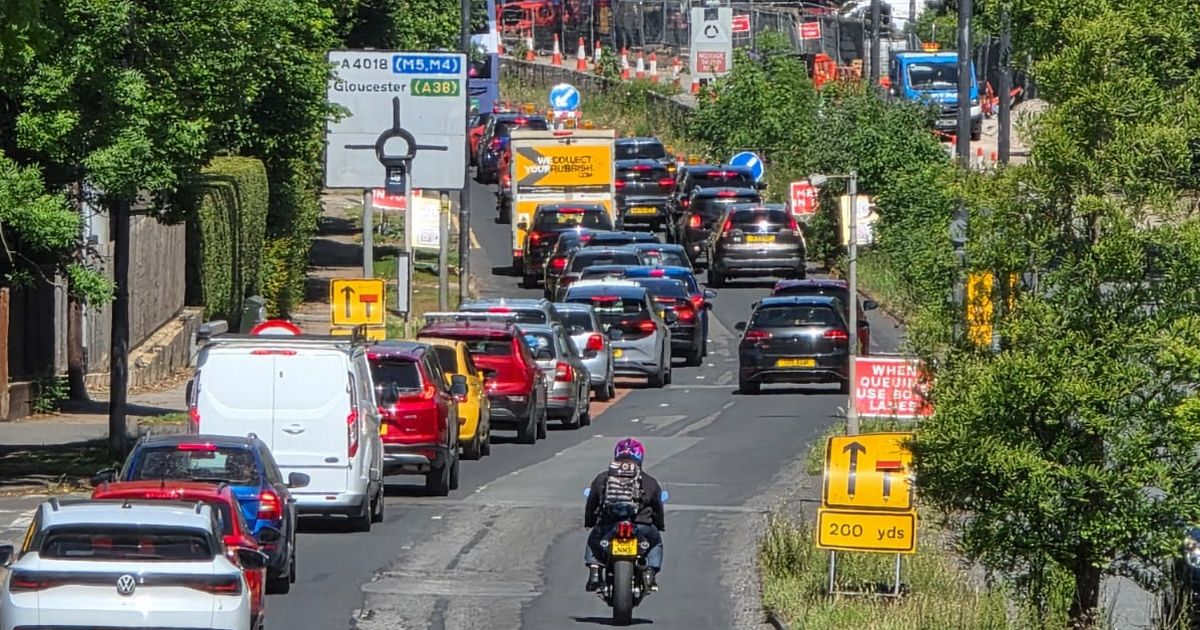
There is a big shift in the thinking behind how people get around Bristol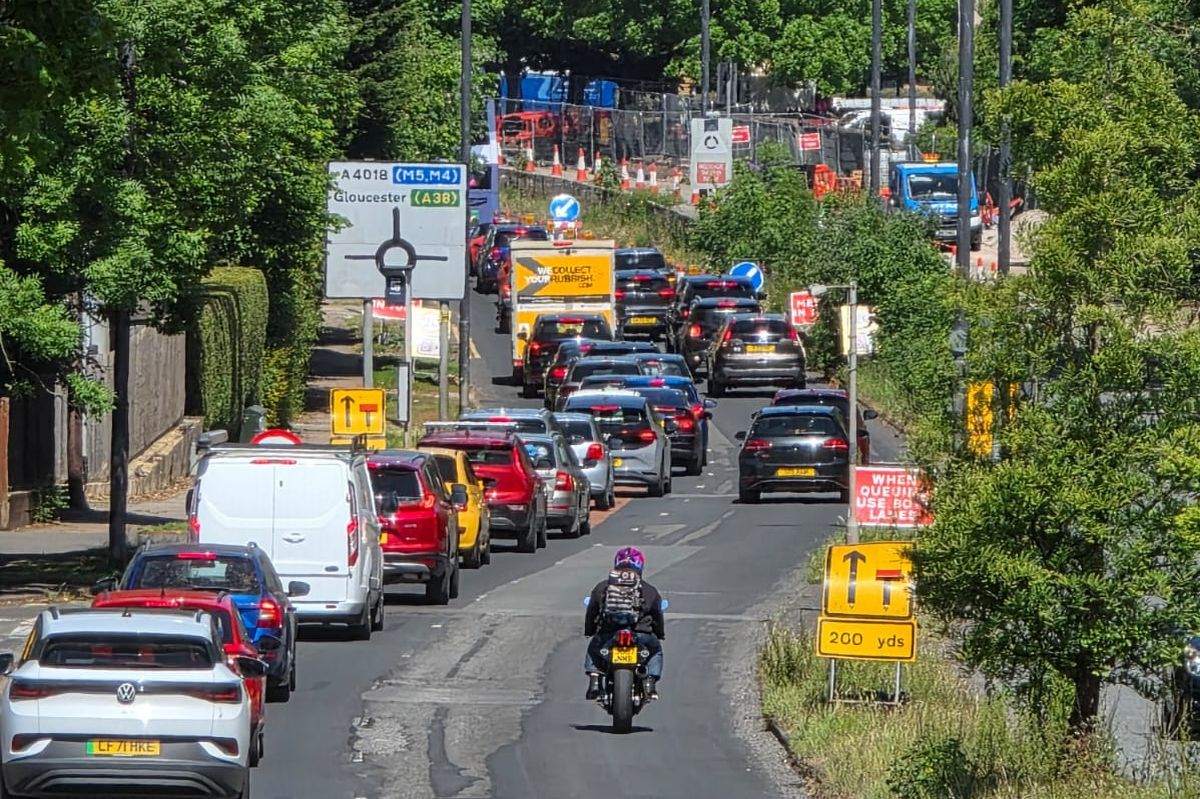 Roadworks on the A4018 near Henbury, Bristol(Image: Bristol Live)
Try getting anywhere in Bristol at the moment and you will soon end up navigating around seemingly omnipresent roadworks. In 2025 much of the city’s roads were dug up, annoying people attempting to walk, cycle, get the bus or drive almost anywhere. This is just the start.
In 2026 there will be roadworks on “everything, everywhere, all at once”, according to Green Councillor Ed Plowden, chair of Bristol City Council ’s transport policy committee. However, hopefully the temporary pain of lane closures and shut pavements will then pay off in 2027.
New bike lanes and bus lanes and wider pavements will of course be a boon to cyclists, pedestrians and bus passengers. And in theory even people driving will benefit from what politicians call “modal shift”, as better alternatives to the car lead to fewer people on the roads.
Bristol’s cycling network can seem like a disjointed mess, but is already much better than in previous years and is about to get a huge upgrade. And there are ambitious plans to make travelling by bus much less infuriating, with bus lanes making journey times more reliable. Construction of four new train stations on the outskirts of Bristol could also finally begin.
There are three main reasons the city is covered in roadworks at the moment, and why these will cover even more of Bristol over the next 12 months.
After a decade of austerity, in 2022 the government gave £5.7 billion to eight city regions to make their transport more sustainable, with the West of England getting £540 million. But the catch was this needs to be spent by March 2027.
Upgrading transport infrastructure involves a lot of time-consuming bureaucratic hurdles before getting spades in the ground, so much of the actual digging is only just beginning, with a huge amount planned in 2026. The result is that the city’s transport network should hopefully get much better, however people have to suffer through a huge amount of roadworks all at once.
The second reason is the push for modal shift. Bristol is the second most congested city in the country and transport experts believe that this is due to there being too many cars on the roads.
Both the Greens, currently running the city council, and Labour, who previously ran the council and still run the West of England Combined Authority, believe the solution is better alternatives.
This means building miles of new bike lanes and bus lanes and making pavements wider. There is a general shift away from the car-dominated way of thinking from the 1960s and 1970s, towards giving people a range of options in how they get around. Many four or five-seater cars carry just one driver and no passengers, which is a less efficient use of space than a large bus.
Cllr Plowden said he has not driven in a car by himself since becoming a councillor to get around the city. Speaking in December, he said: “I’ve used either public transport or a bicycle for everything. I thought it would be just too much of an irony to become a Green Party councillor and then because I’d be doing extra journeys, to do that with a single-occupancy vehicle.”
The third reason is a shortage of staff among contractors hired to carry out the roadworks. After several years of having little money to upgrade infrastructure, the workforce was gradually eroded. And now there is suddenly a lot of money to carry out upgrades, contractors have complained to the council that they’re struggling to hire enough staff to do all the work needed.
Keeping track of all the planned transport changes is difficult. These include Victoria Street; Temple Way; Broadmead; the Bedminster Bridges roundabout; the Portway; new train stations in Henbury, North Filton, Portishead and Pill; the South Bristol Liveable Neighbourhood; the East Bristol Liveable Neighbourhood; new resident parking zones; Park Street; and many more.
The common theme in all these ambitious projects is giving less priority to people driving cars and more priority to other ways of getting around. Which of course is inevitably very controversial, with people who rely on driving getting incredibly wary about the effects on them. This is particularly the case in the East Bristol Liveable Neighbourhood, among disabled people.
Not everybody can walk, cycle or get the bus. An example is Melissa Topping, a prominent critic of the East Bristol Liveable Neighbourhood, who relies on driving a large van to carry around her mobility scooter, but struggles to navigate the new bollards and planters blocking roads near her house in Redfield. She has consistently called on the council to scrap the trial scheme.
In the longer run the West of England region, including South Gloucestershire and Bath and North East Somerset, could eventually get some form of mass transit system. This is now unlikely to be an underground network, favoured by former Labour mayor Marvin Rees, but could end up with some tram lines as well as bus rapid transit, but that is many years away.
Last summer the government gave the region £200 million to develop plans for mass transit. But these are at an early stage, and spades won’t be in the ground until the 2030s. In the meantime though — after the roadworks in Bristol get even worse than they are now — getting around the city on foot, by bike, scooter or bus could soon become much easier, safer and less infuriating.