Future art historians will single out the pandemic as a defining moment in the development of 21st-century architecture. Aida Bratovic would agree. The architect and interior designer was living in her west London house when the first lockdown was announced. The open-plan top floor, carefully designed for entertaining and cooking, became a full-time workspace for Aida, her wine-merchant husband and their two teenagers. Tempers were tested; the allure of one fluid space waned as privacy became a yearned-for luxury. It was time to move.
For years, she had been intrigued by a nearby terraced house. Built in 1905, the corner property had a patchwork past. First a post office and then a printing works, the shop front window on the ground floor was a legacy of its commercial heritage. It had been derelict for several years requiring cash and vision to rekindle its charms. The estate agent suggested they offered ‘what they could.’ A few days later it was theirs. During Edwardian times, the street was lined with shops and businesses all now converted into homes. Compared with its smarter neighbours this house felt untouched. It was an opportunity to start again. To design a post-Covid home, suitable for both family life and work.

Architect Aida Bratovic in her ‘non -corporate’ office, at a table designed by architect Robert Heritage. The cabinet behind was found at The Old Cinema; light Oluce Sonora, Moon chairs by Tokujin Yoshika for Moroso.
Mark Roper
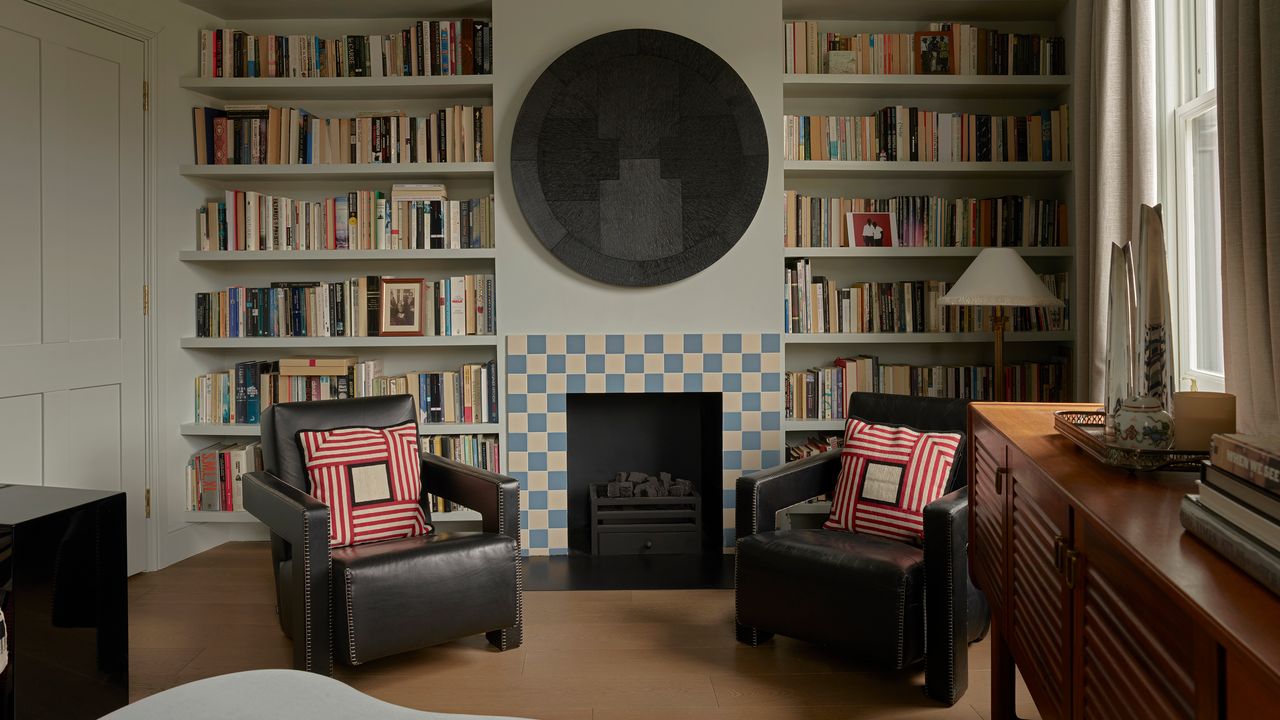
The front door opens into Aida’s ‘non-corporate’ office. Fabric samples are stowed in an antique haberdashery cabinet with meetings taken around a table designed by architect Robert Heritage. Down a small set of stairs light cascades through the glazed roof of the new kitchen where French doors open onto a courtyard garden, planted from scratch. Instead of knocking through the first floor rooms Aida retained the dividing wall, and installed the opening which connects the snug sitting room to a study that doubles as a guest room. Above, there are three bedrooms each with its own compact bathroom. The space has almost doubled: from 1000 square feet to 1,900.
Perpendicular living suits a family with older children. Everyone has their own space, says Aida, whose clients include the late Lord Rothschild. Not just bedrooms but somewhere, ‘to listen to music, read a book, or have a cup of tea with a friend.’
When it came to decorating, the unusual corner plot – there is not a single right angle in the house – called for resourceful solutions. In her son’s bedroom, a futon-style bed tucks under sloping walls, the lower part picked out in deep blue to define the space. To bring light to her daughter’s north-facing bedroom, she painted the ceiling, and papier mâché pendant, an earthy yellow. The custom-printed mural masking the Ikea cupboard is based on a ‘deconstructed’ painting by Hungarian artist László Moholy-Nagy. High-low ingenuity stretches to the bathrooms; ‘the tiniest’ brass towel rail, a trapezoid counter-top, the parchment-pale shower curtain (there wasn’t enough room to open a screen) against lagoon-blue tiles: a combination inspired by a print by contemporary artist Cecilia Reeve.