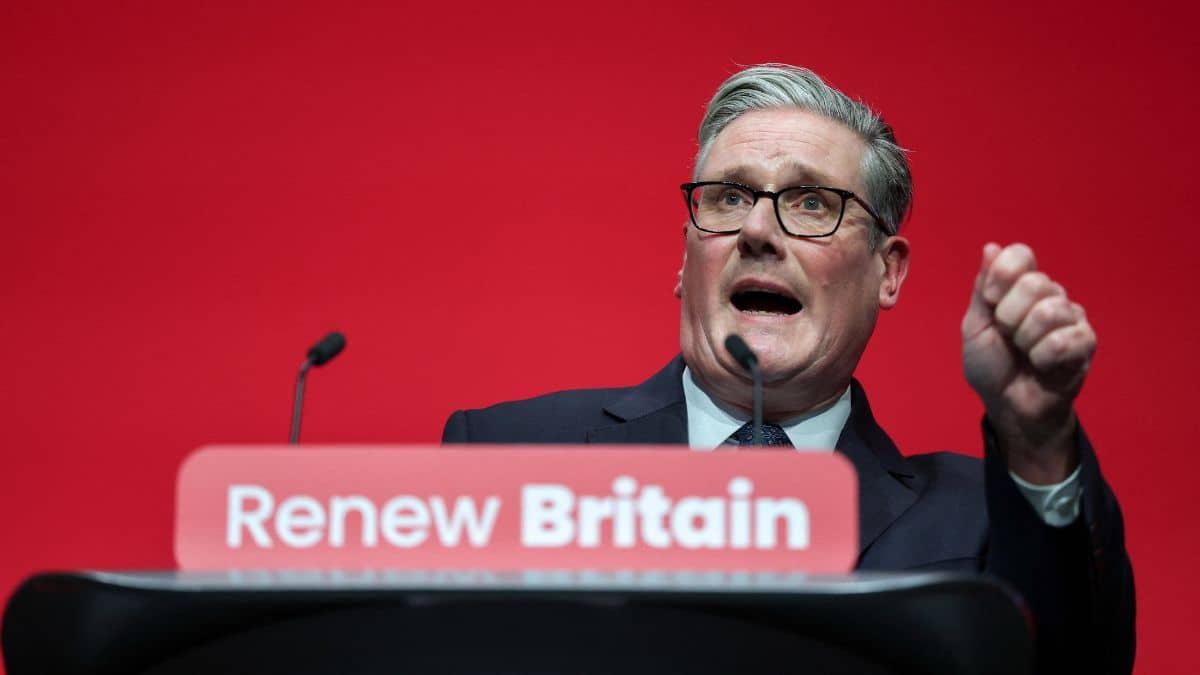
Starmer has signalled that the UK could seek closer alignment with the EU single market, saying it would be considered “if it’s in our national interest,” in his clearest indication yet that Labour is exploring deeper economic ties with Brussels.
Amid a worsening economic crisis, British Prime Minister Keir Starmer has indicated that the UK should pursue closer ties with the EU single market rather than rejoining a customs union. The remarks are the clearest sign yet that the government is exploring ways to deepen economic links with Brussels.
Starmer told BBC news that the UK should consider “even closer alignment” with the single market if it is in the national interest. “If it’s in our national interest … then we should consider that, we should go that far,” he said.
STORY CONTINUES BELOW THIS ADSingle market preferred to customs union
Responding to cabinet colleagues who have suggested a new customs union could benefit the UK, Starmer said he did not think that was the solution. “We are better looking to the single market rather than the customs union for our further alignment,” he added.
Health Secretary Wes Streeting, Justice Secretary David Lammy, and TUC General Secretary Paul Nowak have previously argued that a customs deal could bring economic gains. Starmer’s comments, hinting at further dynamic alignment beyond the food and drink deal agreed in May, drew immediate criticism from Reform UK and Conservative figures.
Trade deals and changing priorities
Starmer acknowledged that much had changed in recent years, including new trade deals under Labour. “I argued for a customs union for many years with the EU, but a lot of water has now gone under the bridge,” he said.
He added that recent deals with the US and India, which he said serve the national interest, meant the UK should now prioritise alignment with the single market rather than returning to a customs union.
Ongoing negotiations with Brussels
Progress has been slow on the latest EU agreements, with the UK stepping back from plans to join a multi-billion-pound EU defence fund. Talks continue over the new food and drink (SPS) agreement and a youth mobility programme, though several disputes remain unresolved.
Starmer said any closer alignment with the EU would not include a return to full freedom of movement. He defended a youth mobility scheme aimed at allowing young people to travel, work, and gain experience across European countries.
Backlash from opponents
The shadow foreign secretary, Priti Patel, described Starmer’s remarks as a “Brexit betrayal,” claiming he was “surrendering our freedom to cut regulation and strike our own trade deals.”
Reform UK leader Nigel Farage said the comments breached trust with Labour voters and criticised potential EU cooperation on energy markets, arguing it would tie the UK to “crazy EU net zero policies and carbon taxes.”
A Labour source countered that Farage’s opposition to closer European ties and clean energy initiatives fuels a politics of division, while Labour seeks to make UK businesses and households better off.
Hints of revisiting EU ties
Starmer has suggested in recent months a desire to strengthen EU relations. In November, Nick Thomas-Symonds, responsible for EU negotiations, was promoted to full cabinet rank. Economic adviser Minouche Shafik has also recommended internally that returning to the customs union could be an effective way to boost growth.
Starmer emphasised that any future alignment would be “if it’s in our national interest” and ruled out revisiting manifesto promises to rejoin the EU single market or customs union, or to end freedom of movement.
STORY CONTINUES BELOW THIS AD
The Conservatives responded by claiming Starmer was using Brexit as a scapegoat for the UK’s economic challenges.
End of Article