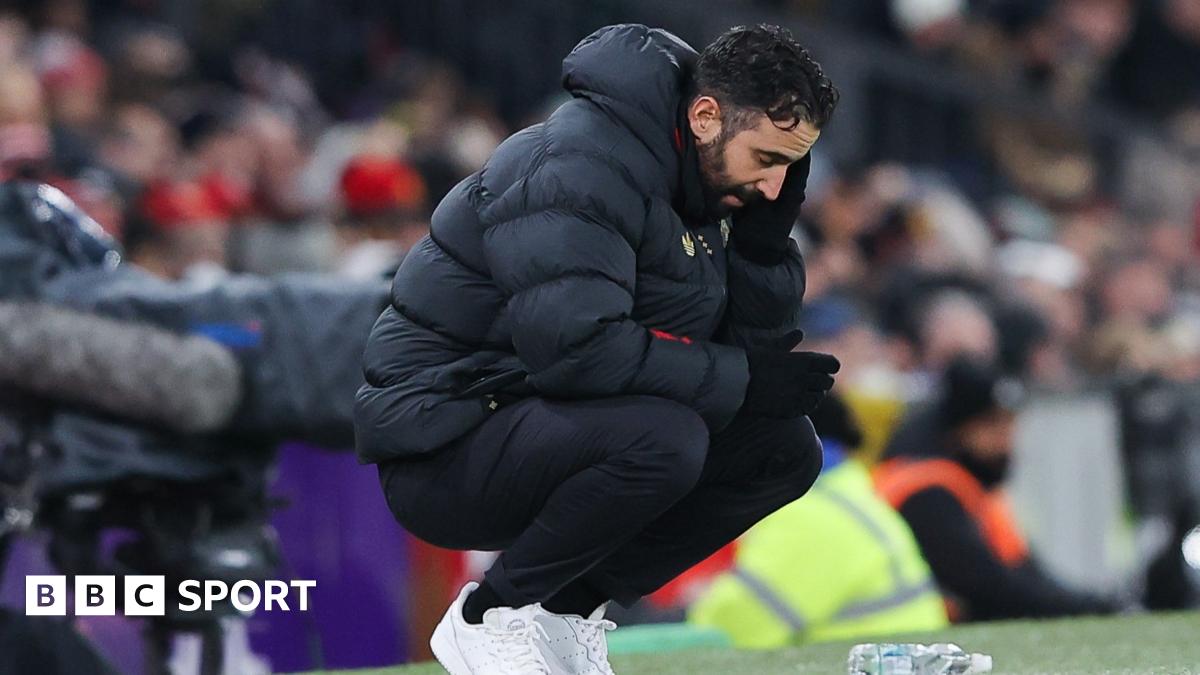
‘Amorim removed player freedom’published at 13:09 GMT
13:09 GMT
Umir Irfan
Football tactics correspondent
Amorim, as a coach, is a system-first coach rather than a player-first coach.
He came into the job with an idea of what he wanted to create, in terms of shape and the roles each player in that shape do.
The Portuguese coach asked his players to learn his system even when they were not natural fits for the roles he expected, refusing to adapt his system to their strengths.
This decision was the source of many of his struggles whilst United boss. If a coach is unwilling to adapt to the players he has and those players aren’t good enough to carry out the roles you ask of them, results won’t follow.
Inheriting a squad built to play a possession-based back four, Amorim opted for a 3-4-3 shape on the ball, encouraging direct play, whilst conceding possession at times.
Amorim wanted his wide centre-backs to step up and carry the ball, becoming involved in the attack when United have the ball, before pressing aggressively off the ball – roles that defenders had to learn. It often meant they found themselves in the opponent’s half, whether aiding chance creation or having to press the player they were marking.
In Amorim’s ideal system, he would play attacking wingbacks on the opposite side to their strong foot, which made Amad a good fit going forward but defensively he struggled in his new role. United lacked a left wing-back who fit Amorim’s criteria with various options being shoehorned into the position.
You could make similar points about most positions in Amorim’s system, with non-signing players not being ideal fits.
On top of that, Amorim drilled his players to play certain passing routines which began to become predictable and removed some of the freedom players had.
Amorim’s reluctance to tweak his system allowed coaches to soon figure out repeatable ways to press United, whilst finding the same spaces to exploit in attack too.